The European Union's Geopolitical Situation: Navigating Vulnerability and Strategic Robustness
The European Union is navigating a complex geopolitical landscape, moving from traditional reliance on the United States toward greater strategic autonomy and industrial robustness to counter security threats from Russia, China, and shifting American policies.
Highlights
- •U.S. Secretary of War Pete Hegseth signaled a definitive end to traditional Atlanticism, pushing the EU toward military self-reliance.
- •The EU is actively developing an internal defense-industrial base through initiatives like the EDIS and the ASAP regulation.
- •European geopolitical strategy is shifting from 'normative power' to 'robustness' to withstand Russian, Chinese, and U.S. coercion.
- •The EU is expanding its territorial system through strategic partnerships with countries like Canada, Turkey, and the UK.
The European Union's geopolitical situation is currently navigating a period of significant tension, defined by a shift from traditional security reliance to a quest for internal robustness. This strategic evolution was highlighted during the 82nd anniversary of the D-Day landings in Normandy, where U.S. Secretary of War Pete Hegseth delivered a message reflecting the updated National Security Strategy released in November 2025. His remarks underscored a growing distance between the United States and the EU, urging European nations to prioritize their own military autonomy.
Building European Strategic Autonomy and Robustness
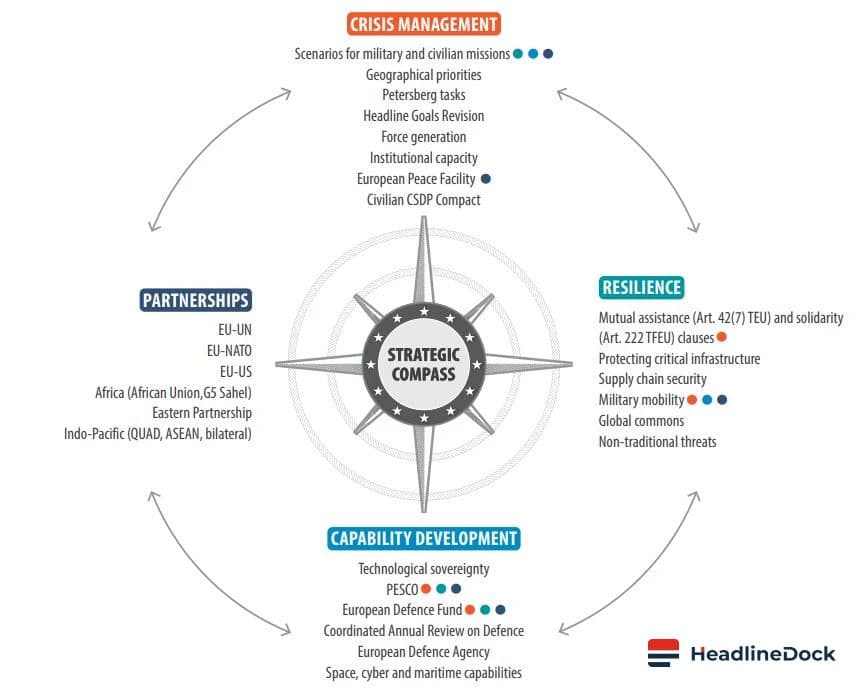
Faced with a landscape marked by pressures from Russia, China, and the new American foreign policy, the European Union is actively developing internal mechanisms to safeguard its interests. The bloc has made strides in financial and industrial defense, including the NextGenerationEU recovery plan and tools like the Anti-Coercion Instrument, designed to counter external trade threats. Furthermore, the Chips Act and the Net-Zero Industry Act reflect a broader push for technological and resource sovereignty.
The shift toward an EU defense industry is perhaps the most critical development. In response to the ongoing conflict in Ukraine, the European Union has implemented frameworks like the Regulation in Support of Ammunition Production (ASAP) and the European Defence Industrial Strategy (EDIS). These efforts aim to dismantle nationalistic industrial barriers, creating a unified market for defense and enabling the European Union's geopolitical situation to stabilize through shared manufacturing capacity.
This push for robustness represents a shift from the European Union's historical focus on normative power—relying purely on law and regulation—toward a more proactive stance. By fostering interdependency through a network of partners, including the United Kingdom, Norway, Canada, and candidate nations like Turkey, the EU seeks to create a territorial system capable of absorbing external shocks. This approach is a direct reaction to what experts describe as a triple threat of coercion: the aggressive imperialism of Russia, the systemic rivalry posed by the People’s Republic of China, and the pragmatic, often challenging, stance of the current U.S. administration.
Ultimately, the goal is to transform the European Union into an architectural power. By codifying interdependency and shielding its common market from foreign exploitation, the bloc aims to maintain its autonomy in an increasingly hostile global arena. The success of this strategy, however, remains deeply tied to the ongoing commitment and engagement of European citizens, who form the foundation of this unique political entity.