Agathe Habyarimana: Legal Investigation Into Rwandan Genocide Complicity Reopened in France
The investigation into Agathe Habyarimana regarding her alleged complicity in the 1994 Rwandan genocide has been reopened by French authorities. This landmark legal move seeks to address the role of the 'Akazu' network in the massacres, offering a significant opportunity for historical clarification and justice.
Highlights
- •The investigation into Agathe Habyarimana for alleged genocide complicity has been officially reopened by the Paris Court of Appeal.
- •Agathe Habyarimana is accused of being a central figure in the 'Akazu' network, which radicalized the Rwandan regime in 1994.
- •The 1994 genocide against the Tutsi was triggered by the assassination of President Juvénal Habyarimana and President Cyprien Ntaryamira.
- •A potential trial in France is seen as a crucial moment for historical accountability and public discourse regarding the Rwandan tragedy.
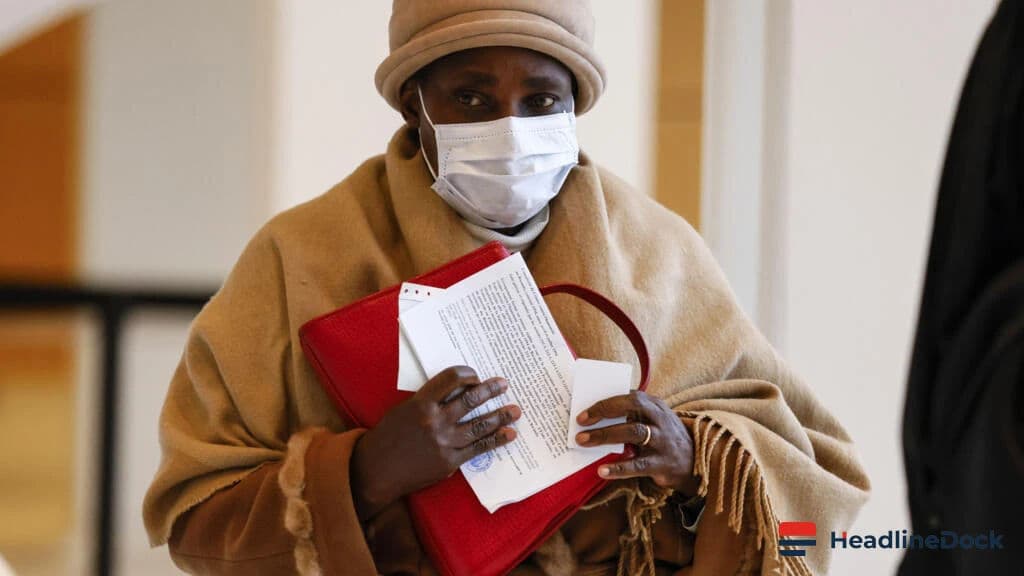
The legal future of Agathe Habyarimana, the widow of former Rwandan president Juvénal Habyarimana, has become a focal point in the enduring quest for accountability regarding the 1994 genocide against the Tutsi. Following a significant legal shift, the investigation into her alleged involvement in the genocide has been reopened, reigniting public and judicial scrutiny over a case that has spanned two decades.
On April 6, 1994, a missile attack destroyed the aircraft carrying Juvénal Habyarimana and the president of Burundi, Cyprien Ntaryamira. This event triggered the horrific genocide, resulting in the massacre of over one million people within three months. For years, Agathe Habyarimana, who has resided in France for an extended period, has faced accusations that her inner circle played a primary role in instigating the violence.
Legal Developments and the Quest for Accountability
In August 2025, French judges initially issued a non-suit (non-lieu) regarding the allegations against Agathe Habyarimana, citing insufficient evidence to justify a trial. However, this decision faced widespread criticism from survivors, various human rights groups, and the national anti-terrorist prosecutor. On May 6, 2026, the investigation chamber of the Paris Court of Appeal reversed this decision, ordering a resumption of the case concerning complicity in genocide and crimes against humanity. Although Agathe Habyarimana, now 83, has contested this ruling through an appeal in the Court of Cassation, the legal process remains active.
Central to this legal saga is the influence of the Akazu, an informal but powerful network often referred to as the "Madame's clan." This group, comprised of close political, military, and economic allies, is widely considered to have been instrumental in radicalizing the regime and orchestrating the massacres. Historical research, along with testimony from various judicial proceedings, has consistently highlighted how this network disseminated extremist ideology and facilitated the execution of the genocide.
The Challenges of Establishing Judicial Truth
Establishing individual criminal responsibility in the case of Agathe Habyarimana remains complex. The passage of time has led to the loss of potential witnesses and the fragmentation of memory, while the reliance on informal power structures—characterized by patronage and proximity rather than documented administrative orders—makes the collection of evidence particularly difficult. Despite these hurdles, a potential trial represents more than just a search for a verdict; it is viewed by many as a vital opportunity for public deliberation. A trial would allow for a rigorous confrontation between historical evidence, archival records, and survivor testimonies, further cementing the truth of the genocide within global memory and public awareness in France.