Retd High Court Judge Challenges Property Classification in Telangana High Court
Former Telangana High Court judge Justice Abhinand Kumar Shavili has challenged the classification of his 3.26-acre land in Shamshabad as prohibited. The petition contests the legality of the registration department's decision, citing long-standing ownership records and lack of due inquiry.
Highlights
- •Justice Abhinand Kumar Shavili (retd) has challenged the inclusion of his 3.26-acre plot in a prohibited properties list.
- •The disputed land is located in Shamshabad, Rangareddy district, and has been in the family's possession since the 1980s.
- •Petitioners claim the classification as prohibited land is arbitrary and contradicts official revenue records.
- •The Telangana High Court has directed the matter to be heard by an appropriate bench.
A former judge of the Telangana High Court, Justice Abhinand Kumar Shavili (retd), has initiated legal action to contest the status of his property. The legal challenge centers on a prohibited properties list maintained by the stamps and registration department, which currently includes 3.26 acres of land owned by the former judge and his brother, Ashok Kumar Shavili.
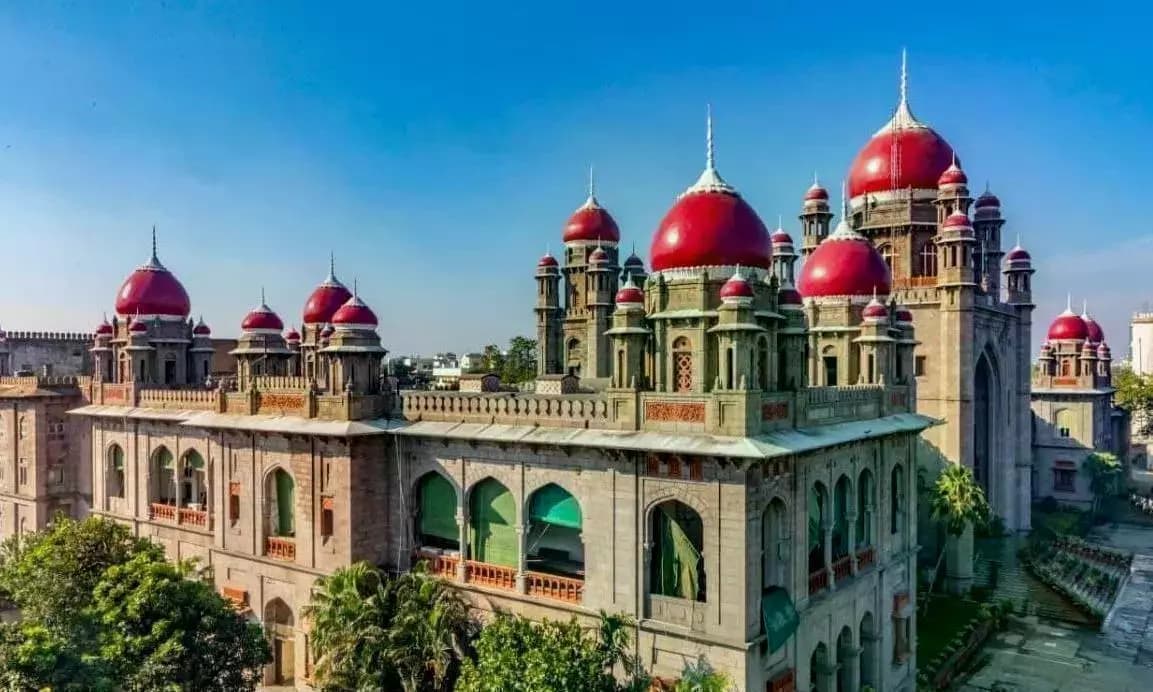
The case, which revolves around a plot of land located in Shamshabad within the Rangareddy district, was presented before Justice N.V. Shravan Kumar on Monday. Recognizing the nature of the dispute involves regulatory actions by the stamps and registration department, the court ordered that the proceedings be moved to the appropriate bench for further consideration on June 16.
Challenging the Prohibited Properties List Classification
The petitioners have formally questioned the legality of administrative actions initiated in November 2025. During that time, authorities labeled the 3.26 acres as prohibited land under the Telangana Registration Act. This classification has significant legal implications, as it prevents the registration and alienation of the property, effectively restricting the owners from exercising their rights over the land.
According to the petition submitted to the Telangana High Court, the land was originally acquired by Justice Shavili and his brother during the 1980s. Since that time, they have maintained uninterrupted possession. The petitioners further asserted that their ownership has been consistently acknowledged by revenue authorities, evidenced by the issuance of pattadar passbooks and formal entries documented in official revenue records over several decades.
The legal challenge argues that the decision to categorize the land as prohibited is both arbitrary and lacking a valid documentary foundation. The petitioners highlighted that historical revenue records explicitly list the names of their predecessors-in-title, which they argue directly contradicts the government's claim that the land was assigned. They contend that the revenue department failed to conduct a proper inquiry or provide a reasoned justification for this classification.
Describing the administrative action as a mechanical, non-speaking order, the petitioners argued that the authorities acted without proper application of mind and ignored available revenue documentation. Consequently, the former judge has requested judicial intervention to declare the action illegal and unconstitutional, while seeking a court directive to remove the land from the prohibited properties list, thereby restoring their full property rights.