President Trump Confirms Iran Has Agreed To Never Develop Nuclear Weapons
President Donald Trump has announced that Iran has committed to never developing nuclear weapons, while dismissing claims of a $300 million payment to Tehran as false. The agreement ties sanctions relief to rigorous nuclear inspections and regional security cooperation.

Highlights
- •President Trump confirms Iran has agreed to never develop a nuclear weapon.
- •The administration denied rumors of a USD 300 million payment to Tehran.
- •Sanctions relief is strictly tied to verifiable nuclear inspections and regional security compliance.
- •A formal agreement is expected to be signed in Geneva involving multiple international stakeholders.
United States President Donald Trump has publicly declared that Iran has entered into an agreement to permanently forgo the development of a nuclear weapon. This statement, issued via social media, aims to clarify the administration’s diplomatic stance while simultaneously refuting circulating claims that the U.S. government intended to provide USD 300 million to Tehran as part of the nascent peace framework.
Understanding the New US-Iran Peace Agreement
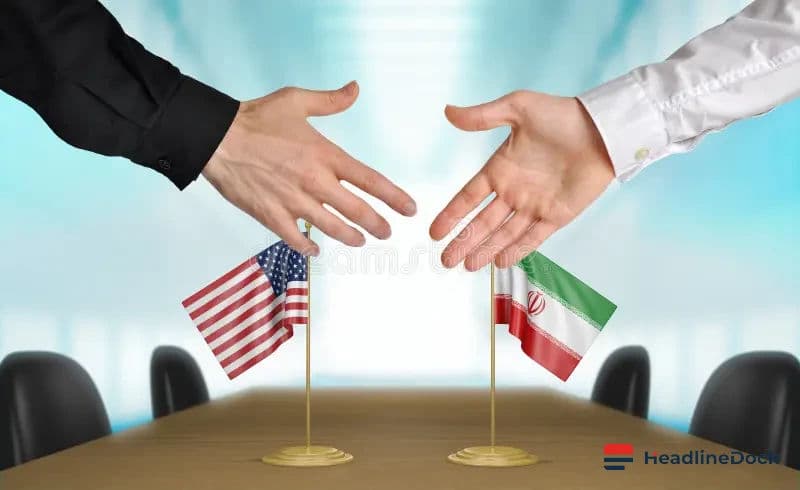
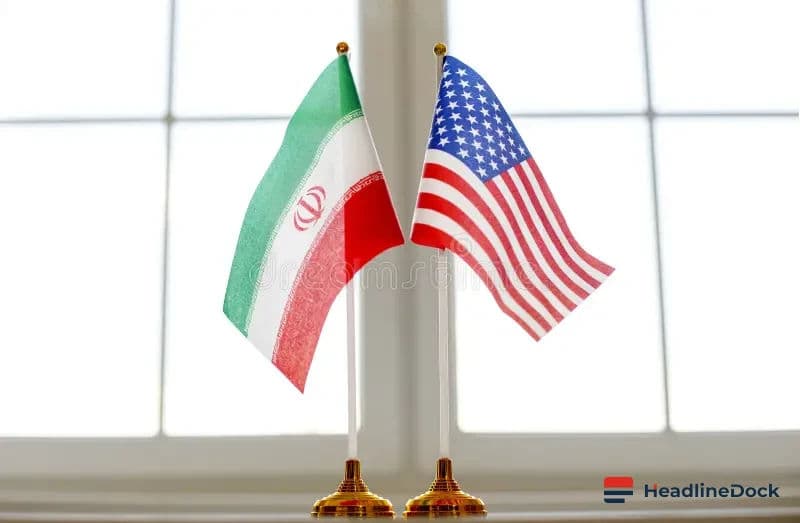
The announcement regarding a nuclear weapon-free Iran arrives during a period of intense focus on a new memorandum of understanding (MoU). This agreement is designed to establish a formal structure for bilateral engagement, explicitly conditioning the easing of economic sanctions on Tehran demonstrating full compliance with nuclear verification protocols and regional security mandates. Administration officials have characterized the accord as a performance-based model, where economic integration and sanctions relief remain directly tethered to verifiable cooperation on non-proliferation.
Vice President JD Vance publicly reinforced the President’s position, confirming that a central objective of these diplomatic efforts is to ensure that Iran never acquires the capacity to build a nuclear device. The administration maintains that any potential economic benefits for the Iranian government are strictly contingent upon the elimination of enriched uranium stockpiles and adherence to a rigorous, transparent inspection regime.
Global Reactions and Strategic Implications
The diplomatic progress has also drawn attention from key international allies. Israeli Prime Minister Benjamin Netanyahu reiterated his long-standing commitment to preventing Iranian nuclearization, describing it as his primary mission. He emphasized that regardless of the specifics within the new agreement, his administration would not tolerate any scenario where Iran manages to secure nuclear capabilities. This underscores the regional complexity surrounding the ongoing negotiations involving the United States, Iran, Switzerland, Pakistan, and Qatar.
As the international community awaits the formal signing ceremony scheduled in Geneva later this week, the United States administration continues to describe the accord as a significant document. Officials have indicated that the full text will be made accessible to the public following the conclusion of the event. The success of this initiative rests heavily on the balance between providing economic incentives and ensuring absolute transparency in Iran's nuclear activities. The evolving situation remains a critical focal point for regional stability in the Middle East and global non-proliferation efforts.