President Trump and the Evolving Debate Over Presidential Power and Congress
President Trump's recent comments regarding the Iran agreement have ignited a debate over presidential power and the role of Congress. The discussion centers on whether the executive branch respects the constitutional system of checks and balances or tends toward unilateral authority in governance.
Highlights
- •President Trump's comments on the Iran agreement underscore questions about the balance of power between the executive and legislative branches.
- •The U.S. Constitution mandates a system of separated powers, intended to prevent the concentration of absolute authority in a single office.
- •Critics argue that viewing Congress as an afterthought undermines the constitutional role of direct public representation and institutional accountability.
- •The debate highlights a long-standing tension between unilateral presidential action and the necessity of congressional oversight in foreign affairs.
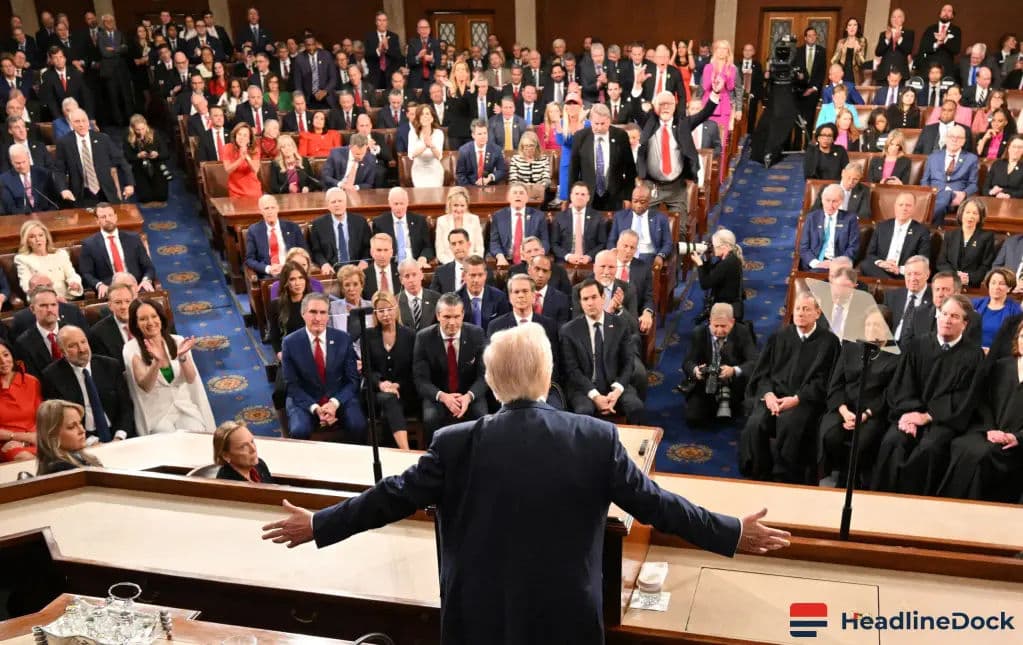
Recent remarks by President Donald Trump regarding a new international Iran agreement have sparked a broader discussion about presidential power and the constitutional role of Congress. When questioned about whether he intended to present the deal to the legislative branch for consideration, the president indicated that such a move had not been a primary part of his initial planning.
This admission has reignited debates concerning the boundaries of executive authority. In the American system of separated powers, Congress serves as a vital check, particularly on significant matters such as foreign policy and national security. While legal experts often debate the specific requirements for congressional approval regarding international pacts, the political implication is clear: the administration appeared to view the legislature more as an secondary consideration rather than an essential coequal partner.
Evaluating Presidential Power and Constitutional Balance
The observation of how President Donald Trump communicates his authority provides insight into his approach to governance. Analysts of media and political rhetoric note that his language frequently frames the legislature as an obstacle or a tool for rubber-stamping agendas, rather than an equal branch of government. This approach builds upon a history of modern presidents expanding their unilateral authority in areas like immigration, trade, and administrative directives.
Historically, the U.S. Constitution was designed to prevent any single office from holding absolute, top-down control. By distributing authority across different institutions, the founders sought to ensure checks and balances. However, the rise of the rhetorical presidency—where leaders bypass institutional norms to appeal directly to the public—has transformed how presidential power is wielded. While earlier leaders like Abraham Lincoln or Franklin D. Roosevelt actively engaged with legislators to secure support for major initiatives, current rhetoric suggests a move toward a more personalized style of decision-making.
When leadership is presented as a matter of individual superiority—where the president acts first and invites others to catch up—it challenges the foundational principles of a representative democracy. Because members of Congress are elected directly by citizens, they serve as the primary mechanism for public accountability in the national government. Treating this branch as optional risks sidelining the role of constituents and undermining the structural safeguards that prevent public authority from becoming purely personal influence.
Ultimately, the ongoing tension regarding the Iran agreement highlights a fundamental question about how American democracy functions. The debate is not merely about foreign policy strategy, but about whether institutional oversight remains a legitimate and necessary component of national decision-making. As the country moves forward, the relationship between the executive and legislative branches continues to define the health and balance of the constitutional system.