BC Reservation Panel Conducts Public Consultation in Guntur on Local Representation
The Dedicated Commission on Backward Classes, led by Rajeev Ranjan Mishra, held a public hearing in Guntur to gather feedback on local body reservation policies. The panel aims to assess current systems to ensure better political and social empowerment for BC communities.
Highlights
- •The BC reservation commission held a public hearing in Guntur to collect stakeholder feedback.
- •Chairman Rajeev Ranjan Mishra led discussions on reservation allocation and community empowerment.
- •Various political parties and BC associations submitted formal recommendations for policy improvements.
- •The commission will incorporate these findings into a final report for the government.
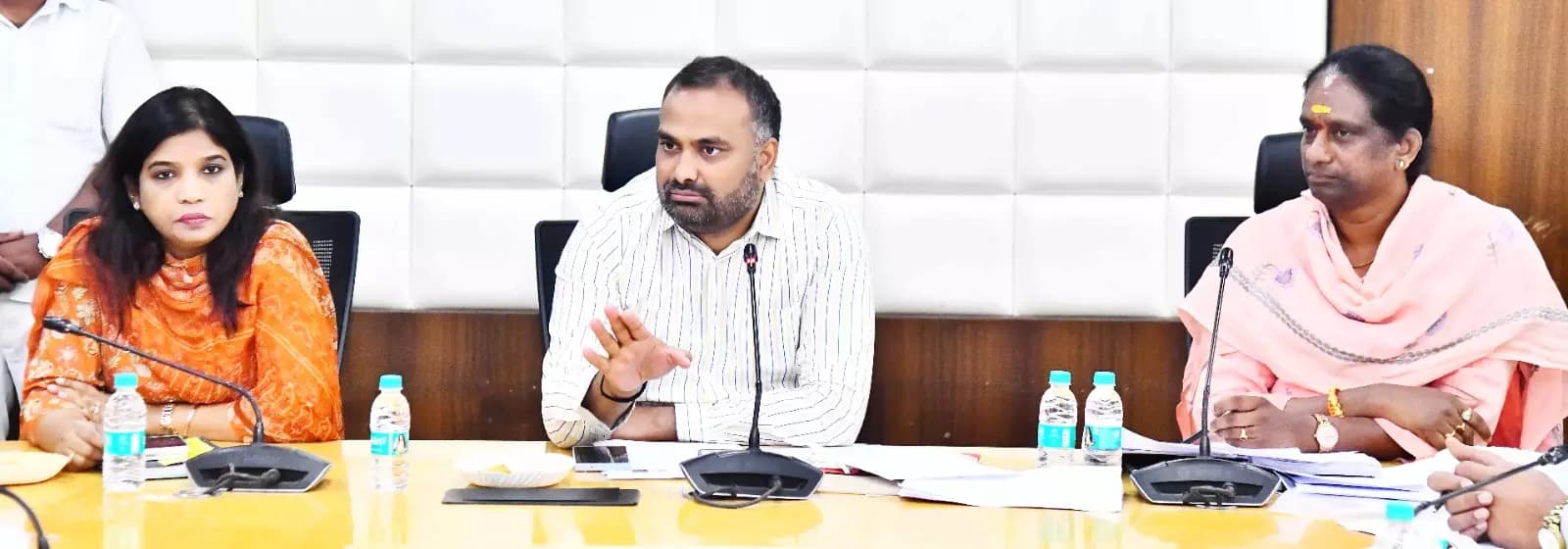
The Dedicated Commission on Backward Classes (BC) reservations recently held a significant public hearing in Guntur to gather vital feedback regarding reservation policies in local self-governing institutions. Rajeev Ranjan Mishra, the chairman of the commission, personally presided over the session at S.R. Sankaran Hall, where he engaged with a diverse group of stakeholders, including political representatives, local residents, and leaders of various BC organizations.
This initiative is part of an extensive, ongoing study aimed at examining the practical implementation of reservation quotas for Backward Classes within local governing bodies. The discussions throughout the day centered on critical issues such as the equitable allocation of reserved seats, as well as the broader social, economic, and political empowerment of these communities. Participants were eager to discuss necessary measures to further strengthen the representation of BC communities in grassroots governance.
Evaluating BC Reservation Policies in Guntur
Addressing the assembled participants, Rajeev Ranjan Mishra emphasized the commission’s steadfast commitment to performing a thorough and comprehensive assessment of the current reservation framework. He explicitly assured all stakeholders that every memorandum, representation, and suggestion submitted during the event will be meticulously analyzed and considered before the commission finalizes its detailed report for formal submission to the government.
Members of various political parties and advocacy groups seized the opportunity to present formal memoranda, calling for policies that better align with present-day demographic realities and urgent social requirements. The objective, as highlighted by many, is to ensure that the political representation of Backward Classes remains robust and truly reflective of the population's needs.
The event saw a notable presence from senior government officials, which underscored the importance of this consultation process. Key attendees included Joint Collector Ashutosh Srivastava, DRO Khajavali, RDO Srinivasa Rao, BC Welfare Officer Mayuri, and ZP CEO Jyoti Basu. Their participation, alongside municipal commissioners, local body leaders, and members of the public, reflected the widespread interest in the potential policy shifts that could arise from the commission's findings.
As the commission moves forward with its review, the feedback gathered in Guntur is expected to play a crucial role in shaping recommendations that aim to refine local governance. By prioritizing inclusive dialogue, the commission seeks to build a framework that addresses historical imbalances while fostering stronger political participation for Backward Classes across the state.