US Consulate Supports Research Tie-up for Visakhapatnam Institute in Advanced Construction Tech
The US Consulate in Hyderabad is facilitating research collaborations between the Visakhapatnam-based INSWAREB and US institutions. The partnership aims to advance innovative cementitious materials and concrete technologies, particularly for nuclear infrastructure safety and sustainable, waste-based construction solutions.
Highlights
- •The US Consulate in Hyderabad is supporting INSWAREB in forging research ties with American universities.
- •The collaboration focuses on developing irradiated cementitious materials to protect nuclear infrastructure from radiation.
- •Research initiatives utilize agricultural by-products like rice husk ash to enhance concrete strength and sustainability.
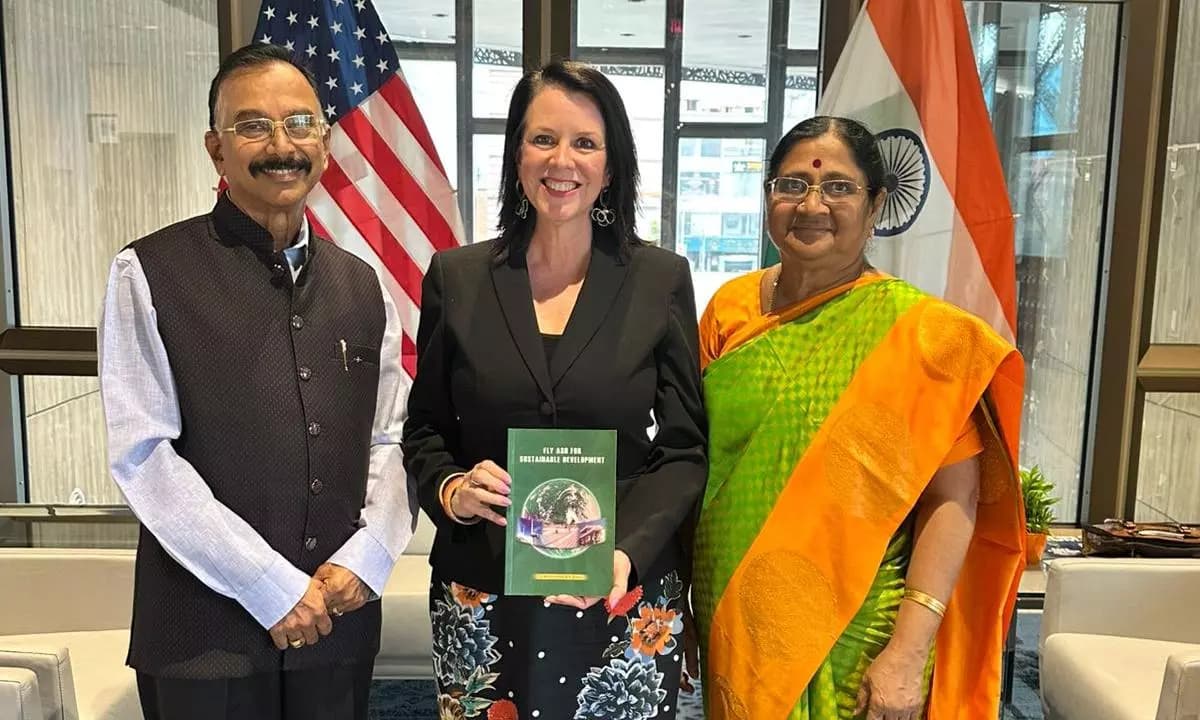
- •US Consul General Laura Williams encouraged the institute to formalize proposals for bilateral scientific partnerships.
The US Consulate in Hyderabad has formally pledged its support to the Visakhapatnam-based Institute for Solid Waste Research and Ecological Balance (INSWAREB). This initiative aims to foster robust research collaborations between the Indian institute and various academic and scientific organizations across the United States. The move is designed to accelerate innovation in sustainable construction and waste management, focusing specifically on scientific collaboration.
Advancing Infrastructure Research through Collaboration
The partnership centers on groundbreaking proposals regarding advanced cementitious materials and concrete technologies. Experts at INSWAREB, led by founders Dr N. Bhanumathidas and N. Kalidas, are addressing significant global challenges, particularly the degradation of concrete within nuclear infrastructure due to prolonged radiation exposure. Their research involves developing irradiated cementitious composite materials utilizing agricultural and industrial by-products like fly ash and rice husk ash.
This innovative approach promises to bolster material strength while promoting environmental sustainability. By repurposing waste, the technology supports rural economic growth linked to rice husk processing. Furthermore, the institute has proposed these irradiated materials as potential alternatives to silica fume, which would improve overall resource efficiency in construction projects.
Strategic Technology and Scientific Partnerships
To facilitate these ambitious goals, INSWAREB has identified the advanced test reactor at the Idaho National Laboratory for critical irradiation studies. The institute is actively exploring academic collaborations to secure access to the necessary specialized research infrastructure. Additionally, the organization highlighted its nano concrete (NAC) technology, which was introduced in 2010. This material, formulated without the use of coarse aggregates, shows immense promise for specialized infrastructure applications, including advanced radiation-shielding structures.
This development follows a high-profile visit to Visakhapatnam on April 28 by US Consul General Laura Williams, during which she attended the groundbreaking ceremony for a new Google Data Centre. During this visit, she engaged with the founders of INSWAREB and encouraged them to formally present their proposals to unlock potential Indo-US scientific collaboration. The ongoing discussions underscore the importance of bilateral frameworks, such as the Indo-US Science and Technology Forum, in bridging the gap between innovative research and real-world technology development. By fostering such international ties, the project aims to create a lasting impact on global construction standards and nuclear safety protocols.