Trinamul Congress Faces Collapse: High Command Accused of Corruption and Hubris
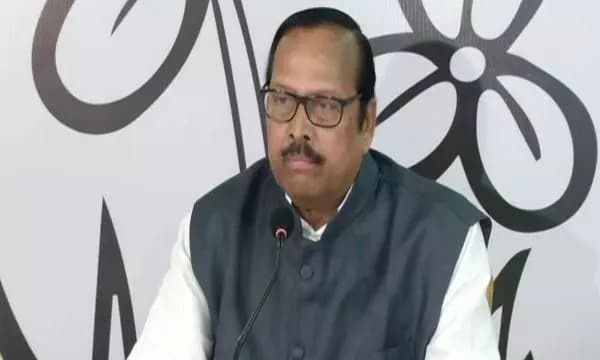
Senior Trinamul Congress leader Rajya Sabha MP Sukhendu Sekhar Roy asserts a severe collapse of the party due to internal corruption and mismanagement. Accusing I-PAC of becoming more influential than organizational committees, he predicts disintegration within two years.
Highlights
- •TMC High Command accused of terror and corruption
- •I-PAC cited as policy-making authority with outsourced decision-making power
- •Systematic dismantling of internal democracy by top leaders
- •Expected imminent collapse of the party within two years
New Delhi - In the wake of a devastating electoral defeat, one of Trinamul Congress' (TMC) most senior leaders has launched a harsh critique against party leadership. Rajya Sabha MP Sukhendu Sekhar Roy, speaking candidly to an unnamed newspaper source, accused the TMC high command of presiding over a regime steeped in 'terror and corruption', predicting an imminent disintegration of the party within two years.
Accusations against TMC High Command
Using coded references from ancient Indian epics, Roy likened the TMC leader at the apex to Duryodhana, stating that 'ambition and lust for power' orchestrated their downfall. He also accused I-PAC, the party's election strategizing outfit, of becoming a policy-making authority, reducing TMC organizational committees to mere formalities.
The senior parliamentarian claimed that within a few years, I-PAC had amassed enormous wealth through its outsourced decision-making power. Roy refused to believe the top leadership was unaware of this rampant misconduct. His claims come after facing intimidation and harassment following criticism against the police's handling of the R.G. Kar rape and murder case.
The TMC leader emphasized that 'power went to heads' of top leaders, leading to systematic dismantling of internal democracy, crushing dissent through a network of strongmen and lumpen elements. There was 'zero tolerance' for criticism, according to Roy, making the party 'politically untrustworthy'. He highlighted instances where the TMC abandoned strategic allies multiple times under his tenure as head of political affairs.
Commenting on West Bengal's current state, Roy argued that power transformed former street-fighters into established rulers, fostering an atmosphere of 'arrogance', 'entitlement', and unchecked authority. He suggested a growing public sentiment against the TMC's leadership, culminating in a mass revolt post the R.G. Kar incident.
According to Roy, the loss at the ballot was anticipated but not the extent of it - an opportunity that had long been brewing for the opposition parties, such as the Congress and Left Front, who will now aggressively contest the TMC's dominance in West Bengal's battlefield.