The Sovereignty Paradox: Why Europe’s Defence Industry Struggles With Coopetition
The abandonment of the FCAS fighter jet project underscores a critical governance gap in the European defence industry. Experts argue that without neutral coordination and effective structures to manage competitive cooperation, Europe will struggle to achieve true strategic autonomy in critical military technologies.
Highlights
- •The €100-billion FCAS program has collapsed due to unresolved tensions between French and German industrial interests.
- •German firms have launched 'Team Gen 6' to develop a new fighter jet, signaling a shift toward national-led initiatives.
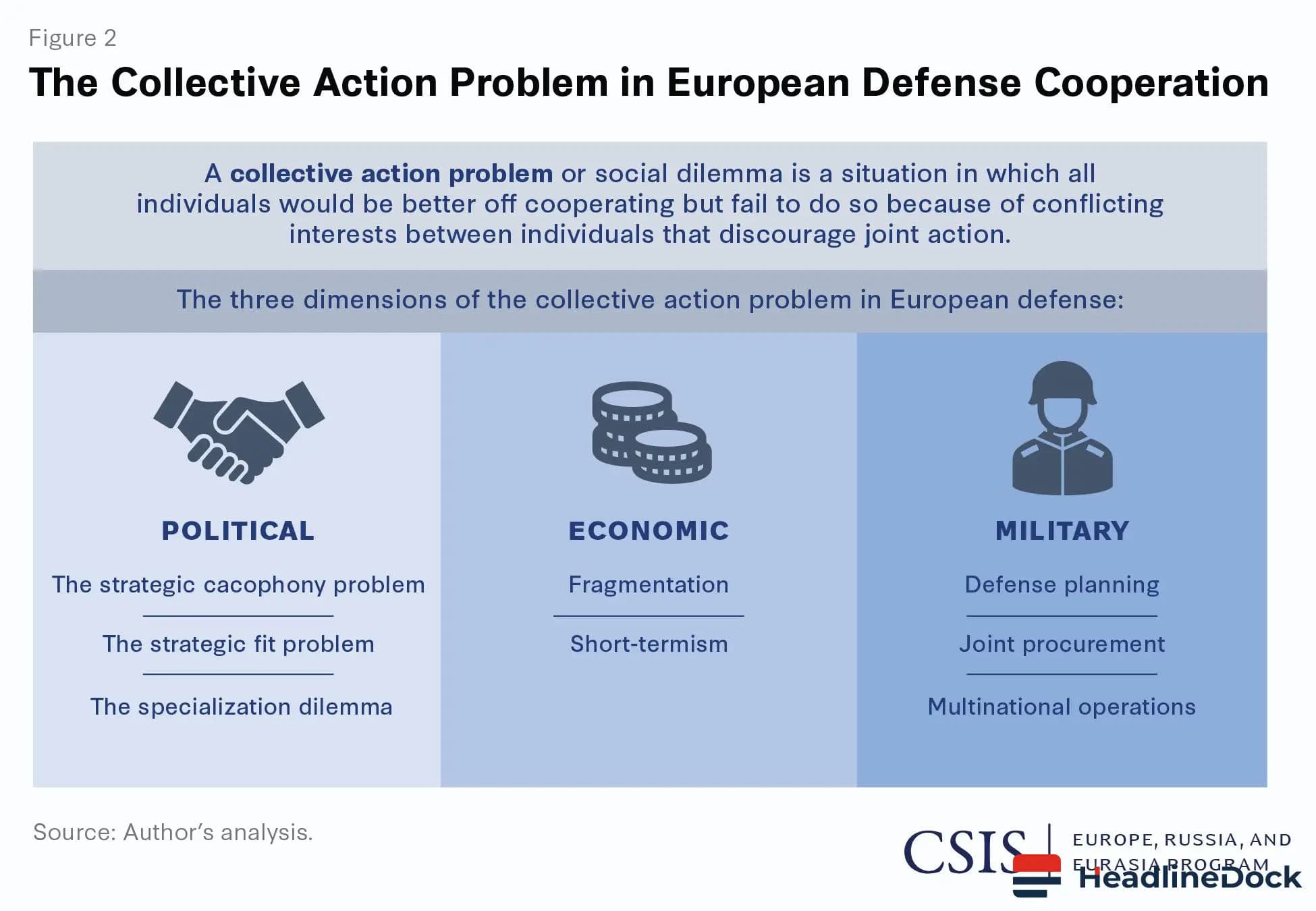
- •Coopetition in the European defence industry suffers from a lack of neutral governance structures compared to space projects.
- •The failure highlights the urgent need for robust institutional frameworks to manage cross-border knowledge sharing and strategic goals.
The collapse of Europe’s ambitious Future Combat Air System (FCAS) marks a significant turning point for the continent's European defence industry, highlighting a critical tension between national interests and collective sovereignty. The massive €100-billion initiative, intended to develop a next-generation fighter jet, officially dissolved after France and Germany abandoned the program, revealing the deep structural fragility inherent in cross-border military partnerships.
Following the breakdown, eight major German aerospace and defence firms announced the formation of “Team Gen 6” on June 11 at the ILA Berlin Air Show. This new initiative aims to pursue a sixth-generation fighter jet without French involvement, with Spanish industry also aligning itself with the project. This shift underscores a broader challenge: how European states attempt to maintain sovereignty while simultaneously engaging in complex "coopetition"—a strategy where competitors must cooperate to achieve technological goals they cannot reach individually.
The Challenges of European Defence Sovereignty
The core issue facing the European defence industry is the necessity of pooling resources. Advanced frontier technologies, including next-generation combat aircraft, sophisticated semiconductors, and robust AI infrastructure, require levels of investment that no single firm or individual nation can sustain alone. While this model worked effectively for the European satellite navigation system Galileo—largely due to the neutral coordination provided by the European Space Agency (ESA)—the defence sector faces far more intense hurdles. In the case of FCAS, the primary industrial players, Dassault and Airbus Defence and Space, represent conflicting national agendas, making true collaboration difficult.
The inherent paradox is that while partners must share knowledge to drive progress, they are also motivated to protect their own commercial and strategic advantages. This creates a risk of "asymmetric learning," where one participant benefits more from the shared expertise than another. When national sovereignty is the ultimate stake, this dynamic often leads to defensive posturing rather than cohesive industrial development. For instance, Spain, which joined FCAS in 2019, eventually pivoted toward independent alternatives after the core relationship between France and Germany stalled.
Ultimately, the failure of FCAS suggests that European strategic autonomy remains more of an ambition than a fully realized framework. Without a credible governance architecture—similar to the role ESA played for Galileo—and a willingness to delegate certain oversight functions to a neutral coordinating entity, high-stakes collaborative projects are likely to remain susceptible to collapse. As the security environment evolves, the ability to manage complex, adversarial, yet essential partnerships will be a defining test for Europe’s industrial and military future.