CISF Plans Major Facial Recognition Data Fusion Centre Across Airports
The Central Industrial Security Force (CISF) is planning a data fusion centre in New Delhi to integrate facial recognition data across major airports. This initiative, currently under review by the Home Ministry, aims to bolster security through advanced technological integration.
Highlights
- •CISF plans to establish a data fusion centre in Delhi for centralized facial recognition data.
- •The project aims to integrate 1.5 lakh CCTV cameras across various installations under CISF cover.
- •A hybrid security model is being implemented, utilizing trained Private Security Assistants for non-core duties.
- •A new nine-storey CISF headquarters is under construction in Delhi, slated for completion by May 2028.
The Central Industrial Security Force (CISF) is actively advancing a strategic initiative to centralize monitoring capabilities across the country's aviation hubs. The organization is currently planning the establishment of a specialized data fusion centre located in New Delhi, designed to integrate facial recognition data from major airports nationwide. This ambitious project, which aims to enhance security oversight, is presently under review by the Ministry of Home Affairs.
Enhancing Security Through Advanced Technology
According to CISF Director General Praveer Ranjan, the objective is to create a unified technical framework that streamlines surveillance. Beyond the implementation of facial recognition, the force intends to integrate approximately 150,000 CCTV cameras currently installed at various units operating under its security umbrella. This consolidation is expected to significantly bolster the force’s ability to monitor critical installations, which include aerospace facilities, nuclear plants, and power stations, alongside 73 civil airports.
The initiative is part of a broader push to modernize security infrastructure. In addition to the proposed data fusion centre, the CISF is focused on deploying integrated command and control centers at vital sites. This technological upgrade complements the agency’s existing mandate of protecting 359 units across the nation.
Expanding Capacity and Hybrid Security Models
The CISF is also expanding its operational reach to include maritime security. Having been mandated to provide protection to major and non-major seaports, the force has submitted a proposal to raise three additional battalions to support its current deployment at 12 major seaports. These efforts are part of a comprehensive strategy to address the complexities of securing diverse industrial and transport environments.
To optimize resource management, the agency has developed a hybrid security model. This approach delegates non-core security duties to trained Private Security Assistants (PSA), allowing CISF personnel to focus on core security functions. To date, about 2,500 PSAs have been trained alongside various state police forces to execute these specialized duties effectively.
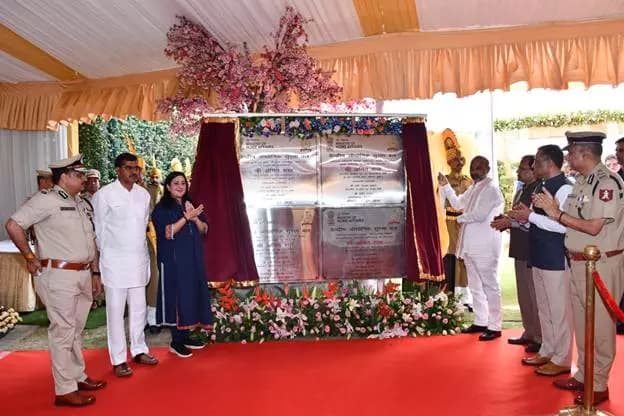
To support its growing operations, the CISF has commenced work on a new headquarters building. The facility, a nine-storey structure located on a 0.66-acre plot in the CGO Complex on Lodhi Road, is expected to be completed by May 2028. This investment, valued at Rs 75.78 crore, underscores the agency’s long-term commitment to maintaining robust national security infrastructure. Since its inception in 1969, the force has grown into an organization comprising approximately 200,000 personnel dedicated to protecting the nation's most vital assets.