How the Central Arctic Ocean Fisheries Treaty Unites Global Powers After Five Years
The Central Arctic Ocean Fisheries Agreement has successfully maintained cooperation between the US, Russia, China, and other nations for five years. By prioritizing scientific research and sustainability, the treaty serves as a critical model for diplomacy amidst ongoing regional geopolitical challenges.
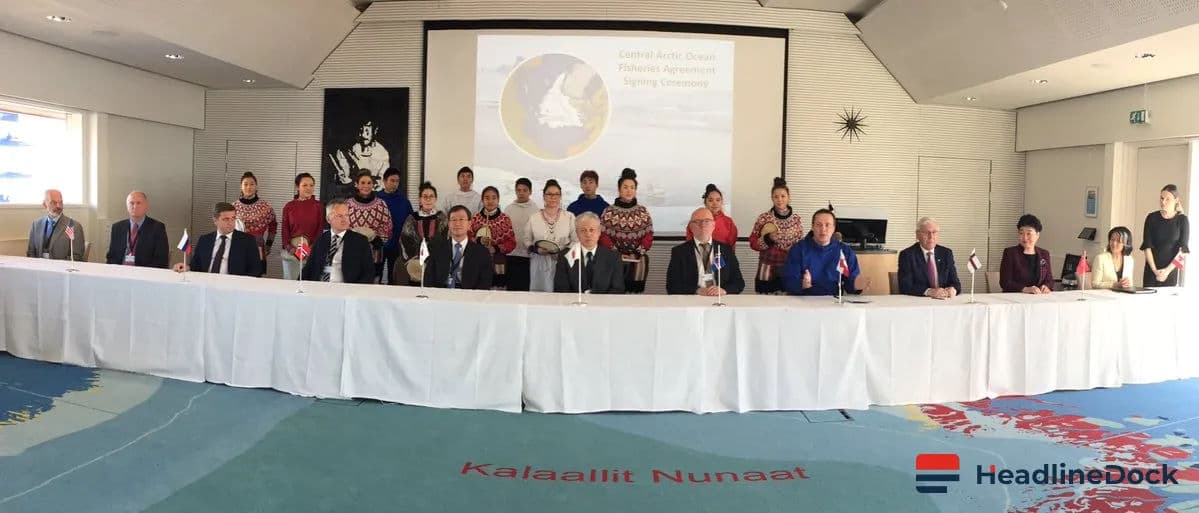
Highlights
- •The Central Arctic Ocean Fisheries Agreement prohibits commercial fishing in the high seas to allow for scientific research.
- •Key world powers including the US, Russia, and China continue to collaborate on the treaty despite global geopolitical tensions.
- •The agreement utilizes the precautionary principle to protect the rapidly warming Arctic marine ecosystem.
- •The treaty is a rare example of successful international collaboration that incorporates Indigenous knowledge and non-governmental expertise.
Amidst growing geopolitical tensions and climate concerns, the Central Arctic Ocean Fisheries Agreement stands as a rare diplomatic achievement. For five years, this landmark treaty has successfully maintained cooperation between major global powers, including the United States, Russia, and China. By implementing a moratorium on commercial fishing in the high seas of the Central Arctic Ocean, the agreement prioritizes long-term ecological stability over immediate exploitation.
The Arctic region is currently facing extreme environmental pressure, with temperatures rising three to four times faster than the global average. As melting sea ice opens new maritime corridors, the threat of unregulated commercial activities grows. The Central Arctic Ocean Fisheries Agreement proactively addresses these risks by applying the precautionary principle, ensuring that no industrial fishing begins until sufficient scientific data is available to guarantee sustainability.
A Model for Diplomatic Collaboration
The success of the Central Arctic Ocean Fisheries Agreement serves as a potential blueprint for future international diplomacy. Despite the significant deterioration of relations between Russia and many other nations following the 2022 invasion of Ukraine, this treaty has continued to function. All parties, including Russia, continue to participate in annual meetings and collaborative research programs to monitor the fragile marine ecosystem.
This initiative traces its roots to a 2008 bipartisan effort in the United States, later championed under the administrations of both Barack Obama and Donald Trump. The agreement is notably inclusive, requiring the active participation of Arctic Indigenous peoples and integrating traditional knowledge alongside modern scientific research. Such involvement ensures that management strategies reflect the needs and wisdom of those who have lived in the region for generations.
Furthermore, the treaty offers international legitimacy to non-Arctic states like China, Japan, and South Korea by positioning them as responsible stakeholders in polar affairs. By fostering a shared commitment to environmental protection, the agreement keeps communication channels open even when broader geopolitical relations are strained. This demonstrates that nations can successfully set aside intense disagreements to protect shared resources, mirroring historical efforts like the Antarctic Treaty.
As the international community faces mounting challenges—from increased commercial shipping to the potential for deep-sea mining—the principles behind this fisheries pact are increasingly relevant. Whether it can inspire broader stability in the Arctic remains to be seen, but its performance thus far provides a hopeful example of how science-led diplomacy can transcend political borders.