How Female Baboons Strengthen Family Bonds to Boost Survival and Longevity
Research on baboons reveals that female kinship is vital for survival. By maintaining stable social bonds with relatives, female baboons effectively manage stress, improve their physical health, and significantly increase their lifespan, providing evolutionary insights into the importance of social connections across species.
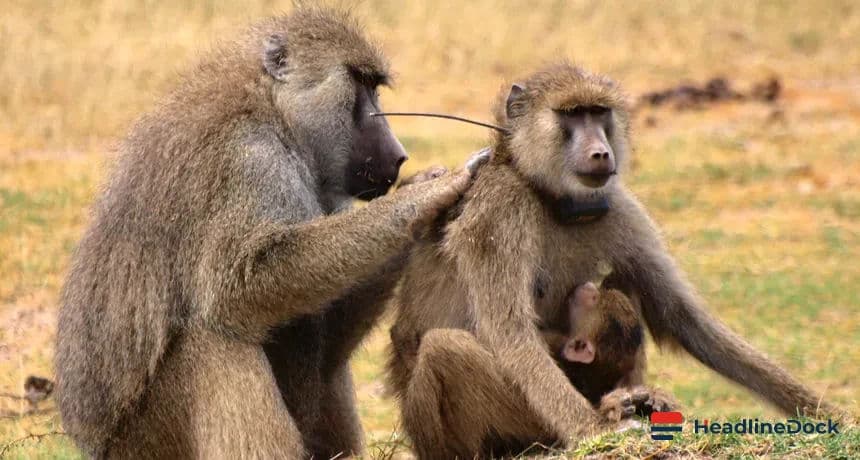
Highlights
- •Female baboons stay in their birth groups, forming strong, multi-generational matrilines.
- •Social grooming among kin is an altruistic behavior that improves physical health and survival.
- •Long-term studies show that well-connected females live significantly longer than isolated ones.
- •Strong social bonds act as a buffer against stress by mitigating the negative effects of glucocorticoids.
Baboons are among the most widespread primate groups found across the African continent, ranging through sub-Saharan regions and into the Arabian Peninsula. Their remarkable ability to adapt to diverse environments—from arid deserts and open grasslands to dense tropical forests—highlights their ecological flexibility. New research into the lives of female baboons underscores how maintaining strong family bonds is crucial for their survival, health, and overall success.
Evolutionary anthropologists have dedicated decades to studying the complex behaviors of chacma baboons, olive baboons, and yellow baboons. In these social structures, males typically migrate to different groups upon reaching maturity to avoid inbreeding. Conversely, females remain within their birth groups, forming intricate matrilines—groups of related individuals connected through maternal ancestry. These foundational kinship ties significantly influence their daily existence and long-term reproductive outcomes.
The Role of Maternal Kinship and Social Cooperation
The social lives of female baboons are deeply structured by maternal relationships. Mothers provide essential care, including nursing and protecting their offspring from external threats. Even after juveniles are weaned, they maintain tight-knit bonds with their mothers, often seeking comfort and safety during conflicts. Mothers frequently intervene to support their daughters, assisting them in establishing dominance hierarchies, which allows these young females to secure favorable social positions.
Cooperation within these groups, particularly through social grooming, serves as a vital survival mechanism. By removing parasites, females provide tangible health benefits to their relatives. Although grooming is time-intensive and may limit foraging opportunities, the evolutionary benefits of kin selection—where individuals prioritize the survival of genetic relatives—explain the development of these altruistic behaviors. These strong, stable social connections are not merely behavioral habits; they are essential for long-term health.
Impact of Social Bonds on Stress and Longevity
Beyond immediate cooperation, stable social bonds play a critical role in stress management. Chronic exposure to stress hormones, such as glucocorticoids, can be detrimental to the health and lifespan of primates. Scientific data collected over many years from sites like the Amboseli Basin and the Moremi Reserve reveal a clear correlation between social integration and survival.
Females who maintain strong, consistent social connections with their mothers, sisters, and daughters exhibit significantly higher longevity compared to those who are socially isolated. The ability to effectively cope with stressful events is directly linked to the quality of these support networks. As researchers continue to explore the biological mechanisms connecting social interaction to physical health, the findings emphasize the profound importance of community ties. Ultimately, these studies of non-human primates offer valuable insights into the evolutionary history of social behaviors and their lasting impact on survival across species, including our own human origins.