Analyzing the South Africa Jobs Crisis: What a Decade of Data Reveals
A decade of administrative tax data reveals a persistent jobs crisis in South Africa, characterized by sluggish formal sector growth and rising unemployment. With youth particularly impacted, experts are calling for a strategic shift toward supporting the informal economy and exploring new fiscal policy initiatives.
Highlights
- •South Africa created only about 130,000 net new full-time equivalent jobs annually over the last decade.
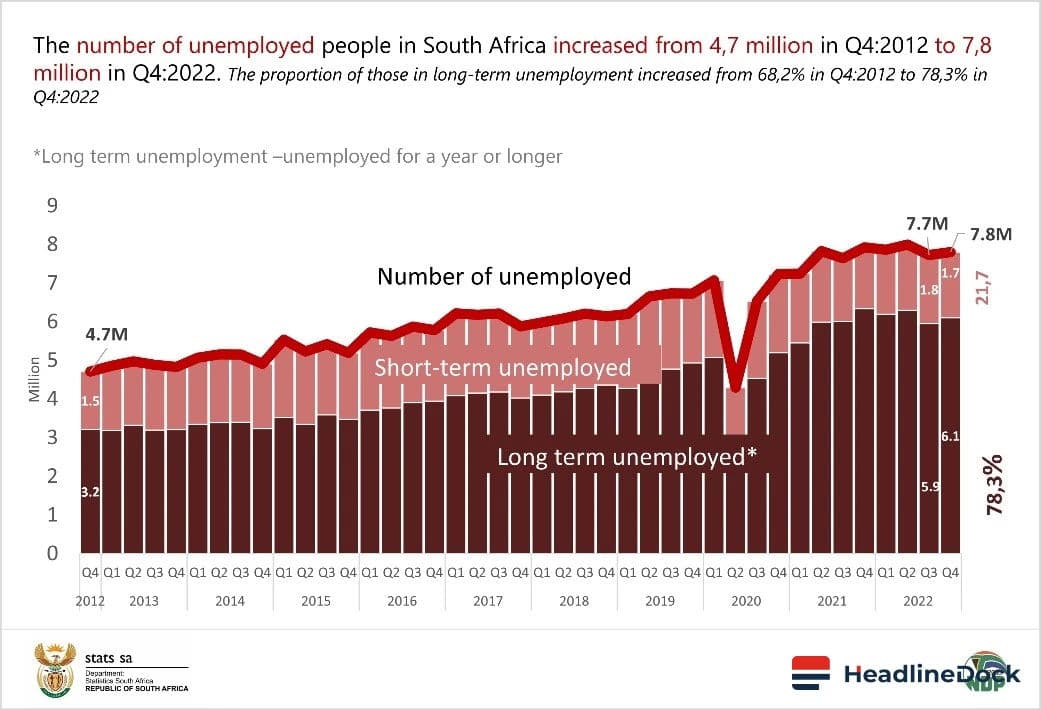
- •Unemployment figures surged from 8 million to almost 12 million job seekers between 2014 and 2024.
- •Younger workers aged 15-35 suffered the steepest employment declines following the COVID-19 pandemic.
- •Potential solutions include bolstering the informal economy and exploring large-scale infrastructure or income grant programs.
The persistent South Africa jobs crisis has reached a critical juncture, raising uncomfortable questions about whether the formal economy possesses the capacity to provide necessary employment. Recent analysis of administrative tax data covering the decade between 2013/14 and 2023/24 paints a concerning picture of stagnating formal sector growth and deepening economic challenges for the nation's youth.
Experts utilizing the Spatial Tax Panel—a comprehensive database compiled from employer-employee tax filings—have observed that the country created only about 130,000 net new full-time equivalent work opportunities annually during this ten-year period. This equates to a growth rate of less than 1% per annum, which is fundamentally insufficient to keep pace with the nation’s expanding population. Official data from the Quarterly Labour Force Survey reinforces this assessment, revealing that the number of unemployed job seekers grew from approximately 8 million to nearly 12 million between 2014 and 2024.
The Growing Unemployment Gap for Young Workers
The impact of this South Africa jobs crisis is not felt equally across all demographics. New data indicates that younger job seekers are experiencing significantly worse outcomes than their older counterparts. A comparative look at employment shifts across age cohorts in metropolitan municipalities shows that while workers over the age of 35 demonstrated resilience following the COVID-19 pandemic, younger groups faced severe setbacks.
Statistics show that the 15-25 age cohort experienced a 5% contraction in employment, while those aged 25-35 saw a 15% decline. These groups have struggled to recover, with job numbers plateauing at lower levels than pre-pandemic benchmarks. This indicates a structural shift where formal job creation is increasingly moving away from the younger generation.
Evaluating Potential Solutions and Economic Policies
Given the limitations of standard economic tools in addressing a problem of this magnitude, the debate is shifting toward alternative strategies. While conventional economic theory often focuses on price incentives and market adjustments, the current South Africa jobs crisis appears to require more transformative interventions. The efficacy of measures like minimum wage laws and employment tax incentives has been mixed, suggesting that minor adjustments may not suffice when the market struggle to clear surplus labour.
Policy discussions are now increasingly considering the role of the informal economy, which, according to the Quarterly Labour Force Survey, already accounts for more workers than the formal manufacturing sector. Supporters argue that expanding support for small and informal enterprises could be better aligned with the needs of marginalised communities. Other proposed options include the implementation of a basic income grant or large-scale infrastructure-led stimulus programs. Ultimately, experts suggest that a combination of these approaches may be necessary to stimulate meaningful job growth, though the primary challenge remains the significant fiscal cost and the need to maintain public financial stability.