Unsold Homes Rise Across India as Housing Supply Outpaces Demand
Unsold housing inventory in India has surged to an 18-month supply as supply growth continues to outpace demand. While total sales volume has decreased, property values have seen an increase, reflecting a complex market shift across various income segments, particularly in affordable and mid-income categories.
Highlights
- •Unsold housing inventory in India has reached approximately 18 months of supply as of Q1 2026.
- •Residential sales volumes declined to 4 lakh units in 2025, down from a peak of 4.8 lakh units in 2023.
- •A significant value-volume dichotomy exists, with total residential property value rising despite a drop in total units sold.
- •Affordable and mid-income housing segments experienced the steepest declines, particularly in Hyderabad and the NCR.
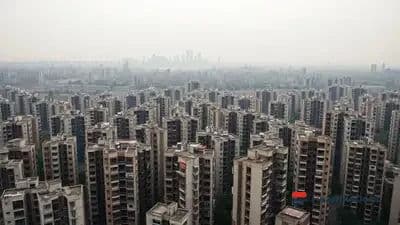
The latest real estate data indicates that unsold homes across India are accumulating at an accelerated rate. As of the first quarter of the 2026 calendar year, the inventory of unsold housing units has climbed to approximately 18 months of sales. This metric, which measures the time required to clear available stock at the current velocity of transactions, highlights a growing imbalance between supply and demand within the national residential market.
Experts attribute the surplus of unsold homes to sustained high levels of new project launches. Developers have been encouraged to initiate projects due to a combination of accessible funding, capital-light land acquisition models, and lingering optimism from earlier market growth cycles. Consequently, the inventory backlog has risen from 14 months in 2024 to 18 months by Q1 2026.
Market Dynamics and Volume-Value Dichotomy
While housing sales have retreated from the record-breaking 4.8 lakh units observed in 2023 to nearly 4 lakh units by 2025—representing a negative compound annual growth rate of roughly 9 percent—there is a notable disparity in market performance. Despite a contraction in the total volume of sales, the total residential value climbed from 4,870 billion rupees to 6,006 billion rupees during the same period. This indicates a clear dichotomy between volume and value in the current economic landscape.
The cooling demand is primarily driven by affordability challenges, high-base effects from previous years, fluctuations in the IT sector, and reduced purchasing power following volatility in domestic stock market indices. Analysts emphasize that this trend points more toward a necessary volume correction rather than any fundamental structural weakness within the housing sector.
Performance Across Housing Segments
Detailed analysis shows that stress is permeating different segments of the market. The affordable and lower mid-income housing category, defined by prices below 80 lakh rupees, experienced the earliest pressure. Pan-India volume for this segment saw a sharp decline in 2025, with major urban centers like Hyderabad and the NCR region recording the most significant drops, falling by approximately 57 percent and 34 percent, respectively.
Mid-income housing units, priced between 80 lakh and 1.5 crore rupees, mirrored this downward trend. After strong growth in 2023, sales in this category contracted by nearly 8 percent in 2025. Conversely, the premium housing market—properties exceeding 1.5 crore rupees—has shown greater resilience. While growth in this high-end segment has moderated to around 6 percent, it remains the most stable part of the market, though key regions such as MMR have seen premium sales volume decline by approximately 15 percent over the last two years.