The American Women Who Cared for French Orphans During World War I
During the First World War, thousands of American women provided critical humanitarian aid to France, including supporting war orphans. This transnational effort, led by philanthropists, played a vital role in civilian relief and the post-war reconstruction of devastated French communities.
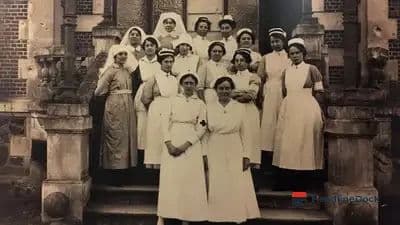
During the tumultuous years of the First World War, a significant yet frequently overlooked chapter of transatlantic history unfolded. While the United States maintained a stance of official neutrality between 1914 and 1917, thousands of American women bypassed governmental policy to provide essential aid to France. These individuals, often hailing from affluent backgrounds, crossed the Atlantic to care for war-torn communities, support medical teams, and serve as maternal figures to thousands of orphaned children.
The Humanitarian Legacy of American Women in WWI
The dedication of these American women was driven by a sense of duty, often framed by the historical memory of La Fayette, the iconic French figure of the American Revolution. By 1918, their involvement had expanded into critical roles, including operating telephone lines for military communications. Beyond direct war efforts, their humanitarian impact was profound. They established "colonies" to shelter displaced children, providing nourishment, education, and stability when the French state was overwhelmed by the conflict.
Philanthropists like Alma A. Clarke and Erica Thorp de Berry raised substantial funds in the United States to sustain these initiatives. Their work went beyond mere material support; they actively integrated American cultural education into the daily lives of the children they rescued. For instance, the celebration of Independence Day in regions like Indre-et-Loire became a symbolic gesture of unity between the two nations.
Reconstruction and Long-Term Impact
Following the Armistice, the focus of these efforts shifted toward the reconstruction of devastated French regions. Figures such as Anne Morgan spearheaded ambitious projects to restore infrastructure, including the construction of schools and libraries. From the château of Blérancourt, these women oversaw operations that provided agricultural aid, including tractors and livestock, to struggling farmers. Specialized organizations, such as the Ligue des enfants franco-américains founded by Miss Butler, ensured that infants and young mothers received essential supplies like milk.
The efforts of these American women were truly expansive. The Société des enfants sans père de France, for example, facilitated the "adoption" of roughly 300,000 children by American sponsors between 1915 and 1921. This vast network of philanthropy redefined the relationship between the two nations during a period of global catastrophe. Today, historians emphasize that understanding these individual trajectories provides a vital perspective on transatlantic history. This interconnected narrative offers contemporary educators a unique entry point for exploring the First World War, encouraging collaborative projects that link schools and universities across both sides of the Atlantic.