Appolonia: How an African Kingdom Resisted the Transatlantic Slave Trade
The Kingdom of Appolonia, located in present-day Ghana, stands as a historical outlier for its minimal participation in the transatlantic slave trade. Through economic reliance on gold and ivory, and a sacred anti-slavery ritual known as 'amonle', the kingdom effectively avoided the human trafficking common to the region.
Highlights
- •The Kingdom of Appolonia in Ghana shipped only 352 captives over four centuries, acting as a statistical outlier.
- •The kingdom relied on gold and ivory trade rather than participating in the transatlantic slave trade.
- •An 'amonle' sacred covenant served as a binding oath that prohibited the sale of Appolonian subjects.
- •Appolonia's history adds critical nuance to ongoing debates regarding historical accountability and reparative justice.
The transatlantic slave trade remains a defining, complex epoch in global history, spanning from the early 1500s through the mid-1800s. While frequently viewed through a rigid lens of victimhood and exploitation, the reality was deeply multifaceted. Europeans, constrained by limited geographical knowledge and susceptibility to regional diseases, relied heavily on African states and influential merchant elites to facilitate the capture and sale of human beings. However, this level of cooperation was not universal, as evidenced by the unique historical position of the Kingdom of Appolonia.
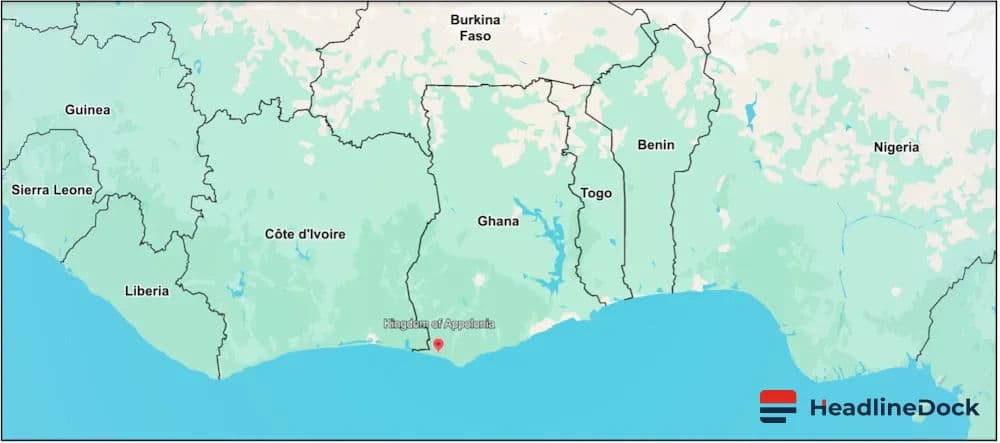
Located in southwestern Ghana—then part of the Gold Coast—the Kingdom of Appolonia, also identified as the Nzema State, operated as a distinct outlier in the regional economy. While major centers like Elmina and Cape Coast were involved in the shipment of hundreds of thousands of captives, Appolonia documented a mere 352 individuals transported throughout four centuries of the transatlantic slave trade. This statistical disparity underscores a significant departure from the prevailing economic models of that era.
Understanding Appolonia’s Resistance and Historical Context
The Kingdom of Appolonia emerged in the late 1600s, composed of small villages congregating near the border of present-day Côte d'Ivoire. Despite its proximity to the rising power of the Asante Kingdom and the growing dominance of the Atlantic-focused slave economy, Appolonia maintained a remarkably different trajectory. Research indicates that the kingdom’s economy was fundamentally tethered to the trade of gold and ivory rather than the commodification of human lives.
Furthermore, the state implemented formal mechanisms to prevent the trafficking of its own subjects. Central to this was a sacred covenant known as amonle. This ritual, which involved the mixing of royal blood with herbal preparations, acted as a binding oath for both residents and migrants. By swearing against the sale of locals and refugees, the Amonle ritual effectively dismantled internal systems that could have otherwise supported a slave-trading infrastructure.
The story of Appolonia complicates contemporary conversations surrounding reparative justice. As scholars and international bodies navigate the legacy of the transatlantic slave trade, figures like those from Appolonia challenge traditional assumptions about culpability. When the lines between perpetrator and victim blur, determining the framework for historical justice becomes significantly more intricate. The kingdom’s record serves as a vital reminder of the agency exercised by various African societies, offering a nuanced perspective on a catastrophic period in human history that continues to influence modern calls for justice and accountability.