Priyank Kharge Demands Legal Accountability and Transparency from the RSS
Karnataka Home Minister Priyank Kharge has intensified calls for the RSS to adopt legal transparency and public accountability. Citing the organization's significant political influence and security protocols, he argues that all institutions must operate within the country's established legal framework to ensure democratic compliance and security.
Highlights
- •Karnataka Home Minister Priyank Kharge has demanded legal clarity and public accountability from the RSS.
- •Kharge argues that an organization with vast social and political influence cannot remain beyond legal scrutiny.
- •The minister questioned remarks about the organization's ability to mobilize a force quickly, citing national security concerns.
- •Kharge emphasizes that in a constitutional democracy, all institutions must operate transparently under the framework of the law.
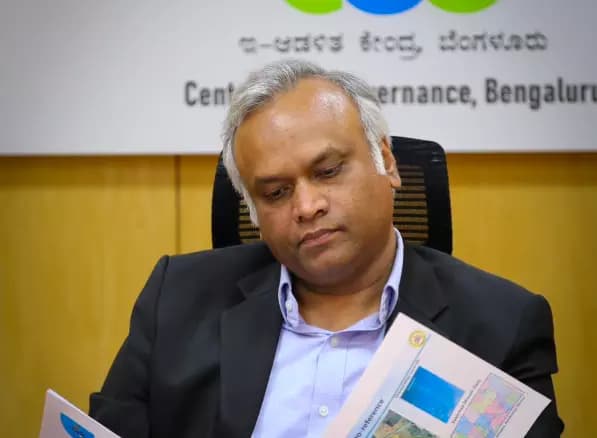
Priyank Kharge, the Minister for the Home Department of Karnataka, has reignited a debate regarding the operational transparency and legal standing of the Rashtriya Swayamsevak Sangh (RSS). Emphasizing the need for institutional responsibility, the minister reiterated that an entity wielding significant socio-political influence should not be exempt from public accountability and legal oversight.
Addressing Calls for RSS Accountability
In a formal communication directed to RSS chief Mohan Bhagwat, Priyank Kharge sought clarity on the organization’s legal framework. This move follows ongoing discourse about the role of the RSS in public life, particularly given its acknowledged status as the ideological parent organization of the Bharatiya Janata Party (BJP). The minister clarified that his inquiry was submitted on June 15, predating recent video statements attributed to Mohan Bhagwat that have circulated on social media platforms.
Priyank Kharge argued that while the RSS has the right to function as a cultural entity, its expansive network and influence necessitate a higher level of transparency. The minister highlighted that many individuals associated with the organization receive security protocols funded by taxpayers. Consequently, he posited that the public maintains a legitimate right to understand whether the RSS complies with the same rigorous legal standards mandated for other formal institutions within the country. He suggested that formal registration would resolve ongoing contradictions regarding its operational mandate.
National Security and Transparency Concerns
The minister further raised concerns regarding remarks attributed to the RSS leadership, which allegedly claimed that the organization could mobilize a force comparable to the national armed forces within a very short timeframe. Priyank Kharge expressed alarm at this assertion, noting that if a non-governmental organization believes it can organize such a force, the state government is entitled to information regarding its structure, training, funding, and chain of command.
Concluding his remarks, the minister stressed that in a constitutional democracy, no organization should perceive itself as being above legal scrutiny or immune to answering public questions. He dismissed the notion that the RSS is exempt from providing explanations, characterizing such a stance as an indicator of a mindset that views public accountability as optional. The minister’s call for RSS transparency serves as a pointed critique of the relationship between powerful organizations and their duty to operate within established legal frameworks, ultimately raising significant questions concerning public order and national security.