President Murmu: Tribal Way of Life Offers Path to Global Peace
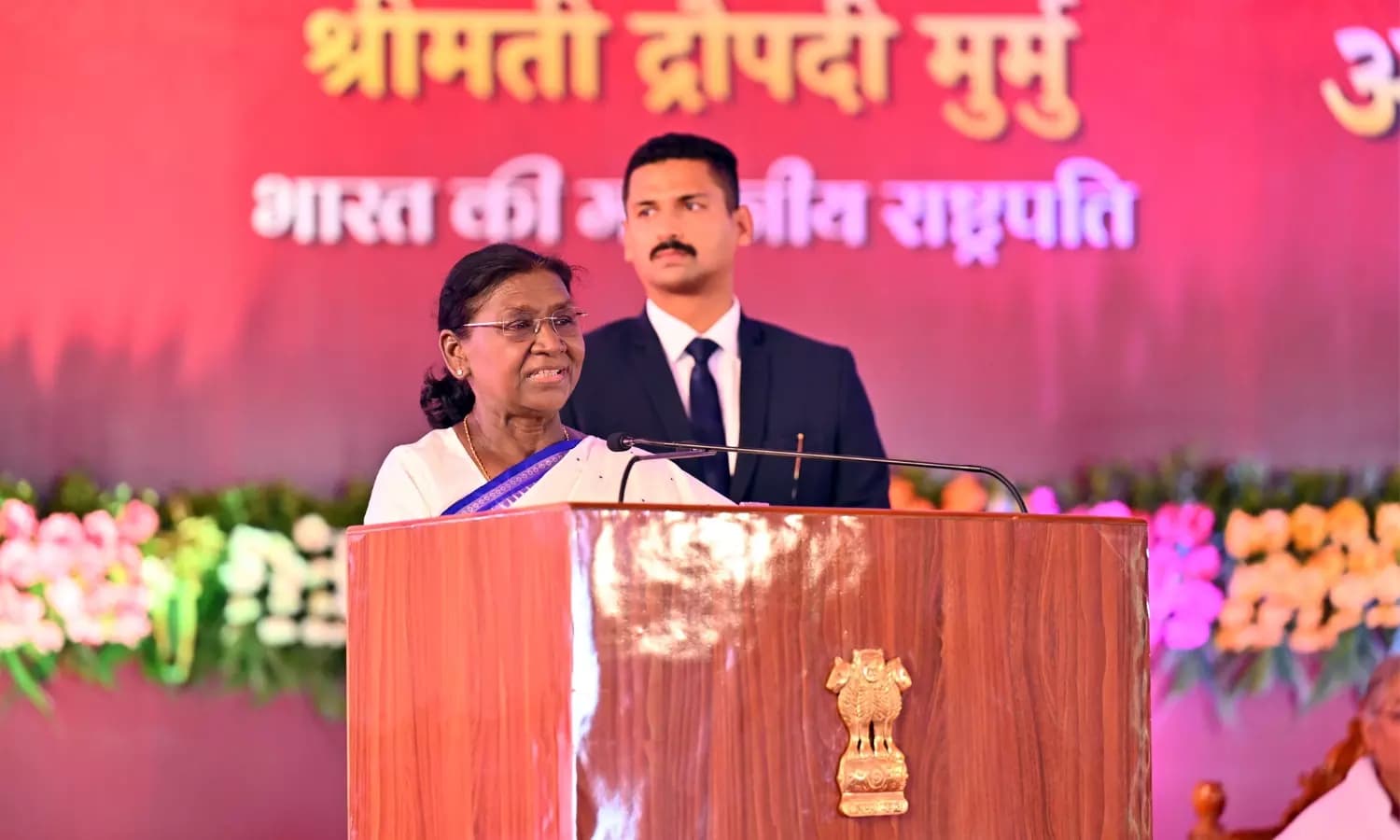
President Draupadi Murmu has lauded the tribal way of life for its inherent peace, harmony, and environmental respect. Speaking in Madhya Pradesh, she highlighted how indigenous values of simplicity and spiritual connection offer a much-needed path to stability in today’s conflict-prone global landscape.
Highlights
- •President Draupadi Murmu identified the tribal way of life as a blueprint for global peace and harmony.
- •The President addressed a conference in Betul, Madhya Pradesh, focused on tribal empowerment and spiritual awakening.
- •Indigenous lifestyles emphasize deep environmental reverence, simplicity, and self-respect, according to the President.
- •President Murmu suggested these traditional values are essential for modern nations striving for holistic development.
In a world currently struggling with pervasive conflict and global instability, President Draupadi Murmu has highlighted the tribal way of life as a potential model for peace. Speaking at a conference in Betul, Madhya Pradesh, titled ‘Empowerment of tribal society by spiritual awakening,’ the President emphasized that indigenous communities possess values that are essential in the modern era.
The event, organized by Brahma Kumaris, focused on how traditional indigenous wisdom can contribute to holistic societal development. President Murmu noted that the lifestyle of indigenous people is intrinsically linked to nature. By revering elements such as the earth, sun, water, and trees, these communities demonstrate a harmonious relationship with their environment that is often missing in contemporary society.
Tribal Wisdom as a Path to Global Harmony
The tribal way of life is characterized by profound simplicity, love, and a lack of aggressive materialism. The President observed that while the modern world is plagued by tension and war, the ancient practices of indigenous groups offer a sustainable alternative. She explained that their approach to spirituality is not separate from daily living but is deeply embedded in their cultural fabric.
Providing examples of their deep-seated environmental respect, President Murmu highlighted that indigenous individuals often offer prayers before harvesting resources, such as cutting a tree, and ensure they only collect dry firewood to avoid unnecessary harm to the forest. This philosophy of minimal impact and deep gratitude is rooted in a long history of peaceful coexistence.
Furthermore, the President underscored the self-respect inherent in indigenous cultures. She noted that these communities traditionally thrive without complaint, maintaining inner peace and joy regardless of external challenges. This resilience, according to President Murmu, is an important lesson for a world currently embroiled in conflict. By integrating such values—along with social equity and environmental stewardship—she argued that India can more effectively pursue its mission to become a fully developed nation.
The President, who is currently undertaking a five-day official visit across Madhya Pradesh and Odisha, concluded by stressing that the global relevance of indigenous values is higher now than at any other period in history. The conference served as a platform to discuss how integrating these ancient, peaceful lifestyles into modern frameworks can foster greater global stability and spiritual awareness.