Language Barriers Undermine Critical Disaster Warnings for Vulnerable Communities
Language barriers are preventing vital disaster warnings from reaching residents in South African informal settlements. Research highlights the urgent need for simplified, localized emergency communication through trusted channels like community radio to improve public safety and ensure effective disaster responses.
Highlights
- •Disaster warnings in South Africa often fail to reach vulnerable populations due to the use of limited languages.
- •Research in Gqeberha shows that most residents in informal settlements have never received an official, understandable disaster alert.
- •Community radio stations broadcasting in isiXhosa are the most trusted and effective way to relay emergency information.
- •Experts recommend co-designing simple, non-technical alerts with local communities to ensure life-saving information is accessible to all.
In our modern era defined by rapid digital connectivity, the assumption that everyone receives essential disaster warnings is increasingly being challenged. While smartphones, sirens, and flashing screens are standard tools, disaster warnings frequently fail to reach vulnerable populations, particularly those who speak minority or Indigenous languages. The gap between sending an alert and ensuring it is understood remains a critical issue that threatens lives.
In South Africa, a country with 12 official languages, emergency notifications are predominantly issued in English and Afrikaans. Local municipal disaster management centers send out SMS alerts and radio broadcasts, yet they often overlook whether the recipients truly comprehend the message. This disconnect demonstrates that simply transmitting a warning does not guarantee it will be understood or acted upon by all residents.
Language Barriers in Disaster Management
A recent study focused on Walmer Airport Valley, an informal settlement located in Gqeberha, Eastern Cape, to evaluate the efficacy of early warning systems. This area is highly susceptible to flooding, with approximately 27,000 residents living in close proximity to the local airport. Most inhabitants of this community communicate primarily in isiXhosa, one of the nation's official languages.
The research revealed that the clarity of an alert is directly linked to the likelihood of community action. Alarmingly, out of 300 residents surveyed, 210 stated they had never received an official early warning message. Even among mobile phone users, a large number reported missing these vital notifications due to weak infrastructure and a lack of awareness regarding registration processes. Consequently, community leaders and local council representatives have become the primary, albeit unofficial, sources of emergency information for nearly half of the population.
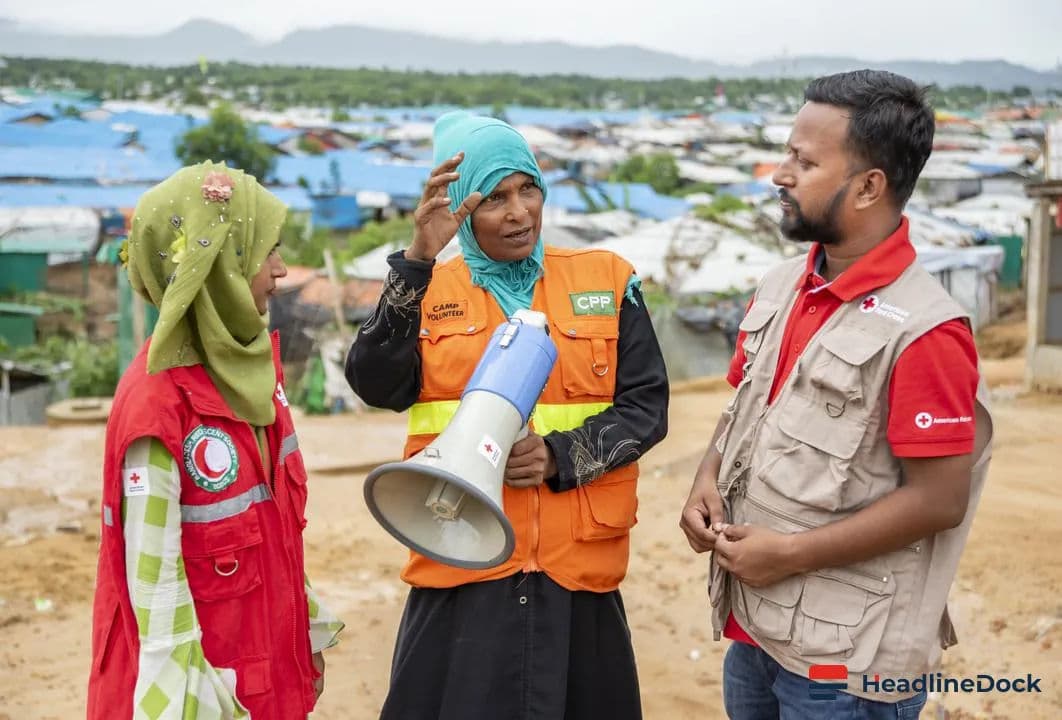
Trust in official systems also varies, though community radio emerged as a highly effective and trusted channel, with 264 of the 300 participants relying on it for news. Because these stations broadcast in local languages like isiXhosa, they represent a vital tool for disseminating life-saving information.
Improving Early Warning Systems
Addressing the challenge of disaster linguicism—the systematic exclusion of linguistic minorities from emergency information—requires immediate, cost-effective solutions. Firstly, official warnings must be co-designed with local communities to ensure they use simple, direct, and non-technical language that is easily understood by all, regardless of education level.
Secondly, municipalities and mobile operators must collaborate to ensure that free, clear alerts successfully reach every mobile device in at-risk areas. Finally, community radio should be formally integrated as a core pillar of the national warning system. By providing local stations with pre-approved, localized content, authorities can ensure that critical information is communicated immediately, bridging the gap that currently exists in disaster preparedness for many vulnerable communities.