Did Neanderthals Use Rhinoceros Teeth as Tools? Scientific Study Confirms Discovery
A new study confirms that Neanderthals utilized rhinoceros teeth as specialized percussion tools during the Middle Palaeolithic period. By analyzing fossil remains and conducting controlled experiments, researchers have demonstrated that these early humans intentionally repurposed dental material for stone tool manufacturing.
Highlights
- •New research indicates Neanderthals utilized rhinoceros teeth as percussion tools for stone knapping.
- •The RINO project utilized experimental archaeology to compare modern dental marks with prehistoric fossil remains.
- •Evidence suggests Neanderthals preferred teeth from older rhinos due to their flat, durable surfaces.
- •Microscopic analysis confirmed the marks were created by human activity rather than animal feeding.
New scientific evidence suggests that Neanderthals engaged in sophisticated behaviors involving the use of rhinoceros teeth as functional tools. Researchers investigating middle Palaeolithic sites have identified distinct patterns and surface marks on these fossils, indicating they were intentionally collected and utilized for technical tasks between 250,000 and 130,000 years ago.
Historically, while large herbivores like the rhinoceros were known to be a food source for prehistoric human groups, their broader roles in daily life remained relatively unexplored. The RINO project was launched to investigate these unusual traces found on teeth at sites such as Payre in the Rhône Valley of France. By comparing these archaeological finds with modern rhinoceros samples and controlled experiments, the team has uncovered evidence that these early humans recognized the durability and utility of the animal's dental remains.
Evidence of Neanderthal Tool Use
To differentiate natural surface alterations from intentional human modification, the research team conducted a rigorous, interdisciplinary study. This involved examining 168 fossilized teeth from various Pleistocene sites across Western Europe and 236 teeth from the collections at the National Museum of Natural History in Paris. The researchers determined that rhinoceros teeth were likely employed as percussion tools during the crafting of lithic implements, such as flint and quartz.
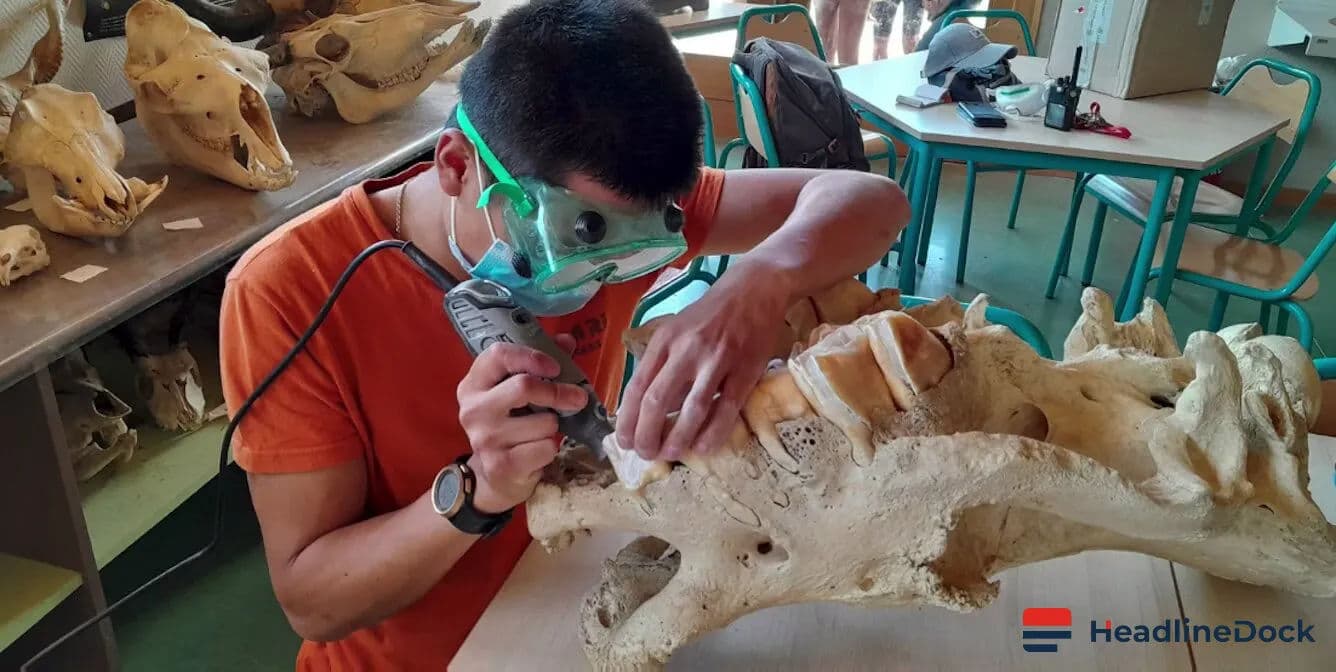
A central component of this investigation utilized experimental archaeology to replicate potential usage patterns. By using modern rhinoceros molars and premolars to perform tasks like stone knapping, retouching, and anvil work, experts were able to create a comparative framework. The marks identified on the archaeological specimens from El Castillo in Spain and Pech-de-l’Azé II in France closely matched the traces produced during these controlled experiments. Furthermore, microwear analysis confirmed that these specific surface markings occurred after the animal had died, effectively ruling out natural feeding or chewing behaviors as the cause.
The findings indicate that Neanderthals often favored teeth from older animals, potentially because their flatter surfaces were more practical for technical applications. This discovery highlights the complex relationship these early human groups maintained with their environment and their capacity for innovative resource management. Moving forward, the research team suggests that a broader reassessment of other Palaeolithic sites is necessary to determine if this practice was widespread or specific to certain regional groups. This breakthrough provides valuable insight into the technical choices and the diversity of raw materials leveraged during the Middle Palaeolithic period, ultimately deepening our understanding of human history and evolutionary adaptation.