Massive 5.3-Million-Year-Old Whale Graveyard Discovered in the Indian Ocean
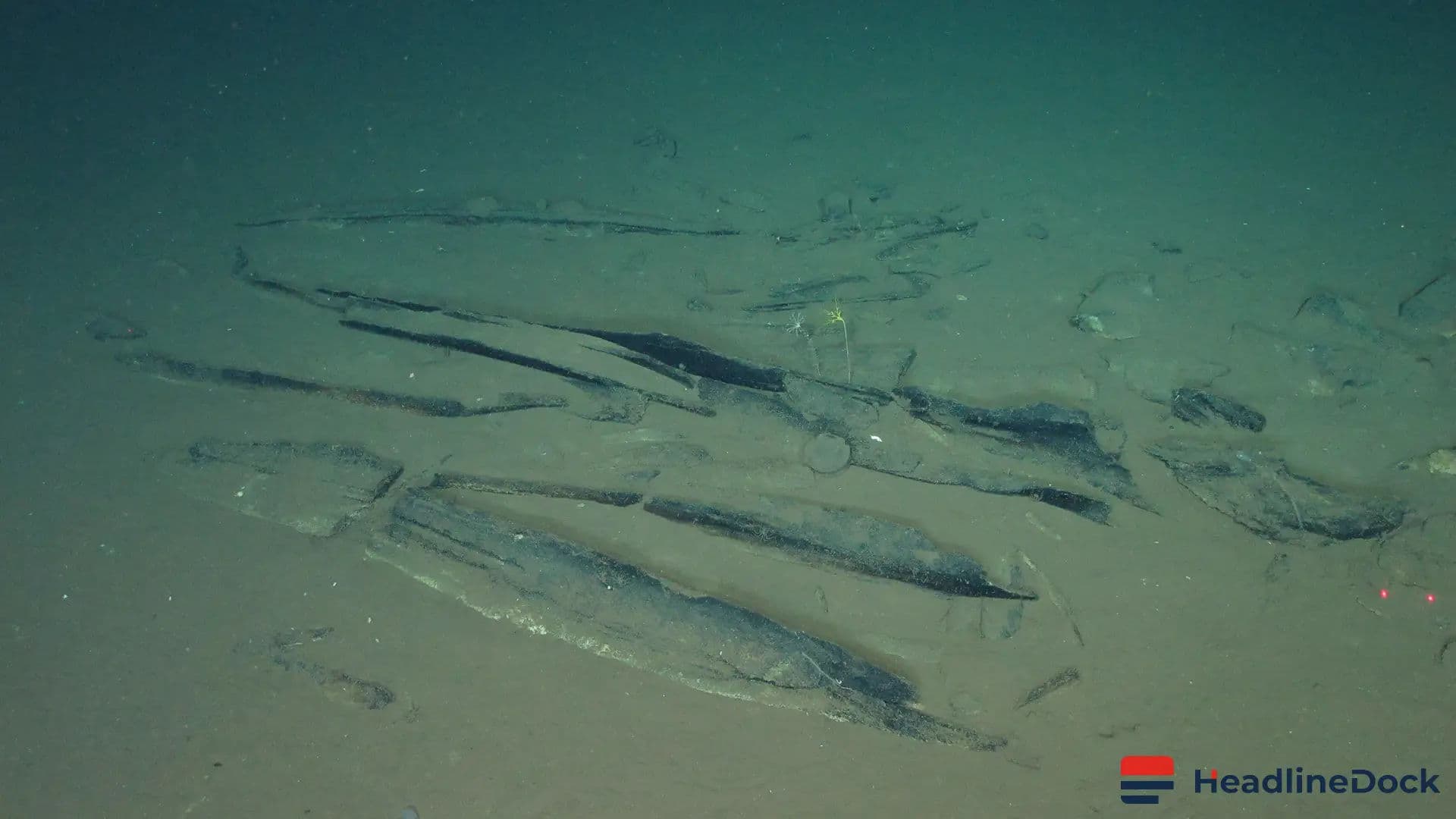
Scientists have identified a vast, 5.3-million-year-old whale graveyard in the Indian Ocean's Diamantina Fracture Zone. The site, which contains 476 fossils, provides significant insights into ancient deep-sea ecosystems and the evolutionary history of beaked whales, marking a major milestone in marine paleontology.
Highlights
- •Researchers discovered a massive 5.3-million-year-old whale graveyard in the Indian Ocean.
- •The site contains 476 fossilized whale remains within the Diamantina Fracture Zone.
- •A new extinct species, Pterocetus diamantinae, was identified among the fossil findings.
- •Unique seafloor topography likely concentrated these carcasses over millions of years.
Researchers have recently uncovered a massive whale graveyard dating back over five million years on the floor of the Indian Ocean. This significant scientific finding, located within the Diamantina Fracture Zone, represents one of the most substantial deep-sea collections of prehistoric marine mammal fossils ever documented.
When a large marine mammal dies at the surface, it eventually descends to the seafloor, providing a rich source of nutrients for various deep-sea scavengers. These events, scientifically known as "whale falls," are rarely observed in such detail. However, this newly identified whale graveyard provides a unique look into ancient deep-sea ecosystems from the Pliocene epoch.
Mapping the Ancient Whale Graveyard
The discovery was made during a series of research dives led by Xiaotong Peng of the Chinese Academy of Sciences, utilizing the Fendouzhe submersible in early 2023. Over the course of subsequent missions, the research team mapped an area stretching approximately 1,200 kilometers along the seafloor at depths ranging between 4,200 and 7,000 meters. The expedition successfully documented 476 distinct fossilized remains, highlighting the immense historical significance of the Diamantina Fracture Zone.
Among the collected samples, scientists identified diverse species including various types of beaked whales, such as Mesoplodon bowdoini and Mesoplodon layardii. Furthermore, they identified a fossil belonging to the Balaenoptera borealis, also known as the sei whale. Perhaps most notably, the team confirmed the existence of a previously unknown extinct species, which they have formally named Pterocetus diamantinae.
Insights from the Deep Sea
Isotopic dating techniques applied to the findings confirmed that the oldest fossils at this site are approximately 5.3 million years old. Experts suggest that the unique, V-shaped topography of the Diamantina Fracture Zone likely acted as a natural trap, funneling decaying carcasses into this concentrated area over millions of years. This discovery not only enhances our understanding of the whale graveyard but also sheds light on the evolutionary history of deep-diving whales.
These findings serve as a powerful reminder of how much of our planet’s ocean depths remains unexplored. By investigating these ancient biological records, researchers are gaining critical insights into past marine biodiversity and the resilience of deep-sea environments. The study provides a valuable baseline for future research into marine mammal evolution and the long-term impact of organic matter reaching the deepest parts of our oceans.