500-Million-Year-Old Fossil Challenges Our Understanding of Earth's Evolution
The new 500-million-year-old fossil discovered in Quebec challenges our understanding of the late Cambrian period's biodiversity and reshapes scientific perspectives on Earth's evolutionary history.
Highlights
- •A groundbreaking 500-million-year-old arthropod fossil from Quebec, Canada, challenges the 'Furongian gap' theory
- •This discovery expands diversity in the late Cambrian period, challenging previous assumptions about a biological collapse
- •Mudstone formations previously overlooked may hold key to more discoveries, highlighting 'anthropogenic bias' in paleontology
- •The find emphasizes the importance of revisiting old collections with modern techniques
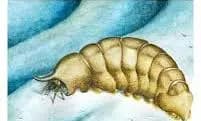
In a groundbreaking discovery, scientists have unveiled a new 500-million-year-old arthropod fossil from Quebec, Canada. This find, named Magnicornaspis garwoodi, challenges our understanding of the late Cambrian period and could rewrite major chapters in Earth's evolutionary history.
Discovered near Sainte-Anne-de-la-Pocatiere in 1962, this specimen comes from mudstones within the Riviere-du-Loup Formation, dating back to the late Cambrian. Initially overlooked for decades at the Smithsonian National Museum of Natural History, it brings new insights into a period once dubbed the 'Furongian gap.' This gap is characterized by an apparent drop in biodiversity that may not represent a true biological crisis but rather a hidden fossil record.
Reassessing the Furongian Gap
The geological setting of this find is crucial. Unlike previous investigations, these mudstones preserved ancient marine environments where fine sediments settled quietly through the water column. This unique environment, previously overlooked,
Key Findings
- The specimen's two large spines hint at early defensive adaptations among corcoraniids, suggesting such features evolved earlier than previously thought.
- These fossils expand the geographic distribution of soft-bodied preservation during this crucial interval, hinting that comparable deposits may be waiting to be discovered elsewhere.
- This discovery underscores the "anthropogenic bias" in our fossil record—biases resulting from where and how we've searched for fossils over time.
These fossils contribute to a growing body of evidence suggesting ecosystems remained diverse during the late Cambrian, despite previous assumptions. Additional discoveries may yet reveal entire groups of organisms that await discovery within museum collections or poorly studied rock formations.