Why AI in Agriculture Requires a Regional Approach for Canadian Farmers
AI in agriculture holds massive potential for boosting yields, but Canada faces a significant adoption gap. Experts argue that shifting from individual tools to a regional, systems-level innovation approach is essential for farmers to successfully integrate and trust advanced agricultural technologies.
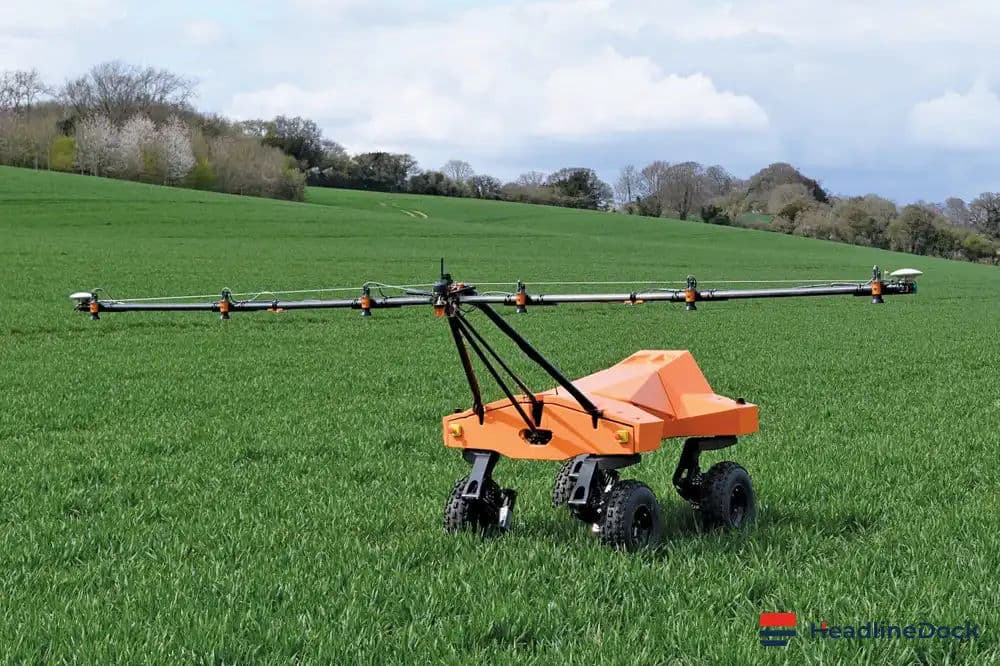
Highlights
- •The global market for AI in agriculture is expected to reach approximately US$47 billion by 2034.
- •A significant adoption gap exists in Canada due to fragmented support structures and integration difficulties for farmers.
- •Research from Brock University identifies information gaps, equipment mismatches, and siloed networks as primary barriers to progress.
- •Experts advocate for a regional, systems-level approach to AI policy to better support diverse agricultural environments across Canada.
Artificial intelligence in agriculture is poised to fundamentally alter the sector, with the global market value projected to hit nearly US$47 billion by 2034. This technology offers the potential to significantly boost crop yields while optimizing inputs, a critical advancement during these times of resource scarcity and unpredictable climatic conditions.
Although Canadian policymakers and industry leaders are increasingly recognizing the potential of AI in agriculture, there remains a persistent gap between the availability of technology and its widespread adoption. Despite the introduction of the national AI for All strategy, experts argue that digital tools alone are insufficient to trigger the necessary systemic transformation across the country.
Addressing Challenges in AI Adoption
Canada currently lags behind several other G7 nations when it comes to the large-scale integration of digital systems within farming. The core issue is not a shortage of advanced technological solutions; rather, it is the absence of supporting systems designed to help farmers understand, integrate, and build trust in these new tools. A recent two-year study on agricultural automation and robotics in Ontario, conducted by researchers at Brock University, confirms that while many technologies are commercially viable, broader structural hurdles remain.
These adoption barriers generally fall into three categories. First, an information gap persists as many producers are unaware of which AI tools are relevant to their specific operations. Second, farmers frequently encounter a mismatch syndrome, struggling to integrate complex new digital platforms with their existing equipment and daily workflows. Third, the innovation network is often fragmented, with researchers, technology companies, and producers frequently operating in silos rather than as a cohesive, collaborative network.
Building a Resilient Innovation Ecosystem
To fully leverage AI in agriculture, industry experts emphasize the need for a shift toward an agricultural innovation systems approach. This strategy recognizes innovation as a networked process that necessitates the active participation of researchers, entrepreneurs, policymakers, and farmers. Because of Canada’s vast geographic scale and diverse production environments, solutions must be grounded in regional context. A strategy tailored for dairy farming in Quebec, for example, may not be applicable to grain production in Saskatchewan or horticultural needs in British Columbia.
Ultimately, transitioning from the promise of AI to practical, long-term change requires a move toward coordinated, multi-level governance. By focusing on regional support ecosystems, policy efforts can bridge knowledge gaps through training programs that emphasize practical integration rather than simple technology promotion. When embedded within a well-governed, regional framework, advanced digital tools can serve as a catalyst for a more competitive, resilient, and sustainable food system.