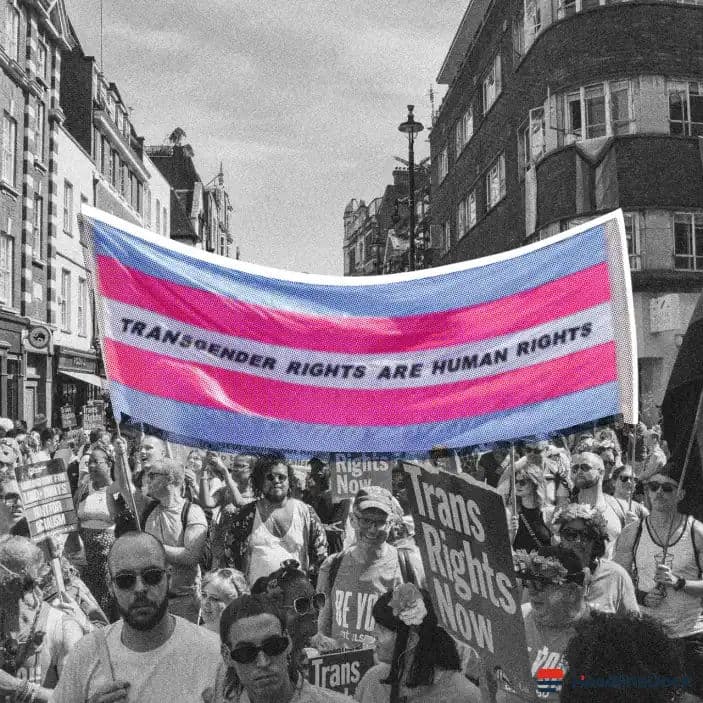
The Debate Over New Zealand’s Legal Definition of Man and Woman
New Zealand's parliament is considering a bill to legally define 'man' and 'woman' by biological criteria. The proposal faces scrutiny from those who argue it simplifies complex biological realities, potentially causing legal inconsistencies and failing to account for human diversity.

Highlights
- •The New Zealand parliament is debating a bill to legally define “man” and “woman” based on biological traits.
- •Critics argue that the bill’s reliance on a singular biological definition is scientifically flawed and overly simplistic.
- •Potential legal ramifications include complications with age-related statutes, such as current abortion legislation.
- •The debate mirrors past scientific controversies, such as the IAU vote that reclassified the status of Pluto.
The pursuit of a precise legal definition of man and woman in New Zealand has ignited a complex debate regarding the intersection of biology, policy, and societal norms. Much like the 2006 scientific controversy that saw Pluto demoted from its status as a planet by a vote, the current legislative efforts to categorize gender have drawn scrutiny from experts and observers alike.
The Legislation (Definitions of Woman and Man) Amendment Bill, introduced by New Zealand First MP Jenny Marcroft, successfully cleared its first reading in parliament on May 20, 2026. The proposed law seeks to define the term “woman” as an “adult human biological female” and “man” as an “adult human biological male.” Proponents of the bill argue that this move is necessary to restore biological reality to legal frameworks, suggesting that such definitions are fundamental and self-evident.
The Challenges of Defining Biological Reality in Law
However, the assertion that there is a singular, universal biological test to categorize sex has met with significant pushback from the scientific community. Experts note that human biology is inherently complex, and attempts to impose rigid definitions often overlook the nuances of genetics and development. While visual inspection remains the standard practice at birth, it does not account for individuals whose internal anatomy or hormonal characteristics do not align with external features.
Furthermore, reliance on chromosomal testing or the capacity to produce gametes—sperm or eggs—also presents significant hurdles. Such definitions could inadvertently exclude large segments of the population, including older individuals who may no longer produce gametes, thereby complicating the very “biological reality” the bill aims to defend. Critics argue that by attempting to simplify these traits into a binary legal category, the legislation creates more confusion than clarity.
The bill also introduces practical concerns regarding age-based legal protections. Attorney-General Chris Bishop has already highlighted potential risks, noting that the narrow definitions might inadvertently lead to discrimination based on age. For instance, opposition MP Camila Belich pointed out that existing statutes, such as those governing access to abortion, could be negatively impacted if the law does not explicitly account for individuals under the age of 20.
Ultimately, the push to pass this legislation reflects a social desire to anchor identity in fixed categories. Whether a parliamentary vote can effectively resolve these deeply human and scientific questions remains a point of intense contention. As the legislative process continues, the discourse underscores the ongoing struggle to balance traditional social intuitions with the complex, evolving understandings of human nature and biological identity.