Telangana to Consult Non-BJP States on New VB-G RAM G Legislation Proposals
The Telangana government is mobilizing to address concerns over the Union's proposed VB-G RAM G, which would replace the current rural employment guarantee act. The state is exploring legal and political coordination with other non-BJP ruled states to defend its federal and financial interests.
Highlights
- •Telangana forms a sub-committee to examine the impact of the proposed VB-G RAM G legislation.
- •The state is seeking coordinated legal and political action with non-BJP governed states like Karnataka and Kerala.
- •Concerns persist over the 60:40 funding ratio and the potential reduction of guaranteed work days from the current standards.
- •Legal experts are assessing a possible challenge in the Supreme Court to protect state federal powers and finances.
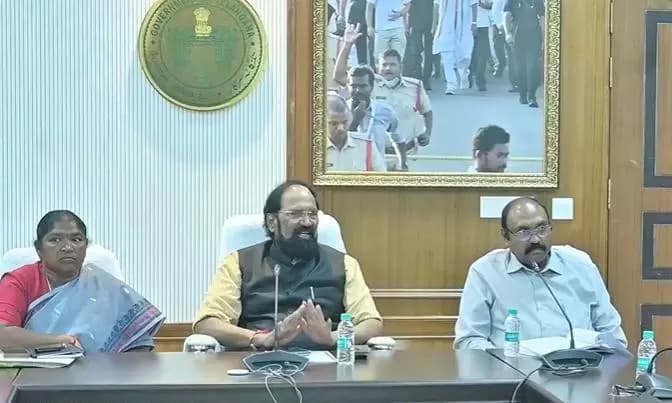
The Telangana government has initiated high-level deliberations regarding the Union administration's proposed VB-G RAM G legislation, which is set to replace the existing Mahatma Gandhi National Rural Employment Guarantee Act. A dedicated state cabinet sub-committee, currently reviewing the potential legislative changes, has formally expressed a desire to engage with other non-BJP governed states, specifically Karnataka and Kerala, to synchronize their legal and political opposition.
Addressing Potential Constitutional and Economic Risks
The panel, led by the Minister for Irrigation and Civil Supplies, N. Uttam Kumar Reddy, held its second meeting this week to analyze the far-reaching implications of the proposed VB-G RAM G framework. Officials involved in the review process argue that the central government has failed to adequately communicate the administrative burden and political consequences of these changes to the public. The sub-committee is scheduled to present its findings to the state cabinet on July 2 to finalize whether the state will adopt the center's guidelines, draft independent state legislation, or initiate a legal challenge in the Supreme Court.
Legal experts consulted by the committee identified several constitutional concerns, suggesting that the central proposal may infringe upon the rights and federal powers of individual states. Furthermore, there is significant pushback against the proposed 60:40 funding mechanism between the center and the states. Critics, including various civil society organizations, contend that this formula unfairly penalizes states that have previously demonstrated higher performance efficiency. They estimate that implementing the new federal framework could cost the Telangana exchequer an additional 2,500 crore rupees.
Impact on Rural Employment and State Autonomy
Beyond fiscal concerns, the potential move to cap guaranteed employment at 60 days has triggered alarms among labor advocacy groups. Stakeholders are urging the state government to resist the central model and instead consider enacting a more robust state-level employment guarantee law that ensures at least 200 days of annual work at the statutory minimum wage. The sub-committee underscored that the central government has reportedly ignored previous recommendations submitted by Telangana regarding the allocation formula.
Government ministers, including Danasari Anasuya Seethakka, Thummala Nageswara Rao, and G. Vivek Venkataswamy, have participated in these critical discussions alongside top administrators like Special Chief Secretary Dana Kishore and Commissioner D. Divya. As the state prepares for a definitive decision, the focus remains on protecting rural livelihoods and ensuring the preservation of the constitutional federal structure that governs state-central relations in India.