Reflecting on the 40-Year Legacy of Maradona’s Hand of God Goal
Four decades after the 1986 FIFA World Cup, the legacy of Diego Maradona's Hand of God goal continues to provoke debate. While reflecting on the historic tension between Argentina and England, experts analyze the distinction between illegal tactics and true sporting genius.
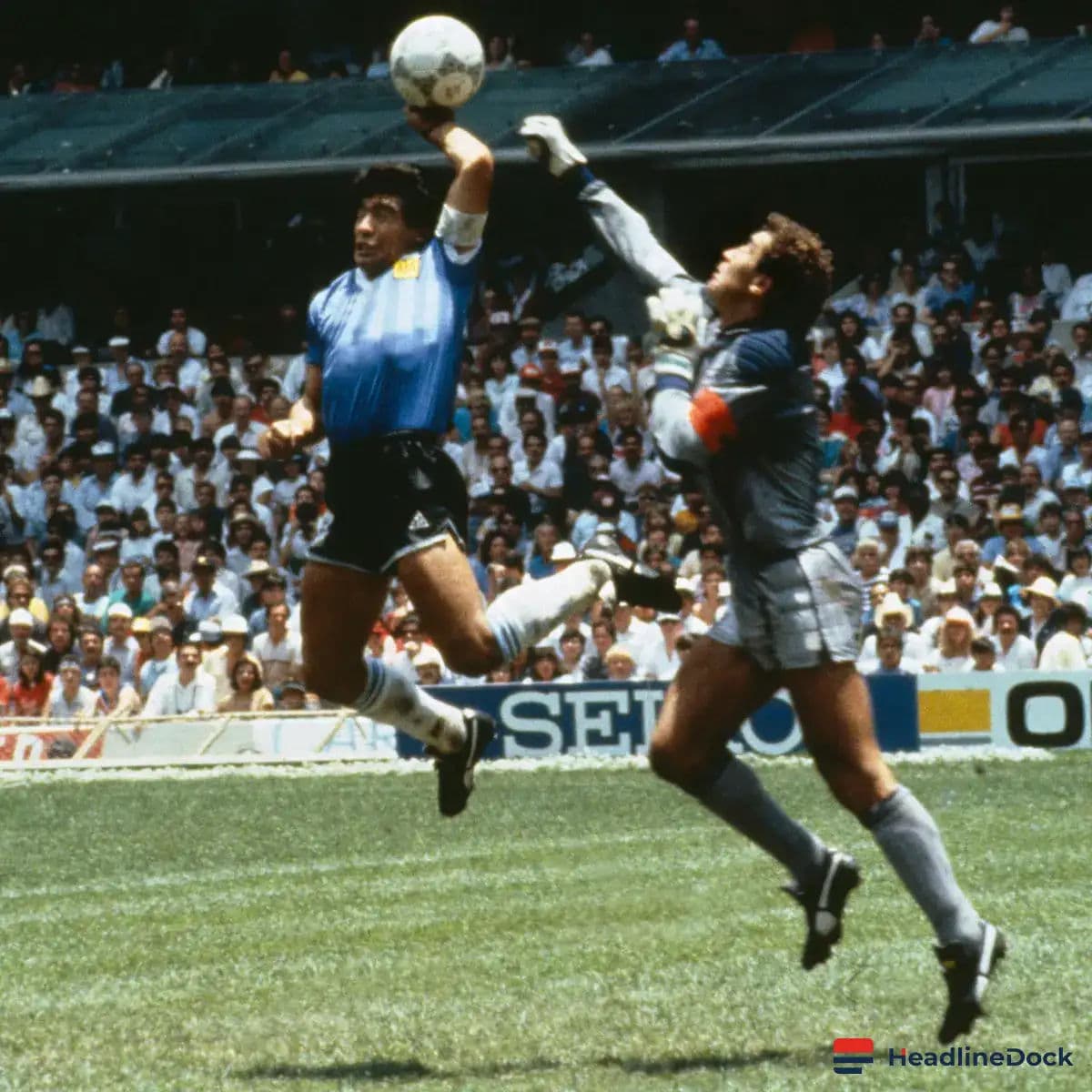
Forty years ago, the football world witnessed an iconic moment during the 1986 FIFA World Cup quarterfinal between Argentina and England. It was on June 22, 1986, at the Azteca Stadium in Mexico City, that the legendary Diego Maradona scored two goals that continue to spark intense debate and admiration in equal measure. Among these, the infamous Hand of God goal remains a complex symbol in global sports.
The Legacy of the Hand of God Goal
The Hand of God goal, where Maradona used his outstretched arm to punch the ball past the English goalkeeper Peter Shilton, is remembered as a clear instance of unsportsmanlike behavior. Despite being an illegal play that should have been disallowed, it has achieved a permanent place in the Argentine collective imagination. The goal is frequently featured in murals, on apparel, and within cultural exhibits, including a notable display at the Casa Rosada, the presidential palace of Argentina.
This deep resonance can be traced back to the historical tensions between Britain and Argentina. The two nations had a fraught relationship long before the 1982 Falkland Islands (or Islas Malvinas) conflict. By the time of the 1986 tournament, feelings regarding the war were still fresh. For many in Argentina, defeating England held a significance that transcended the game of football, effectively acting as a perceived act of national pride following the military defeat of 1982.
Ethics and Sporting Excellence
While the first goal is shrouded in controversy, Maradona also scored the Goal of the Century in the very same match. This second effort, a brilliant 60-yard solo run where he navigated past multiple English defenders, is widely celebrated as one of the most beautiful displays of skill in sporting history. It serves as a stark contrast to the Hand of God, which remains a textbook example of cheating within the sport.
From an ethical perspective, the Hand of God goal violates the core principles of football. It is categorized by experts as an extra-lusory action, meaning it is a move that does not belong to the standard rules of play. While context provides a reason why the goal holds such emotional weight for some, it does not justify the violation of the game’s integrity. As the sport moves forward, it is essential to distinguish between the brilliance displayed in the Goal of the Century and the illicit nature of the first strike. Appreciating Maradona’s immense genius does not require condoning a clear breach of sporting rules.