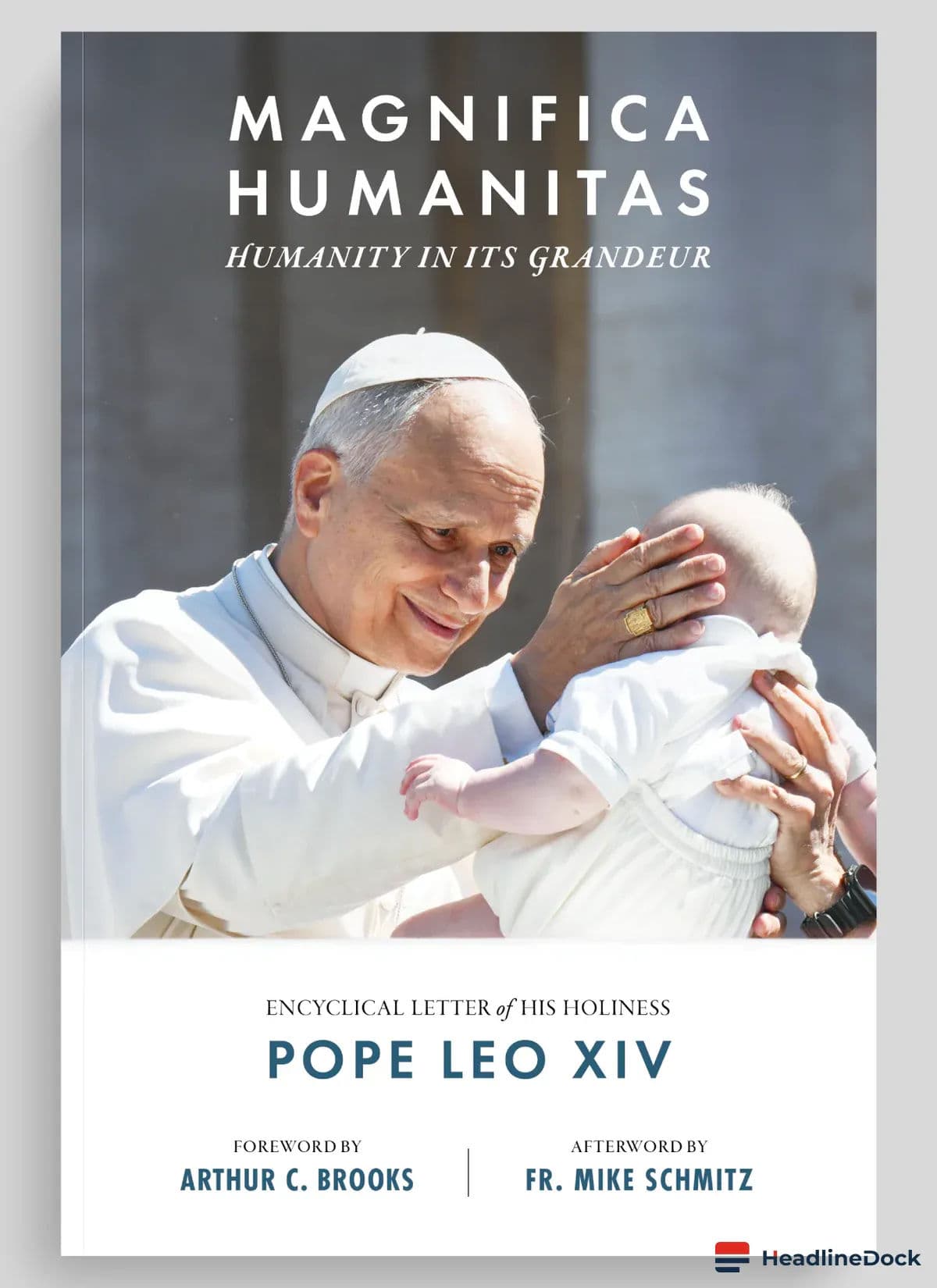
Pope Leo XIV Addresses Artificial Intelligence in Landmark Encyclical Magnifica Humanitas
Pope Leo XIV’s new encyclical, Magnifica Humanitas, redefines the Vatican's approach to artificial intelligence. By moving away from a defensive stance toward an emphasis on human fragility and interdependence, the document offers a new spiritual framework for navigating the age of advanced technology.
Highlights
- •Pope Leo XIV issued the Magnifica Humanitas encyclical on May 15, 2026, focusing on artificial intelligence.
- •The document uses the biblical stories of Babel and Jerusalem to frame the ethics of technology.
- •The Vatican is moving away from a 'besieged fortress' mentality toward a focus on human fragility and interdependence.
- •The encyclical includes an introspective critique regarding the importance of transparency and independent journalism within the church.
The recent publication of the papal encyclical Magnifica Humanitas, signed by Pope Leo XIV on May 15, 2026, signals a transformative shift in how the Vatican addresses modern technological advancements. By focusing on artificial intelligence through a lens of human spirituality rather than as a defensive reaction to societal changes, the church is adopting a novel approach to public discourse.
Shifting Perspectives on AI and Modernity
Historically, the social doctrine of the church was often viewed as a counter-model to prevailing secular trends. Beginning with Rerum novarum in 1891, the institution sought to provide a religious alternative to industrialization and political shifts. Throughout the mid-20th century, this evolved into an engagement with international bodies like the United Nations. However, Pope Leo XIV is now signaling a move away from the model of a church functioning like a besieged fortress.
In Magnifica Humanitas, the pontiff utilizes biblical narratives to navigate the complexities of artificial intelligence. He contrasts the story of the Tower of Babel with the rebuilding of Jerusalem’s walls. This framework shifts the focus from a simple endorsement or rejection of technology to an exploration of human responsibility. The narrative emphasizes that while humanity possesses an innate drive to transform the world, it must also embrace its inherent fragility rather than pursuing a path of absolute, autonomous power.
Embracing Interdependence over Autonomy
The encyclical argues that artificial intelligence should not be seen as a tool for unchecked power or a solution to every human limitation. Instead, Pope Leo XIV advocates for an ethic of interdependence. Recognizing our need for others, particularly in light of our vulnerabilities, is presented as the foundation for a sustainable technological future. By prioritizing this spiritual perspective, the church aims to contribute meaningfully to contemporary debates regarding AI innovation.
Furthermore, the text contains a notable moment of introspection. The pontiff acknowledges that the church has not always modeled transparency in its own pursuit of truth, highlighting the essential role that investigative journalism has played in exposing abuses within the institution. This admission serves as a departure from traditional defensive postures, further indicating that the leadership is seeking to redefine the church's role in the public sphere. Rather than asserting institutional dominance, the focus has shifted toward highlighting fundamental spiritual truths. This transition, while subtle compared to the rapid growth of artificial intelligence, represents a significant evolution in how the Vatican engages with the complexities of the 21st-century global society.