Pakistan Declines Abraham Accords, Defends Stance
Pakistan's refusal to join the Abraham Accords highlights a clash between regional integration efforts and Islamabad's ideological stance, emphasizing the ongoing geopolitical complexities in the Middle East.
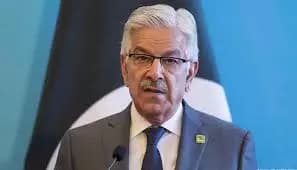
Pakistan has decisively declined to align with the Abraham Accords, a series of normalization agreements signed between Israel and several Arab nations. Defence Minister Khawaja Muhammad Asif articulated Islamabad's position during an interview with Pakistani broadcaster Samaa TV, stating that any agreement conflicting with Pakistan's "fundamental ideologies" cannot be supported.
Asif emphasized the incompatibility by remarking, 'How will you sit down with those people whose word cannot be trusted even for a single day?' This sentiment echoes Islamabad's long-standing and stringent opposition to engaging with Israel. The Pakistani government has also highlighted its passport policy that does not recognize Israel's name or include it on national documents. Asif further elaborated, 'We have a very clear stance that this is not acceptable to us.'
These developments come in the context of US President Donald Trump's push for regional peace, specifically calling for several Muslim and Arab nations—including Pakistan—to join the Abraham Accords following reported negotiations with Iran. In his statement on Truth Social, Trump underlined, 'Negotiations with the Islamic Republic of Iran are proceeding nicely! It will only be a Great Deal for all or no Deal at all.' Trum proposed immediate membership for Saudi Arabia and Qatar as deals with Iran proceed.
The Abraham Accords
A key highlight of Trump's push was the announcement that the US-mediated agreements have brought significant financial, economic, and social benefits to existing members such as the United Arab Emirates, Bahrain, Morocco, Sudan, and Kazakhstan. 'The Abraham Accords have been great for them, and will be even better for everybody,' he stated, emphasizing his intention to expand this framework further.
Amidst these developments, Pakistan's stance remains firm, with Defence Minister Asif reaffirming the country's commitment to its ideological principles. This rejection adds another layer of complexity to regional politics and underscores the challenge of achieving broader diplomatic consensus within the Middle East.