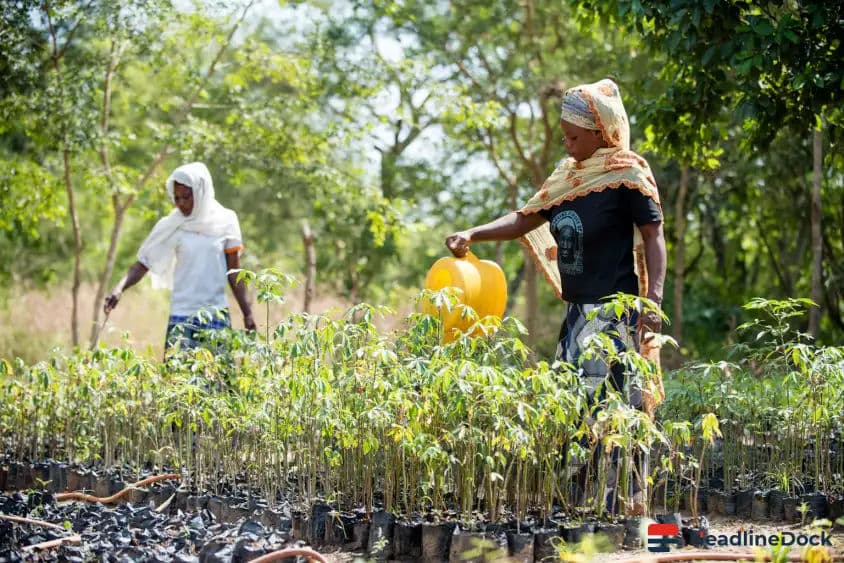
Global Forest Goals Report 2026 Stresses Need for Increased International Co-operation
The Global Forest Goals Report 2026 reveals that progress toward sustainable forest management is insufficient. With critical targets for deforestation and poverty eradication off track, the report calls for strengthened international co-operation, innovative financing, and renewed political will to protect the world's vital forest ecosystems by 2030.

Highlights
- •Only seven of the 26 targets in the UN Strategic Plan for Forests have been broadly achieved so far.
- •Global forest loss between 2015 and 2025 exceeded 40 million hectares, including critical primary forest areas.
- •Geopolitical tensions and a 23 percent decline in foreign aid are hindering necessary international climate and forest efforts.
- •Harmful agricultural subsidies remain vastly higher than the total financial support currently directed toward forest protection.
While the intrinsic value of trees and forests is widely appreciated, nations face significant challenges in implementing robust policies to safeguard these essential ecosystems. The Global Forest Goals Report 2026, presented at the recent United Nations Forum on Forests in New York, serves as a critical wake-up call, emphasizing that intensified international co-operation is vital to reach global forest goals by 2030.
This comprehensive report evaluates progress regarding the six primary forest objectives outlined in the UN Strategic Plan for Forests. Compiled from voluntary submissions by 48 nations—which collectively oversee more than half of the world's forested land—it highlights a stark reality: progress remains inconsistent. Of the 26 associated targets, only seven have been largely achieved. Alarmingly, 17 are only partially met, while two critical objectives—eradicating extreme poverty for forest-dependent populations and reversing deforestation—have failed to meet established milestones.
Urgency for Enhanced International Co-operation
The scale of the crisis is profound. Between 2015 and 2025, the planet lost over 40 million hectares of forest, a territory larger than Japan or Germany. This includes 16 million hectares of primary forests, which are indispensable for maintaining climate stability and biodiversity. Pressures from illegal activities, land-use shifts, and expanding road networks continue to threaten these vital regions.
Although some successes exist, such as Canada’s 2024 Wildland Fire Prevention and Mitigation Strategy, broader efforts are hampered by geopolitical tensions and declining development aid, which saw a 23 percent drop between 2024 and 2025. Furthermore, while the world struggles to protect nature, private financial institutions continue to provide substantial funding—reaching 8.9 trillion USD—to corporations with high deforestation risks. Additionally, environmentally harmful agricultural subsidies remain significantly higher than current investment flows aimed at forest conservation.
The report underscores that while the necessary policy frameworks and technical knowledge exist, the global community must prioritize international co-operation. Strengthening institutions, exploring innovative financing models, and fostering cross-sectoral collaboration are essential to halt the decline of forests. National leadership must be paired with global political will to ensure that financial commitments match environmental ambitions. Without a collective and sustained effort, the goal of protecting global forests for future generations remains at serious risk.