David Hockney: The Legacy of Social Mobility and UK Art Education
The death of David Hockney serves as a catalyst for examining how post-war public policy enabled his artistic success, contrasting it with the modern decline in support for students and the resulting challenges for social mobility in Britain's creative sectors.
Highlights
- •David Hockney, a world-renowned British artist, passed away on June 11 at age 88.
- •His early career was enabled by post-war government grants for students from modest backgrounds.
- •Current UK trends show significant funding cuts to creative education, hindering student access.
- •Hockney's artistic journey highlights the vital role of social mobility in the arts sector.
The passing of David Hockney on June 11, at the age of 88, marks the end of an era for one of the most celebrated figures in modern British art. Born into a working-class family in Bradford in 1937, Hockney rose to global prominence during a transformative period in post-war Britain. His extraordinary journey highlights the critical importance of public support for education and the arts, a foundation that enabled his success and which is increasingly under threat today.
David Hockney’s artistic career and meteoric rise were deeply intertwined with the public policy landscape of his youth. As a young student, he benefited from government-funded grants that covered tuition and living costs, providing him the freedom to experiment and evolve. Without this state-sponsored access, the path for an artist from his modest background would have been vastly different. Today, observers fear that the decline in such support systems creates significant barriers for aspiring creators from underprivileged origins.
Reflecting on Social Mobility and Artistic Freedom
During his time at the Royal College of Art (RCA) in London, Hockney enjoyed an environment that prioritized creative growth. He famously recalled how modest grants allowed him to focus entirely on his craft, unfettered by the financial pressures that plague modern students. This era of accessibility enabled iconic works, including his early print series and the revolutionary paintings that would eventually see his 1972 piece, Portrait of an Artist (Pool with Two Figures), sold for over 90 million dollars.
However, the current educational climate in the United Kingdom presents a stark contrast. Recent reports indicate that creative departments face significant funding cuts, with many students now forced to hold employment alongside their studies just to cover basic living expenses. The ability to engage in artistic experimentation, which was so pivotal to Hockney's development, is becoming an expensive luxury rather than a public entitlement. This shift raises alarms regarding the future of social mobility within the creative industries.
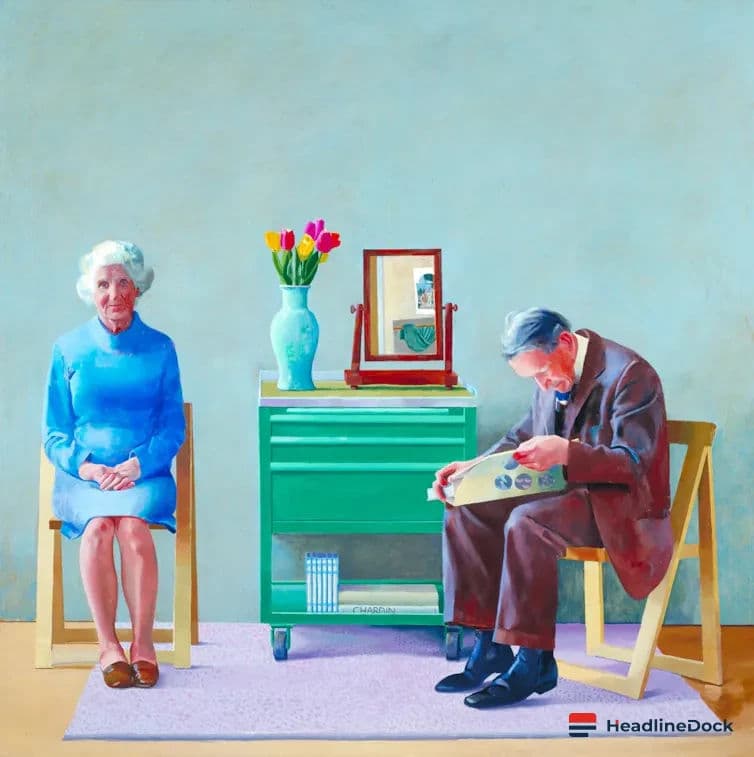
The legacy of David Hockney serves as a poignant reminder of how structural support can change the trajectory of an individual's life. His later works, such as My Parents, subtly captured these themes of class and personal evolution. As the art world reflects on his passing, there is a renewed urgency to examine the systems that once fostered such talent. Ensuring that the next generation has similar opportunities requires a commitment to safeguarding arts education against ongoing budgetary pressures and systemic neglect.