Artificial Intelligence Raises Profound Moral Questions For All Of Humanity To Answer
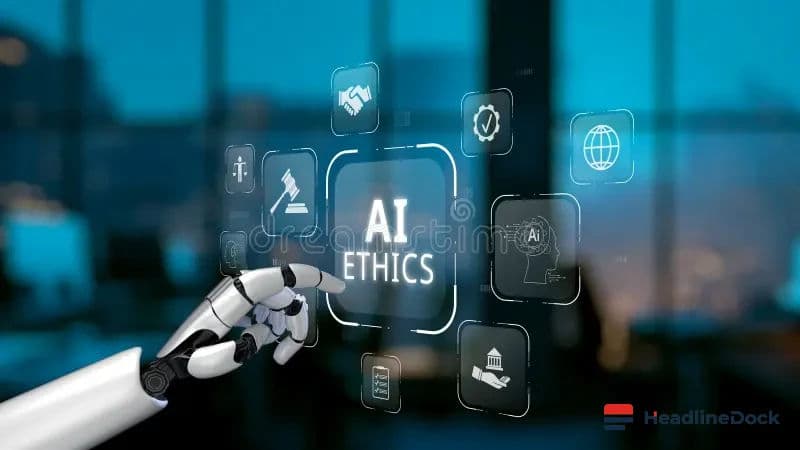
Artificial Intelligence is making critical moral decisions, yet relies on corporate self-regulation. Experts argue that democratic, public-led governance is essential to ensure AI serves humanity, rather than just corporate interests, through independent oversight and enforceable standards.
Highlights
- •Artificial Intelligence is increasingly making critical moral decisions, necessitating independent, public-led regulation.
- •Anthropic co-founder Chris Olah and Pope Leo XIV agree that the tech industry cannot be trusted to self-regulate.
- •Current AI governance strategies, including those in Canada, often lack sufficient focus on public safety and moral accountability.
- •Meaningful AI oversight requires moving beyond advisory consultation to grant the public real, enforceable political power.
The rapid advancement of Artificial Intelligence (AI) has moved beyond mere technical capability, now presenting fundamental moral challenges that demand a collective response from all of humanity. Crucial life decisions, such as border security clearances, mortgage approvals, and even targeting choices in military operations, are increasingly delegated to automated systems developed by private corporations rather than being guided by democratic oversight or public consensus.
Chris Olah, a co-founder of the AI firm Anthropic, recently emphasized during an appearance at the Vatican that the technology sector lacks the capacity for self-regulation. He acknowledged that computer scientists alone should not be the ones determining the ethical standards for such transformative tools. These concerns align with the sentiments expressed in Pope Leo XIV’s inaugural encyclical, Magnifica Humanitas, which warns that AI technology must be utilized to benefit society rather than consolidating power in the hands of a few.
The Urgency of Moral AI Governance
As Artificial Intelligence (AI) continues to evolve at an unprecedented speed, the need for an independent regulatory framework has become critical. Just as established authorities manage the safety of pharmaceuticals or oversee the operation of nuclear reactors, there is a clear requirement for a governing body with the legal power to impose restrictions on AI deployment. Developing these moral benchmarks should involve the participation of the general public, moving beyond the narrow perspective of corporate technical experts.
While many developers are actively grappling with the ethical implications of their work, they often face intense pressure to prioritize speed and market competitiveness. Large organizations frequently hire specialists known as “ethics owners” to manage these tensions, though critics argue that corporate AI ethics can sometimes devolve into an “economy of virtue,” serving primarily to deflect external scrutiny and delay meaningful regulation.
Currently, governments worldwide are racing to codify rules governing the technology. For example, Canada recently introduced its “AI for All” strategy, though many experts argue it remains deficient regarding safety measures and ethical accountability. Critics point to the danger of “participation-washing,” where public engagement exercises are structured to provide the appearance of democratic input without offering actual decision-making power. Meaningful governance requires that public moral judgment be integrated with enforceable political authority. Moving forward, establishing international cooperation, such as the United Nations-led Global Dialogue on AI Governance, alongside local municipal initiatives, will be essential in ensuring that society retains control over the moral choices embedded within these complex systems.