The Critical Role of Meteorology in D-Day
The movie 'Pressure' sheds light on how meteorology played a pivotal role in determining the successful outcome of D-Day, emphasizing the importance of scientific integrity over personal opinions.
Highlights
- •Doubtful Weather Forecast
- •Group Capt. James Stagg's Recommendation
- •Leadership and Ego Clashing with Facts
- •72 Hours of High-Stakes Decision-Making
The history of D-Day on June 6, 1944, is often overshadowed by its grand scale and global impact. However, a critical turning point that determined the success of this operation was Group Capt. James Stagg, a meteorologist whose recommendations influenced the decision to delay the invasion from June 5 to June 6.
D-Day's Weather Woes
The stakes could not have been higher. Scheduled for June 5, the weather was already ominous. Stagg, alongside his team at Allied headquarters, tirelessly analyzed meteorological data to predict conditions on both dates.
On June 4, the forecast hinted at disastrous conditions. Stagg recommended a one-day delay amidst concerns about strong winds and poor visibility. This decision, though controversial, ultimately proved crucial. When the skies cleared on June 6, Allied forces entered Normandy under favorable conditions, enabling their unprecedented invasion.
Stagg's bravery was not inescapable; he had to inform Gen. Dwight D. Eisenhower, Allied leadership, and even himself that the weather might be catastrophically bad on June 5. His integrity and conviction helped shape a momentous historical event.
Staging the Drama of Decision-Making
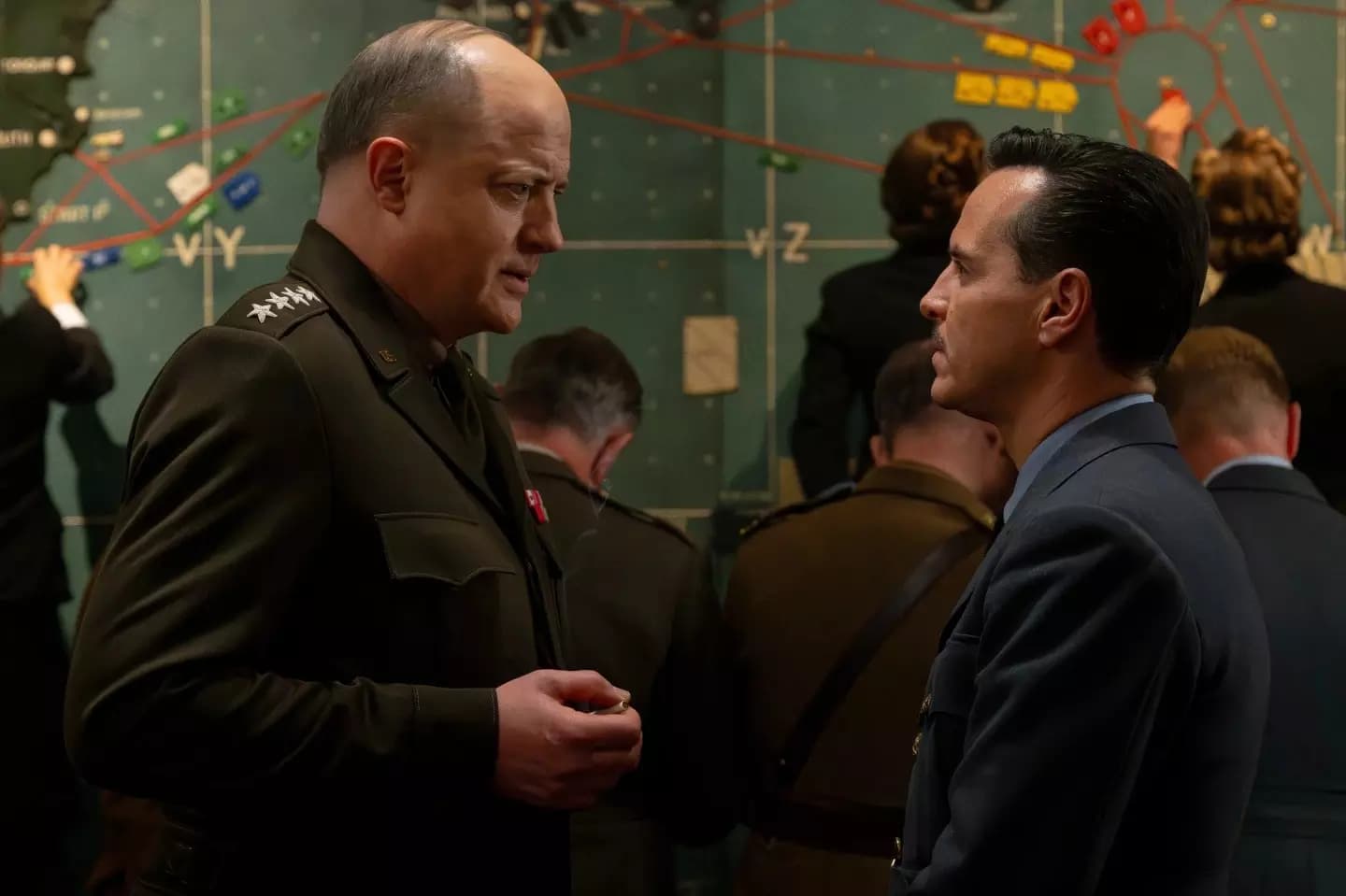
Moving into production with a cast led by Brendan Fraser as Eisenhower and Andrew Scott as Stagg, filmmaker Anthony Maras reimagined this pivotal moment through an engaging narrative. The film, "Pressure," seeks to bring alive the tension of those 72 hours before one of the most daring military operations in history.
Fraser dove deep into his preparations, immersing himself in Eisenhower's persona for authenticity. Scott focused on Stagg's character's inner life and integrity, capturing his less likeable but essential roles within Allied decision-making.
Recreating D-Day itself presented challenges, notably Steven Spielberg's "Saving Private Ryan," which had set the standard for depicting such monumental events. Maras instead chose to highlight decision-makers over soldiers storming the beach, providing a distinct perspective on one of the war's defining moments.
"Pressure" aims not only as a historical lesson but also as a portrait of leadership in crisis. It underscores the importance of trust in scientific judgment and the willingness to accept truth, even when difficult or unpopular. The film's relevance today lies in its portrayal of ego clashing with hard facts, advocating for humility in decision-making.
Anthony Maras states: "Eisenhower showed that he was a maestro at bringing his best self to the table and acknowledging what he didn't know. It is this critical lesson that resonates universally."