Tamil Nadu Debt Burden Nearly Doubles Amidst Growing Fiscal Challenges
A new white paper reveals that Tamil Nadu's debt burden has nearly doubled to Rs 13.18 lakh crore over five years. Finance Minister N Marie Wilson emphasized the need for urgent fiscal reforms to address revenue shortfalls, rising expenditure, and the impact of recent social welfare schemes.
Highlights
- •Tamil Nadu's debt burden has nearly doubled over the last five years, reaching a liability of Rs 13.18 lakh crore.
- •Individual debt per citizen in the state now stands at approximately Rs 1.28 lakh.
- •The state spends Rs 145 for every Rs 100 earned, with capital expenses trailing behind other major Indian states.
- •New social schemes, including the Kalaingar Magalir Urimai Thogai, contribute to an annual loss of Rs 25,000 crore.
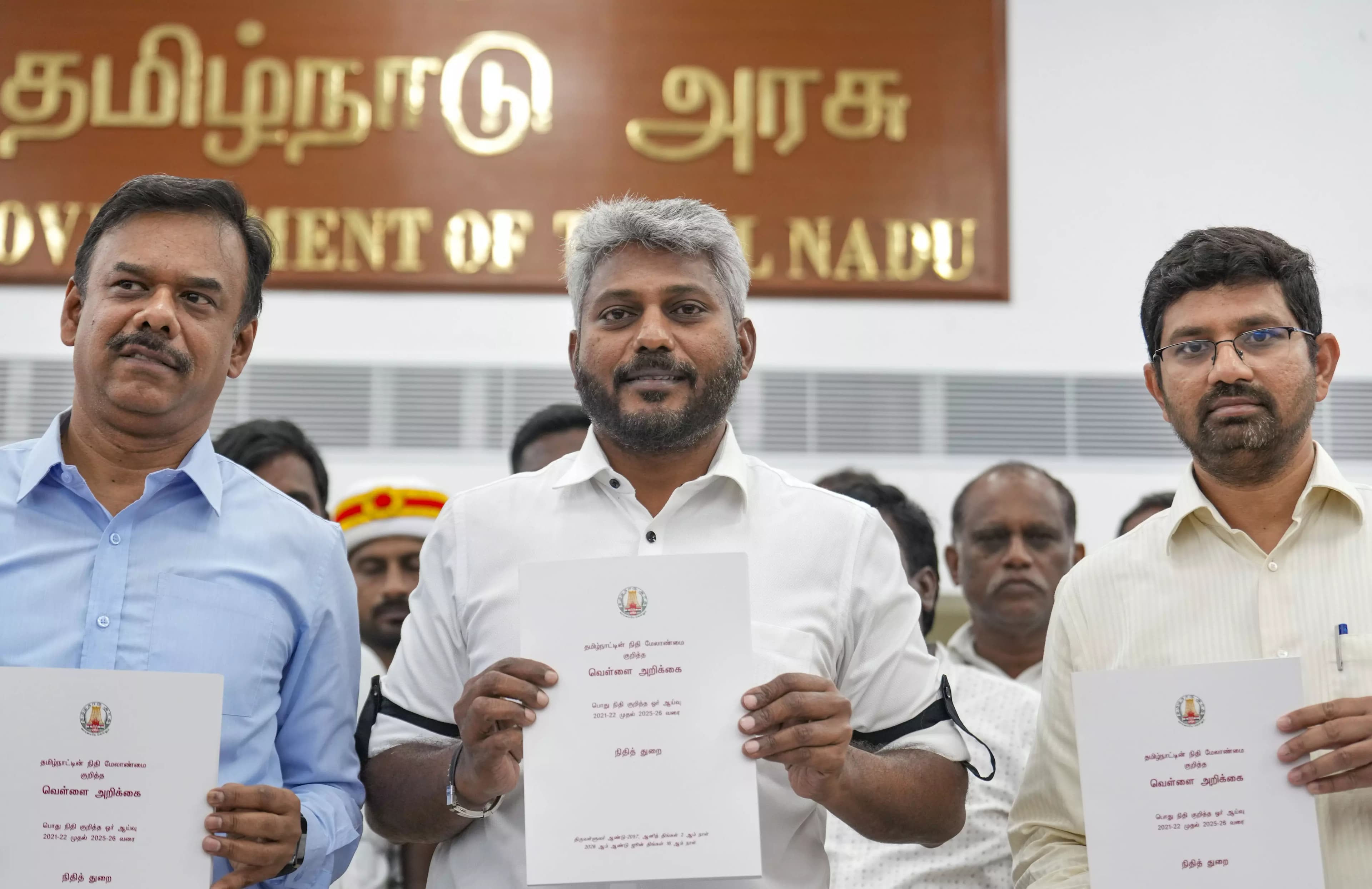
The state government has issued a critical assessment regarding the financial health of Tamil Nadu, revealing that the region’s debt burden has nearly doubled over the past five years. Finance Minister N Marie Wilson disclosed these findings in a comprehensive white paper released at the Secretariat, highlighting significant economic challenges facing the state.
Financial Liability and Economic Challenges
According to the official report, the previous administration left the state with a staggering financial liability amounting to Rs 13.18 lakh crore. Furthermore, the outstanding direct debt is estimated at approximately Rs 10 lakh crore. This massive financial strain translates to an individual debt burden of Rs 1.28 lakh for every person residing in Tamil Nadu.
The white paper indicates that the government’s expenditure has reached an unsustainable level, with the state spending Rs 145 for every Rs 100 generated in revenue. When compared to other economically robust states such as Gujarat, Karnataka, and Maharashtra, the state’s capital expenditure remains notably low at 1.44 percent.
Addressing Revenue Shortfalls and Policy Shifts
Finance Minister N Marie Wilson pointed to several systemic issues that have contributed to this fiscal stagnation. A notable Rs 21,000 crore shortfall was identified, stemming from inaccurate projections in the interim budget, which anticipated a 19 percent revenue increase that ultimately realized only 8 percent. The report suggests that the government failed to create alternative income sources after the GST share was revised in 2017.
The assessment also scrutinized the impact of recent social welfare schemes launched under the M K Stalin government. Initiatives including the Kalaingar Magalir Urimai Thogai, cooperative crop loan waivers, free bus travel for women, and various educational scholarships have resulted in a continuous annual loss of Rs 25,000 crore without corresponding revenue growth strategies.
Additionally, the administration identified challenges within public sector entities. The government had to allocate Rs 1,45,185 crore to maintain electricity supplies, while state-run transport corporations saw expenses double without a successful increase in earnings. The report also highlights a shifting demographic, noting that the state’s elderly population has surged to 71.7 percent, significantly higher than the national average of 56 percent.
Despite these daunting figures, the state government remains optimistic about future reforms. N Marie Wilson outlined a strategy focusing on ending corruption, implementing honest budgeting, reducing unnecessary government expenses, and improving public sector efficiency to gradually stabilize the state's debt burden and overall economic trajectory.