Swedish Minister Brings Baby to EU Climate Talks to Champion Parental Leave
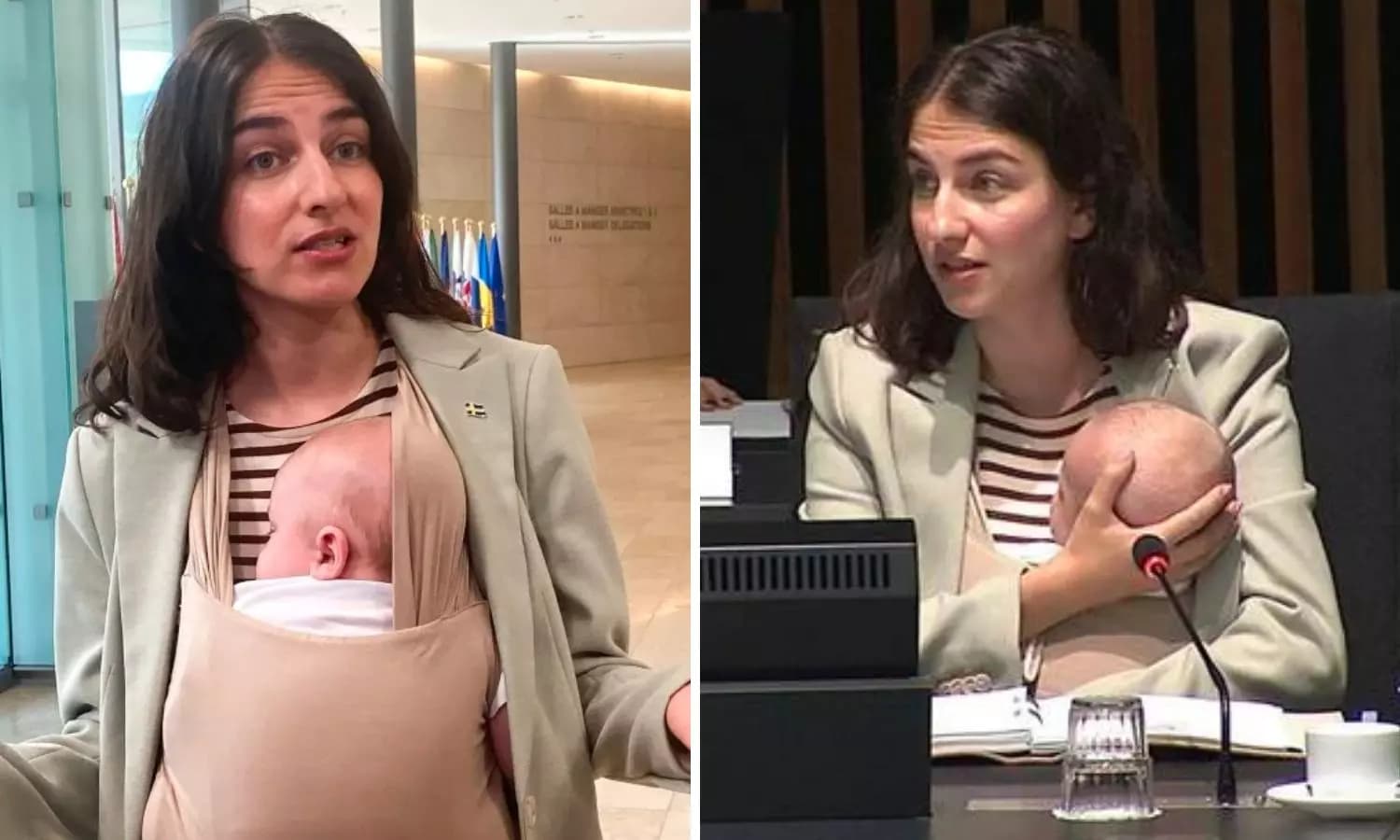
Swedish climate minister Romina Pourmokhtari made headlines by bringing her three-month-old son to an EU climate meeting. Her presence highlighted the success of Sweden's parental leave policies, advocating for flexibility and shared responsibility to help working parents avoid professional burnout.
Highlights
- •Swedish climate minister Romina Pourmokhtari brought her infant son to an EU Council climate meeting.
- •The appearance aimed to showcase the benefits of Sweden's progressive parental leave policies.
- •Sweden mandates 90 days of non-transferable parental leave for each parent to encourage shared caregiving.
- •The move received support from other EU ministers who view family presence as a natural part of life.
A significant moment occurred during a recent gathering of European Union officials when Swedish climate minister Romina Pourmokhtari introduced a special attendee at the negotiating table: her three-month-old son, Adam. This unusual appearance at the EU Council meeting in Luxembourg served as a powerful statement regarding parental leave and the balance between demanding professional responsibilities and family life.
The appearance of the young infant, which officials noted was unprecedented for the institution, highlighted the importance of modern parental leave frameworks. By bringing her child to the official session, Pourmokhtari aimed to illustrate that career advancement and motherhood need not be mutually exclusive choices. The minister emphasized that achieving this balance is significantly easier with the support of a modern partner, noting that her husband traveled with her to provide care while she participated in the discussions.
Promoting Modern Parental Leave Policies
Sweden is widely recognized for its robust family-oriented labor policies. The nation currently offers approximately 16 months of paid leave for parents. A critical component of this system is the allocation of 90 days of leave specifically reserved for each parent, which cannot be transferred. This policy, often referred to as “dad months,” is designed to actively encourage fathers to participate more deeply in early child-rearing. If these specific days are not utilized by the designated parent, they are forfeited, a structure that effectively incentivizes shared domestic responsibility.
Pourmokhtari, who made history as the youngest government minister in Sweden upon taking office in 2022, credits these systemic supports with removing the controversy often associated with fathers taking on primary caregiving roles. Beyond just the legislative framework, she stressed the vital importance of having a supportive professional team. She argued that governments should prioritize flexible sharing arrangements and accessible, affordable childcare to reduce the long-term strain on employees.
The minister highlighted that such policies create substantial value, which should not be overlooked by policymakers. She suggested that while the benefits might not always be immediately apparent in economic data, they play a crucial role in preventing workforce burnout. By creating environments where parents do not feel forced to compromise their professional ambitions or their family commitments, nations can cultivate a more sustainable and resilient working culture.
Other international representatives reacted positively to the inclusion of the infant in the high-level policy talks. Krzysztof Bolesta, the deputy climate minister for Poland, expressed support for the initiative, noting that the presence of the child in a professional political setting was perfectly acceptable. His remarks underscored a growing recognition that integrating family needs into the workplace is a natural, rather than obstructive, part of daily life for modern professionals.