Robots Get Clothes at Fashion Show in Seoul
Seoul hosted a groundbreaking fashion show where humanoid robots wore matching outfits to their human counterparts. This event at Galaxy Corporation highlights the potential for coexistence between humans and advanced robotics, with plans to launch custom-fitted clothing brands in the future.
Highlights
- •Robot fashion show in Seoul
- •Humanoid robots wearing matching outfits
- •Galaxy Corporation designs for human-robot pairs
- •Growing integration of technology into daily life
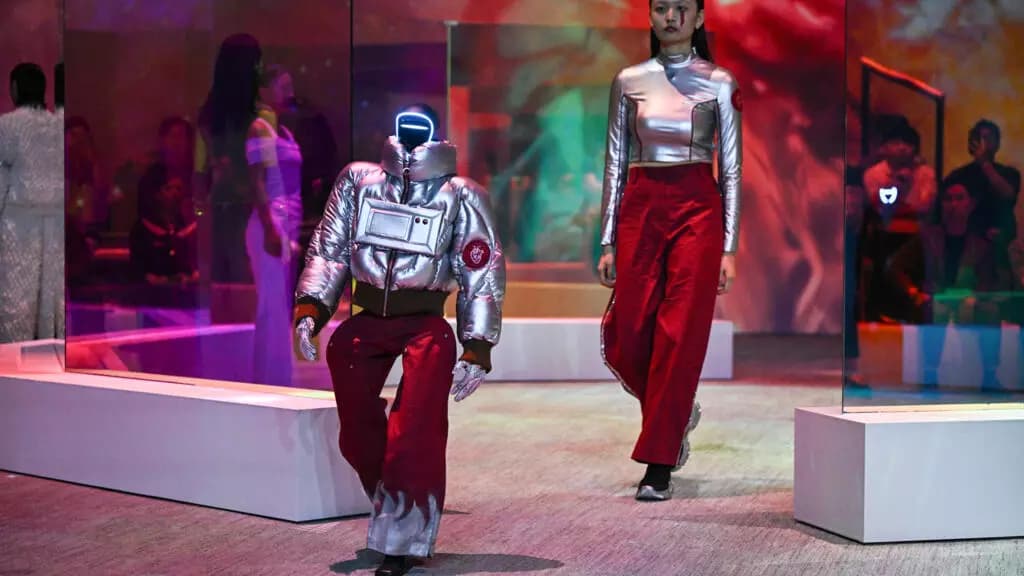
Seoul played host to a unique fashion show where robots and their human counterparts strutted down the catwalk, showcasing the importance of coexistence between humans and androids. The event, held at Galaxy Corporation in Seoul on Thursday, featured carefully tailored outfits for both humans and humanoid robots, with designs ranging from retro space-age attire to Texan cowboy ensembles.
Fashion as a Mirror to Coexistence
We are seeing an increasing interest in integrating technology into daily life, with companies like Galaxy Corporation pushing the boundaries by exploring fashion. CEO Choi Yong-ho emphasised that while every human is unique, each robot should also have its own distinct appearance.
The clothing line, designed by Galaxy Corporation and dubbed 'MACH 33', aims to launch later this year. The outfits on display included silky dresses for humans and billowing black trousers for robots – reminiscent of rock star David Bowie's iconic style in the 1970s. These designs were meticulously fitted onto the robotic skeletons, reflecting the evolving relationship between people and their technological counterparts.
The human-robot pairs took turns to march down the catwalk, with the robot models appearing to wear outfits designed by Unitree, a Chinese company known for its affordable tech solutions. As technology advances, it's becoming clear that robots will not just be tools but companions in various aspects of daily life.
According to financial services firm Morgan Stanley, the world could see over one billion robots by 2050, marking a significant shift in how we interact with artificial intelligence. However, fully automated robots using emerging physical AI technology are still relatively rare and largely pre-programmed or remotely operated for now.