Land Disputes Escalate Between Podu Cultivators and Forest Staff in Adilabad
The arrival of the monsoon in Adilabad has triggered confrontations between podu cultivators and forest officials over land ownership. As authorities implement the Land Retrieval Mission, disagreements over land allocation and the rights of displaced communities have led to heightened tensions and arrests across the district.

Highlights
- •Clashes erupted between podu cultivators and forest officials in Adilabad as monsoon sowing activities began.
- •Disputes center on the government's Land Retrieval Mission, which targets forest land currently occupied by non-tribal farmers.
- •Tensions rose in Nirmal district after land earmarked for Kawal Tiger Reserve oustees led to arrests of local Adivasis.
- •Officials are negotiating land sharing deals in exchange for infrastructure improvements, but cultivators are demanding individual allocations.
As the monsoon season begins in the erstwhile Adilabad district, tensions have flared between local podu cultivators and forest department personnel. Authorities have ramped up efforts under the Land Retrieval Mission, seeking to reclaim forest territories that have been under non-tribal cultivation for decades. These ongoing disputes highlight the complex challenges surrounding land rights, forest conservation, and the livelihoods of those dependent on these contested areas.
Land Conflicts and Official Negotiations
Forest department operations are currently concentrated in Dimda village within the Chinthalamanepalli mandal, as well as Lumbininagar in the Bejjur mandal of Komaram Bheem Asifabad district. Reports indicate that significant portions of forest-classified land—estimated by officials to be between 15 and 20 acres—are currently occupied by non-tribal farmers. These individuals assert that they have been farming these specific plots for approximately forty years, forming the backbone of their economic survival.
To resolve the impasse, discussions between the administration and the cultivators have been initiated. Officials have proposed a compromise involving the allocation of land parcels based on a family unit system. However, the cultivators are pushing back, demanding that land distribution be handled on an individual basis for each family member. Adding to the legal complexity, while some occupiers possess pahanis, they lack formal pattas for the land in question.
Tensions and Administrative Challenges
In a bid to manage the situation, forest authorities have pledged to facilitate infrastructure development—including the construction of roads, culverts, and the installation of borewells and electrical supply—provided that the cultivators agree to surrender half of their occupied land. Appaiah, a forest division officer in Kagaznagar, has been leading these delicate negotiations to reach a settlement.
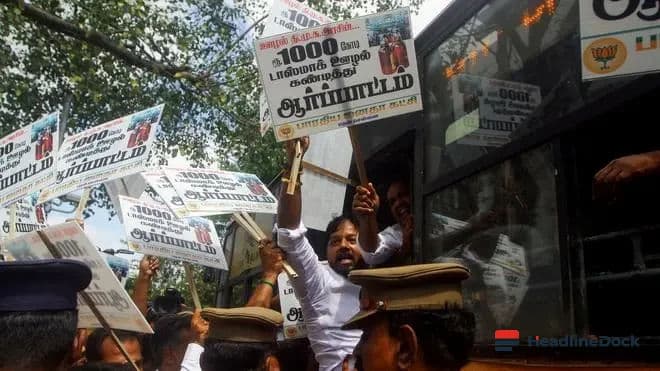
The situation remains volatile, as evidenced by events in Gondguda hamlet, located in Nachanellapur village of the Kadam mandal in Nirmal district. In this instance, Adivasi residents opposed the allotment of their cultivated land to families displaced from the core zone of the Kawal Tiger Reserve. The attempt by forest staff to demarcate the area for these displaced families resulted in physical clashes, leading to the arrest of 20 Adivasis.
Former Adilabad MP Soyam Bapu Rao has since submitted a formal memorandum to the ITDA project officer, Manda Makarandu. The complaint alleges that forest officials are causing internal divisions among the Adivasi community and failing to provide adequate justice for those forced to relocate from the Kawal Tiger Reserve, further complicating the ongoing land retrieval initiatives.