How Rising Heatwaves Are Affecting Poultry Production and Egg Quality
Climate change-induced heatwaves are severely affecting poultry farming, causing significant declines in egg production and quality. Research is ongoing to develop heat-resilient breeds and improved farming techniques to safeguard these essential protein sources against rising temperatures.
Highlights
- •Rising heatwaves directly decrease egg production and reduce overall egg size and shell quality.
- •Hens struggle with thermoregulation due to lack of sweat glands, leading to metabolic stress and lower food intake.
- •Extreme heat exposure significantly alters internal biological processes, affecting egg weight and nutritional composition.
- •Researchers are testing heat-resilient breeds and optimized farming techniques to mitigate the impact of climate change.
As global temperatures rise, the agricultural sector is facing significant challenges, particularly regarding the impact of heatwaves on poultry production. Increasingly frequent and intense heat events are causing hens to produce fewer eggs, which are often smaller and have more fragile shells. Given the global popularity of eggs and poultry meat as accessible protein sources, researchers worldwide are urgently studying methods to improve the heat resilience of these birds.
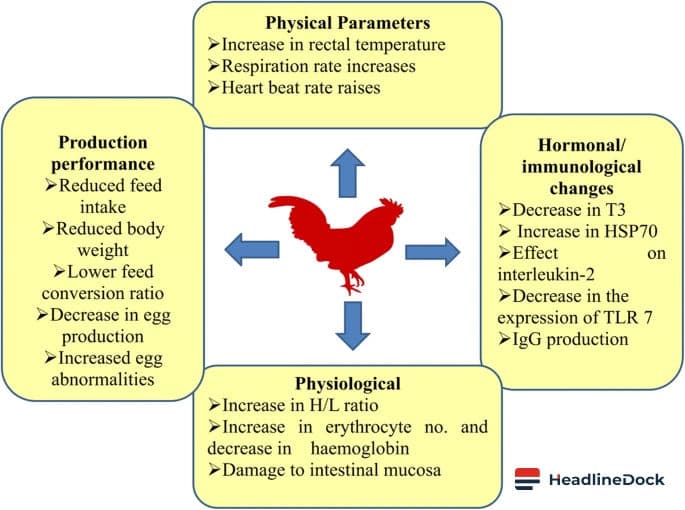
Hens lack functional sweat glands for thermoregulation, making them highly susceptible to heat stress. To cope with high temperatures, they often spread their bodies on the ground and utilize respiratory hyperventilation to dissipate heat through evaporation. During these periods of stress, hens naturally reduce their food consumption and limit their energy expenditure on non-essential functions, such as egg formation, to prioritize survival.
Impact of Heat Stress on Egg Production
The effects of high heat on egg output are significant and well-documented in scientific studies. When hens are exposed to continuous temperatures of 32°C, compared to the standard 22°C, egg production can drop by 15% to 30%. While cyclic temperatures that allow for cooler nighttime recovery may mitigate the total loss of egg numbers, the quality and physical characteristics of the eggs are still heavily impacted.
Eggshells often become fragile during heatwaves because the birds ingest less calcium and struggle to metabolize it effectively due to excessive CO₂ exhalation. Furthermore, the amount of protein-rich albumen in the eggs decreases, and the weight of the yolk is also reduced over time due to metabolic adjustments in the liver. Research indicates that for every degree Celsius above 25°C, egg weight can drop by 0.4 to 1 gram.
Extended exposure to extreme heat, such as temperatures reaching 42°C or higher, can be lethal, as the birds' internal temperature typically stabilizes around 41°C. Beyond these primary effects, the increased water consumption by the birds can result in wetter litter, which creates a breeding ground for pathogens, potentially leading to foot issues like pododermatitis.
Developing Resilience in Poultry
To combat these issues, farmers and scientists are exploring multiple strategies to protect poultry health during heatwaves. Improving infrastructure, such as optimizing building ventilation and implementing effective misting systems that do not compromise litter quality, is a primary focus. Shifting feeding schedules to cooler periods, such as the early morning or night, has also proven effective in reducing heat stress.
In addition to environmental adjustments, researchers are evaluating different poultry breeds, such as the Fayoumi breed, which displays natural resistance to heat. Other studies are investigating the impact of incubation temperatures on embryonic gene expression to foster long-term heat tolerance. While no single solution exists, these diverse approaches are vital to ensuring the sustainability of poultry production against the backdrop of a changing climate.