How Canada’s Immigration Policies Are Creating New Barriers For International Students
Evolving immigration policies by the IRCC are creating new challenges for international students in Canada. Research shows that inconsistent regulations and enrolment caps are fostering inequality, despite the nation's goal of leveraging international talent for economic growth and humanitarian support.
Highlights
- •IRCC has shifted from its original mandate to become a dominant regulator of higher education policy.
- •New enrolment caps implemented in 2024 have led to a substantial decline in international student arrivals.
- •Policy responses to humanitarian crises are inconsistent, often favoring specific nationalities over others.
- •Auditor General reports highlight the ineffectiveness of recent reforms and a lack of equitable access.
Recent research indicates that Canada’s immigration policies are increasingly creating significant barriers for international students. While the Immigration, Refugees and Citizenship Canada (IRCC) was originally designed to support nation-building through various programs, it has evolved into a dominant authority over the country's education sector, a domain typically reserved for provinces and territories. Since the implementation of the International Student Program, this oversight has expanded significantly.
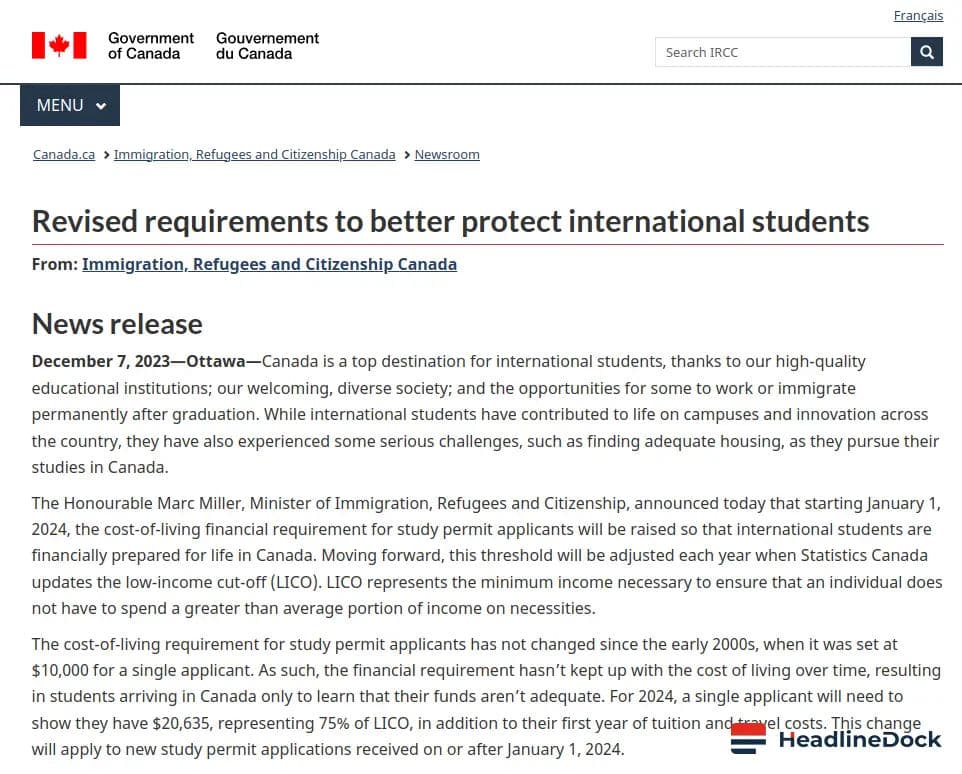
The role of the IRCC in shaping educational policy has become particularly pronounced since 2022. A major shift occurred in January 2024 when the federal government introduced an unprecedented cap on international student enrollment, fundamentally altering the landscape for those seeking to study in the country. Geopolitical tensions, including global conflicts and democratic instability, have further complicated these regulatory efforts, leaving many students navigating an increasingly restrictive environment.
Impacts of Changing Immigration Policies
Researchers analyzed policy announcements made by the IRCC between January 2022 and July 2025 to understand how domestic priorities and international pressures intersect. The findings suggest that while official communications often appear neutral, the inconsistent application of these policies reinforces existing inequalities among international students. For example, the IRCC often frames Canada’s immigration policies as providing a safe haven during humanitarian crises. However, the access granted to these protections varies significantly based on a student’s nationality and background.
Specific measures, such as the Canada-Ukraine Authorization for Emergency Travel program, provided a pathway for nearly 300,000 Ukrainians to settle, work, and study. In contrast, special immigration streams for individuals affected by the conflict in Gaza were more limited, capped at 5,000 temporary visas, and closed after only four months. These disparate approaches highlight how Canada’s immigration policies are frequently tethered to broader foreign policy objectives rather than a standardized humanitarian framework.
Navigating Contradictions and Barriers
A deeper contradiction exists in how the country manages its international student population. While Canada actively recruits students to bolster economic growth, it simultaneously faces internal criticism that suggests students contribute to pressures on housing and social services. A report from the House of Commons has even suggested capping applicants from high-volume countries like India and Nigeria, citing concerns over potential misuse of asylum claims.
Despite recent enrolment caps, the Auditor General noted that the number of students arriving from European nations continued to rise. This data suggests that current reforms are failing to address the fundamental needs for transparency and equity. Without a more balanced framework, the current path threatens to undermine the educational and humanitarian reputation of the nation.