How Artificial Intelligence Will Empower Doctors to Improve Patient Outcomes
Health Minister Damodar Rajanarasimha advocates for the use of artificial intelligence as a powerful tool to enhance medical capabilities. The government plans to deploy AI-powered diagnostic systems across district hospitals to ensure advanced, personalized care is accessible to all, focusing on prevention over reactive treatment.
Highlights
- •Health Minister Damodar Rajanarasimha highlighted how AI can empower doctors to save lives through proactive, personalized care.
- •Government initiatives include deploying AI-assisted X-ray analysis and early disease detection systems in public healthcare.
- •Plans are in motion to scale AI diagnostic tools to district hospitals to improve access in underserved areas.
- •Leading global institutions and tech companies joined the AI in Healthcare 2.0 conference to discuss future medical innovations.
The integration of artificial intelligence in healthcare is set to revolutionize patient outcomes, according to Damodar Rajanarasimha. As the Health Minister, he emphasized that this technology is designed to bolster the capabilities of medical professionals rather than replace them. By acting as a sophisticated instrument in the hands of doctors, AI promises to shift the focus from reactive disease management to proactive, preventative care.
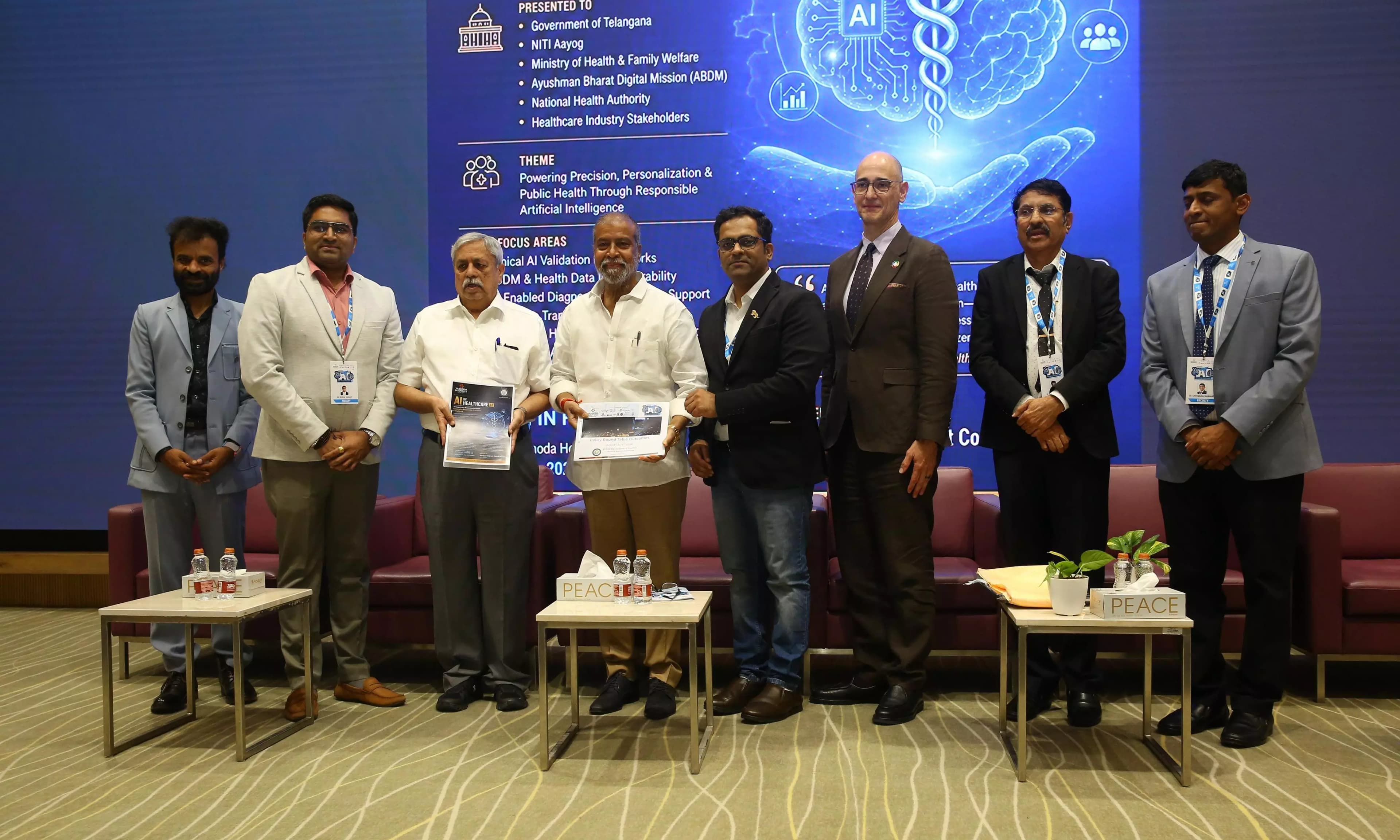
Speaking at the recent international conference titled AI in Healthcare 2.0 – Powering Precision and Personalising Care, held in Hitec City, officials highlighted the broader implications of these technological advancements. The objective is to utilize digital innovations—including genomics and advanced diagnostic tools—to deliver highly personalized treatment plans tailored to the specific needs of each individual patient.
Enhancing Diagnostic Precision with AI Technology
The government is already actively incorporating AI-based solutions into the public healthcare infrastructure. These implementations include specialized systems for AI-assisted X-ray analysis, early identification of sepsis, and diagnostic capabilities for detecting conditions like fatty liver disease at their earliest stages. Plans are currently underway to scale these AI-powered diagnostic platforms to include district-level facilities, effectively closing the gap in specialized care for underserved regions.
Damodar Rajanarasimha maintained that the primary goal of these technological deployments must remain the tangible improvement of human lives. By empowering clinicians with data-driven insights, the healthcare system can ensure that even areas lacking expert specialists receive a higher standard of medical support. The conference brought together a global assembly of experts from prestigious institutions and technology leaders, including Google, Microsoft, IIIT Hyderabad, IIT Hyderabad, ISB, Novartis, Stanford University, King’s College London, Medtronic, and TCS.
A Transformative Force for Clinical Workflows
The role of AI extends beyond simple diagnostics, as it is fundamentally reshaping clinical workflows and decision-making processes. Dr. Chinnababu Sunkavalli, who serves as the clinical director and a robotic surgical oncologist, noted that the technology is a profound force for transformation within the medical field. By enabling greater diagnostic accuracy and streamlined efficiency, AI supports the move toward more effective and personalized treatment strategies.
This conference served as a vital nexus for healthcare leaders, researchers, technology innovators, and policymakers to converge. The collaborative efforts showcased in the event reflect the next wave of healthcare transformation, setting the stage for a future where technology and human expertise work in tandem to optimize health outcomes. The consensus remains that while the technical advancements are rapid, their application is strictly intended to supplement the professional judgment of doctors, ultimately creating a more robust and accessible healthcare ecosystem.