French Historian Marc Bloch Honored with Induction into the Panthéon
Renowned French historian and resistance hero Marc Bloch is set to enter the Panthéon on June 23, 2026. His innovative methodology, which bridged history with social sciences, continues to revolutionize how historians research and interpret complex societal shifts from the medieval era to the present.
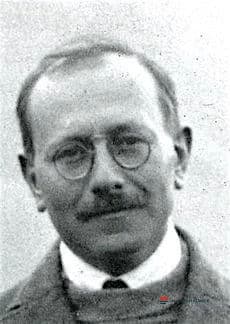
Highlights
- •Marc Bloch and his wife, Simonne Vidal, will be inducted into the Panthéon on June 23, 2026.
- •Bloch co-founded the influential Annales journal, promoting interdisciplinary approaches to historical research.
- •He revolutionized historical methodology by moving beyond legal analysis to explore social practices and mentalities.
- •His legacy persists as a foundational reference for modern scholars across multiple humanities disciplines.
The esteemed French historian and resistance figure Marc Bloch is set to be honored with a prestigious induction into the Panthéon on June 23, 2026. Alongside his wife, Simonne Vidal, Bloch will be recognized for his enduring contributions to historical scholarship and his valiant efforts during World War II.
While often remembered by the general public primarily as a hero of the French Resistance, his professional legacy as an academic remains profoundly influential. As a co-founder of the seminal journal Annales d'histoire économique et sociale in 1929, Marc Bloch pioneered a new approach to the study of the past, emphasizing interdisciplinary dialogue and rejecting the constraints of traditional nationalistic narratives.
Revolutionizing Historical Methodology
Marc Bloch fundamentally transformed the historian profession by advocating for a method rooted in inquiry rather than mere fact-gathering. He utilized an expansive range of source materials, including images, physical objects, and landscape observations, to construct a more complex understanding of social dynamics. By applying comparative analysis across different societies, he sought to move beyond the limitations of strict, conventional legal history.
His groundbreaking work, Les Rois thaumaturges (The Royal Touch), published in 1924, serves as a testament to his innovative methodology. By examining the medieval belief in the royal power to heal illnesses, he ventured into the realm of anthropology and the history of mentalities. This approach initially confused many of his contemporaries, yet it ultimately established Bloch as a foundational figure whose influence continues to shape modern historiography.
An Enduring Intellectual Legacy
Beyond his rigorous scholarly achievements, Marc Bloch was dedicated to clear communication, famously asserting his ambition to address both learned scholars and students with the same level of clarity. His writings, including the posthumously published Apologie pour l'histoire ou métier d'historien, continue to serve as essential guides for researchers today. The decision to honor him at the Panthéon underscores the deep respect the professional community still holds for his methodological innovations.
The academic impact of Marc Bloch is not merely historical; it remains a living tradition. Contemporary scholars frequently revisit his work to understand how to effectively integrate socio-economic and cultural perspectives into the study of history. As a key figure in the Annales school, his intellectual courage in challenging stagnant academic conventions ensures that his status as a master of the historian craft remains undisputed, decades after his execution by the Gestapo on June 16, 1944.