Endangered Indian Grey Wolf Discovered in Telangana's Amrabad Tiger Reserve
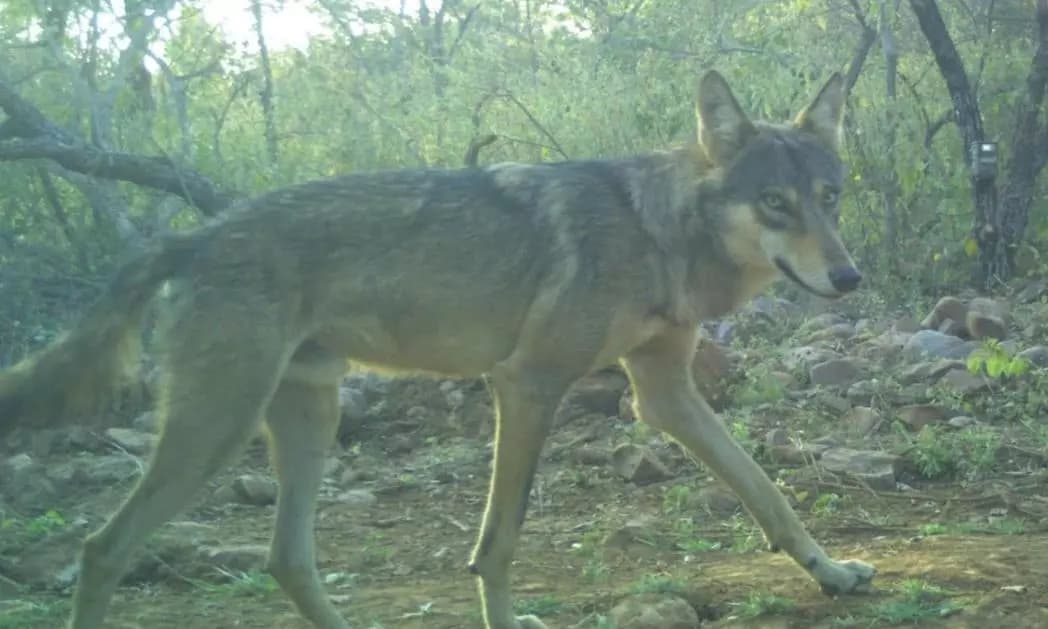
Camera traps in Telangana’s Amrabad Tiger Reserve have captured images of the endangered Indian Grey Wolf. This rare sighting, alongside other documented wildlife, highlights the ecological significance of the reserve and the success of local habitat restoration and management programs.
Highlights
- •The endangered Indian Grey Wolf was documented in the Amrabad Tiger Reserve via camera traps.
- •The species is protected under Schedule I of the Wildlife (Protection) Act, 1972.
- •Camera traps also recorded a wide variety of wildlife including leopards, sloth bears, and wild dogs.
- •The Mouse Deer Soft-release Programme has proven successful, with the animals establishing in the wild.
Recent findings from the All India Tiger Estimation (AITE) 2026 have revealed a significant and heartening development for conservation efforts in Telangana. Advanced camera trap monitoring, originally deployed to track tiger populations within the Amrabad Tiger Reserve (ATR), has successfully captured images of the elusive Indian Grey Wolf. This discovery is particularly notable as the species faces extreme threats from widespread habitat loss, with current population estimates across India remaining critically low at approximately 3,000 individuals.
As a highly endangered species, the Indian Grey Wolf is strictly protected under Schedule I of the Wildlife (Protection) Act, 1972. This classification grants it the same level of legal protection as the tiger, acknowledging its vulnerability. Furthermore, the IUCN Red List identifies the wolf as a vulnerable species, emphasizing the urgency of protecting its remaining territories. The images captured within a plains sector of the Amrabad Tiger Reserve indicate the presence of a pack consisting of five to six individuals, marking a rare and vital documentation of this threatened predator in the region.
Ecological Importance and Biodiversity in ATR
The reappearance of the Indian Grey Wolf within the Amrabad landscape is being hailed by forestry officials as a major conservation milestone. Once commonly found throughout the semi-arid regions and grasslands of the country, their presence now serves as a testament to the ongoing ecological value and health of the Amrabad Tiger Reserve. This development highlights the effectiveness of current habitat preservation strategies in supporting diverse and rare wildlife populations.
Beyond the wolf, the ongoing estimation exercise has successfully recorded a rich array of biodiversity within the reserve. Camera traps have documented numerous other species, including leopards, sloth bears, dholes (wild dogs), golden jackals, jungle cats, rusty-spotted cats, Asian palm civets, small Indian civets, nilgai, sambar, spotted deer (chital), chinkara, wild boar, and the four-horned antelope (chousingha). This diverse collection of fauna reinforces the status of the reserve as one of the most significant wildlife habitats in India.
Success of Habitat Restoration Initiatives
In addition to the sighting of the Indian Grey Wolf, the forest department has confirmed positive outcomes from other specialized conservation projects. Specifically, the Mouse Deer Soft-release Programme in ATR has yielded encouraging data, with camera traps confirming that the mouse deer have successfully established themselves within their natural environment. Dr. Sunil S. Hiremath, the Field Director of ATR, noted that these results validate the scientific approach taken toward wildlife management and habitat restoration. Such success stories are crucial for the long-term sustainability of endangered species populations within protected areas.