Beyond the Trophy: The Financial Winners of the 2026 FIFA World Cup
The 2026 FIFA World Cup delivers significant financial wins beyond just the championship trophy. With a record US$655 million prize fund and US$871 million in distributed support, the expanded tournament is providing historic economic benefits to participating nations and host countries alike.
Highlights
- •The 2026 FIFA World Cup features a record performance-based prize fund of US$655 million for competing teams.
- •A separate US$871 million distribution program provides equal financial support to all 48 participating football associations.
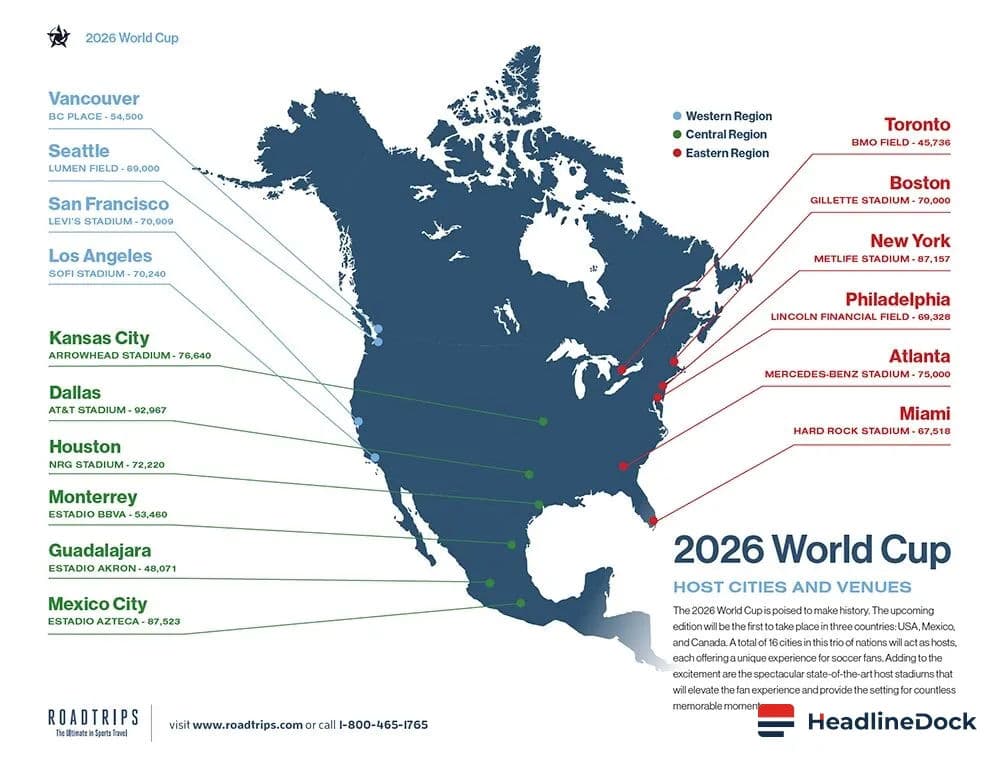
- •The expanded tournament includes 104 matches, driving massive infrastructure and tourism investment across Canada, Mexico, and the USA.
- •Host cities are leveraging the event to accelerate urban development and boost their profiles as international business and tourism hubs.
The 2026 FIFA World Cup is set to be more than just a battle for football supremacy; it represents a major financial milestone for participating teams and host nations. While all eyes are on the eventual champion, the expanded 48-team format ensures that many nations emerge as winners through significant financial gains and global visibility.
The tournament, hosted by Canada, Mexico, and the United States, has introduced a record-breaking financial structure. This initiative aims to support federations and foster growth, reflecting the immense commercial success of the men’s international game. By expanding the tournament to include 48 teams, the competition now features 104 matches, creating widespread economic opportunities.
Understanding the Financial Structure of the 2026 World Cup
The financial framework for the 2026 FIFA World Cup is built upon two pillars. First, there is a performance-based prize fund totaling US$655 million. This merit-based system rewards teams based on their advancement, with payouts scaling from US$9 million for group stage exits to US$50 million for the eventual trophy winner. This prize pool represents a massive 50 percent increase over the 2022 edition held in Qatar.
Complementing this is a US$871 million team distribution program. Unlike the prize money, this support is distributed equally among all 48 participating associations. These funds cover essential operational costs such as accommodation, transportation, training facilities, and insurance. This standardization of base contributions, at a minimum of US$12.5 million per team, is designed to promote financial parity across the sport.
Economic Impact Beyond the Pitch
Beyond the direct payouts to football associations, the 2026 FIFA World Cup acts as a powerful catalyst for host countries. The massive influx of fans, with approximately seven million tickets available across the tournament, is driving record-breaking attendance and boosting tourism. Visitors are extending their trips, exploring various regions, and benefiting local commerce, hospitality, and service sectors.
The infrastructure investments required for such a large-scale event are substantial, with billions of dollars directed toward transportation, security, and urban development. Cities involved in hosting are using the tournament to elevate their global profile, positioning themselves as prime destinations for future large-scale international gatherings. Through this lens, the tournament provides tangible economic legacy benefits for the host nations.
While the competition on the field remains the core attraction, the 2026 FIFA World Cup has already cemented its status as a historic financial undertaking. For the participating nations, the tournament organizers, and the hosting cities, the event is delivering significant value, establishing it as a victory for the broader football community long before the final whistle blows.