Andy Burnham Secures Major Makerfield Win, Signaling Potential Labour Party Shift
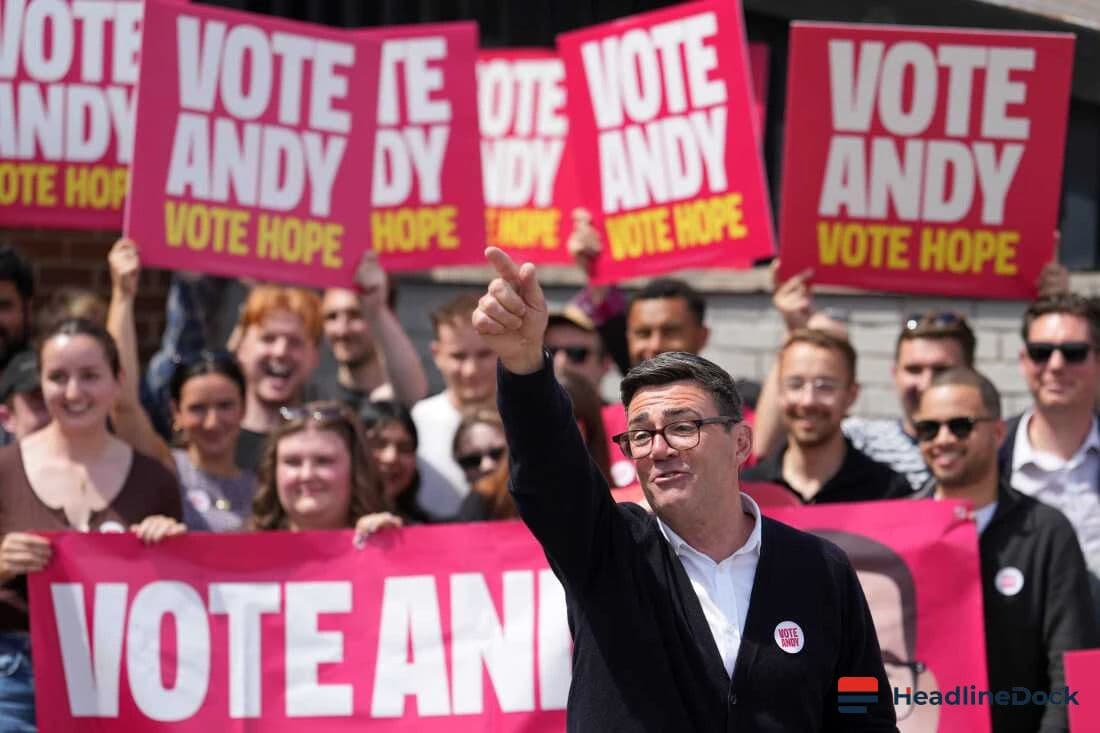
The Makerfield by-election has resulted in a significant victory for Andy Burnham, offering the Labour Party a potential new path forward. With a 23-point swing, the result marks a critical moment for British politics and raises questions about future leadership directions within the party.
Highlights
- •Andy Burnham secured a decisive victory in Makerfield with 54.8% of the vote.
- •The result represented a notable 23-point swing, challenging the momentum of Reform UK.
- •Tactical voting played a significant role, with opposition party shares dropping to 3.3%.
- •Burnham's success places him in the spotlight as a potential future leader for the Labour Party.
The Makerfield by-election has delivered a significant result that could reshape the future trajectory of the Labour Party. By securing a decisive victory, Andy Burnham has underscored his political standing at a critical juncture for British politics in 2026. This electoral outcome is being viewed by many as a potential turning point that could redefine both public perception and the internal performance of the current administration.
Historically, governing parties rarely secure victories in by-elections, particularly with the 23-point swing observed in this race. Andy Burnham achieved an emphatic 54.8% vote share, outpacing the Reform UK candidate by more than 20 percentage points. This success serves as a personal triumph for Burnham, effectively pausing the momentum that Nigel Farage and his party had previously built in the region. The results suggest that voters are increasingly responsive to specific candidates rather than just party labels alone.
The Impact of the Makerfield By-election Result
The broader political landscape remains highly volatile. While Labour struggled in other recent contests, including those in Scotland, the success in Makerfield provides a unique narrative. Analysts note that the combination of Conservative, Liberal Democrat, and Green party votes totaled only 3.3%, which points toward significant tactical voting behavior. This suggests that the electorate is highly engaged and willing to move away from traditional party allegiances to achieve a specific outcome.
Andy Burnham has long advocated for electoral reform, and this victory may solidify that agenda as a core commitment for Labour. However, the path ahead remains complex. Moving from a successful regional leadership record to the national and international stage presents distinct challenges. The transition to the highest office requires navigating the intense scrutiny and impatience of a public that has become increasingly skeptical of traditional political promises.
As Burnham re-enters the national conversation, the focus will now shift to whether his brand of politics is truly portable. Having previously attempted to lead the party in 2010 and 2015, this third chapter for Burnham arrives when the political environment is fragmented and multi-party in nature. The result in Makerfield acts as a clear signal; for some, it represents the beginning of a shift in Labour's leadership dynamics. Whether this victory translates into long-term national governance will be the ultimate test for Burnham as he navigates the complex demands of 2026 British politics.