Andy Burnham Favored to Become Next UK Prime Minister After Starmer Resigns
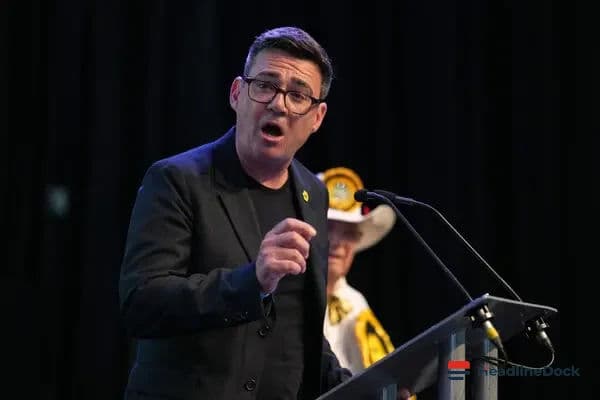
Following Sir Keir Starmer's resignation, new MP Andy Burnham has emerged as the frontrunner for UK prime minister. His recent victory in Makerfield suggests a potential strategy for establishment parties to counter rising populist movements like Reform UK.
Highlights
- •Sir Keir Starmer has resigned as the prime minister of the United Kingdom.
- •Andy Burnham secured a decisive 9.6% vote increase in the Makerfield byelection.
- •Burnham’s success is viewed as a potential model for countering populist political parties.
- •Political analysts are comparing Burnham’s approach to Australian Labor leadership strategies.
Following a period of intense speculation, Sir Keir Starmer has stepped down as the prime minister of the United Kingdom. The race to identify his successor has quickly centered on Andy Burnham, a new Labour Member of Parliament who secured a significant victory in the Makerfield byelection held on June 18, 2026.
This political success for Andy Burnham is notable not only for its local impact but also for how it suggests potential strategies for major establishment parties facing challenges from populist movements like Reform UK. As both the UK and Australia observe established parties losing ground to radical right challengers, political analysts are looking to see if these developments offer transferable lessons for governments, including the administration led by Anthony Albanese in Australia, particularly regarding the handling of parties like One Nation.
Understanding the Burnham Strategy
The Makerfield byelection provided a unique test case. While Labour has faced historically low support and difficult local election outcomes, Andy Burnham managed to increase his party's vote share by 9.6% to reach 54.8%. His ability to buck the prevailing negative trends has drawn considerable attention from Labour leadership, who are eager to replicate his success against the rising influence of Reform UK.
Andy Burnham utilized a campaign style that emphasized his deep-rooted connections to the region, coupled with his high-profile tenure as the first mayor of Greater Manchester. By positioning himself as an insurgent figure promising change—despite his long career in national politics—he successfully tapped into voter dissatisfaction with the current government. He effectively offered voters a chance to support him as a Labour MP while simultaneously distancing himself from the unpopularity of the previous leadership.
Future Directions for Political Blocs
The success of Andy Burnham provides a blueprint for how a party might consolidate support in an era of shifting political blocs. Moving forward, his leadership style is expected to be more consultative, potentially shifting Labour towards more progressive policy stances on utilities, transport, and housing. His previous writings and public commentary suggest a strong interest in structural democratic reforms, such as adopting a written constitution and increasing regional powers, reflecting a vision for a more decentralized and equitable United Kingdom.
The Makerfield result highlights a broader trend: while establishment parties are struggling, voters are responding to candidates who display authentic, organic connections to the labour movement. For those observing from Australia, the comparison is clear. Anthony Albanese and Andy Burnham both frame their political identities around personal and foundational commitments, which may prove vital for maintaining party discipline and voter loyalty as both nations face the challenge of increasingly polarized, multi-bloc political landscapes.