How ESG Rating Agencies Influence Corporate Valuation and Sustainability Strategies
ESG rating agencies significantly influence corporate valuations through their methodological choices. Recent studies show that score fluctuations, often driven by technical changes rather than actual company performance, impact investor behavior, highlighting the need for greater transparency and regulatory alignment in non-financial reporting.
Highlights
- •ESG rating agencies evaluate corporate environmental, social, and governance practices, significantly impacting company valuation.
- •Methodological shifts by agencies like MSCI can artificially alter ESG scores without any actual change in company operations.
- •Research indicates that ESG scores act as powerful signals, influencing how investors perceive and value corporate sustainability efforts.
- •Regulators are increasingly focused on standardizing ESG methodologies to ensure transparency and alignment with public policy goals.
Much like financial agencies assess the creditworthiness of sovereign nations or corporations, ESG rating agencies now evaluate the environmental, social, and governance practices of businesses. These organizations provide scores aimed at measuring how well companies handle social and environmental responsibilities. Increasingly, however, these published scores appear to reflect much more than just a simple assessment of corporate RSE (Responsibility for Society and Environment) practices.
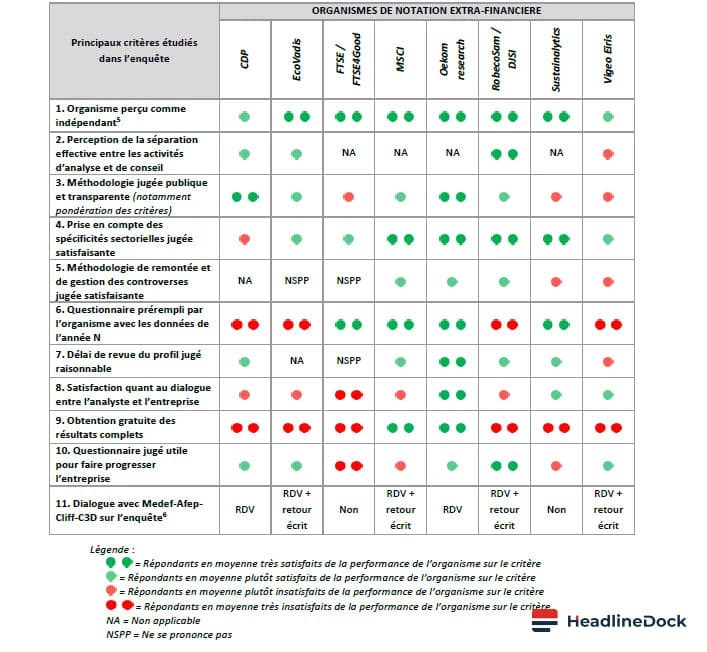
ESG ratings have become a central decision-making tool for global investors and play a significant role in determining company valuations. As firms continue to invest heavily in RSE initiatives—whether voluntarily or due to external pressures—the actual influence of rating agencies has come under intense scrutiny. Recent research published in the British Journal of Management indicates that these agencies might influence how investors integrate RSE data into corporate valuation, highlighting the importance of current European Union efforts to enhance reliability, standardisation, and transparency in non-financial reporting.
Understanding the Impact of Methodological Shifts
Can an ESG score shift without any actual change in a company's operational practices? Evidence suggests it can. In 2010, following several acquisitions of other data providers, the major agency MSCI updated its methodology to incorporate sector-specific indicators. This technical adjustment had an immediate mechanical effect on scores: some firms saw their ratings rise while others fell, regardless of their actual performance. For instance, a firm with 20 strengths and 10 weaknesses might have held a global ESG score of 10 in 2009. If only 15 of those strengths were later deemed relevant to its specific sector, the score would automatically drop to 5. Approximately 80% of companies studied were impacted by this methodological revision, with nearly 60% experiencing a downgrade.
This scenario acts almost like a controlled experiment, allowing researchers to isolate the effect of methodological choices and observe how ESG ratings influence outcomes when they vary independently of real-world corporate behavior. In theory, if financial markets processed information directly from companies efficiently, technical shifts in scoring methods should not impact valuation. However, data from 2010 revealed that when MSCI modified its methodology, the influence of these scores on company valuation became significantly more pronounced.
Strategic Implications for Markets
This increased sensitivity was particularly noticeable among companies with limited financial constraints and lower ownership by institutional investors. These firms depend more heavily on external signals, making them more vulnerable to the methodologies of rating agencies. Consequently, these scores are not merely neutral performance indicators; they act as signals of their own importance. For firms, navigating these evaluation methods has become a critical strategic challenge. It is no longer enough to simply enhance RSE practices; businesses must also understand how those actions are measured and how such evaluations may dictate their market valuation.
Ultimately, these findings suggest that rating agencies are far from being neutral observers. Their methodological decisions can structure market reality, influencing how investors value corporate sustainability. For regulators, these insights underscore the necessity of aligning agency methodologies with broader environmental and social policy goals to ensure these scores effectively support public objectives.