Recent Meteor Impact Over US Eastern Seaboard Triggers Massive Sonic Boom
A recent meteor impact near the Massachusetts-New Hampshire border released energy equivalent to 300 tons of TNT. Such events are becoming more frequently documented thanks to modern digital security sensors, offering scientists unique opportunities to study ancient solar system materials while highlighting the atmosphere's protective role.
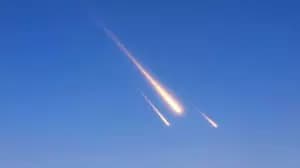
Highlights
- •A 3-5 foot meteor entered the atmosphere on May 30, 2026, creating a sonic boom equivalent to 300 tons of TNT.
- •Advancements in digital surveillance technology have increased the frequency and clarity of recorded meteor impact sightings globally.
- •2026 has seen multiple significant meteor events, including fireballs over Northern Europe, Lake Erie, and Texas.
- •While Earth's atmosphere effectively mitigates most cosmic debris, large objects like the 2013 Chelyabinsk meteor pose potential surface risks.
Earth is perpetually navigating through a vast cosmic environment filled with remnants from the solar system's ancient origins. While our planet generally travels through this space silently, protected by the atmosphere, occasionally the universe delivers a powerful reminder of its scale through a meteor impact. These events often result in intense atmospheric phenomena that capture the attention of communities across the globe.
On the afternoon of May 30, 2026, residents near the border of Massachusetts and New Hampshire were startled by a significant sonic boom. This event was observed by numerous people along the Eastern Seaboard. Following a detailed analysis of satellite imagery, NASA confirmed the phenomenon was caused by a small rock, roughly 3 to 5 feet in diameter, entering the upper atmosphere at a velocity of 42,000 miles per hour.
Understanding Meteor Impact Physics and Energy
As the rock plummeted into denser layers of the atmosphere, extreme friction converted its kinetic energy into immense heat. At an altitude of approximately 40 miles, the structural integrity of the object failed, leading to a massive breakup. This release of energy was calculated at approximately 300 tons of TNT. When an object breaches the sound barrier—which occurs at 761 miles per hour—it generates a shock wave, resulting in the thunderous noise heard by witnesses on the ground.
While most of the material vaporized during this atmospheric descent, some remnants safely reached the waters of Cape Cod Bay. Historically, such brief cosmic intrusions might have gone unnoticed or unverified. Today, however, widespread access to dashboard cameras, security systems, and digital doorbell technology provides a comprehensive network of sensors, making these occurrences more visible in modern news cycles.
The current year has witnessed a particularly active season for such arrivals. Earlier in March, large fireballs were reported over Northern Europe, with scientists eventually tracing the debris to the asteroid Vesta. Shortly after, a 7-ton object detonated over Lake Erie, generating energy equivalent to 250 tons of TNT. Another incident occurred over Texas, where a fragment weighing approximately 3 feet across caused property damage near Houston.
Atmospheric Protection and Cosmic Perspectives
The Chelyabinsk meteor, which exploded over Russia in February 2013, remains the primary benchmark for modern atmospheric impacts. That significantly larger 18-meter object caused widespread damage and injury, highlighting the atmosphere's role as an essential protective barrier. Despite these dramatic occurrences, the statistical likelihood of an individual being struck by a meteorite is extremely low. These events, while startling, provide scientists with valuable opportunities to study the origins of the solar system.