Namo Drone Didi Yojana: Empowering Rural Women with Tech
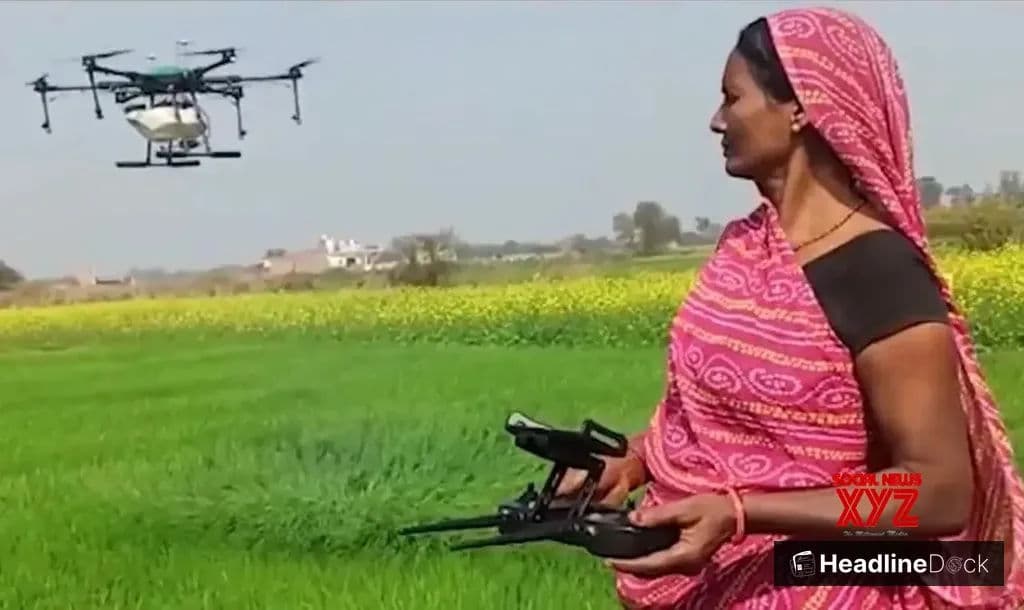
The Namo Drone Didi Yojana empowers rural women through drone technology training, enhancing their economic status and agricultural productivity. This scheme aims to train 15,000 SHGs over two years with government support of ₹1,261 crore.
Highlights
- •Government initiative focuses on training women in drone technology
- •Approximately 15,000 Self Help Groups (SHGs) to be trained by 2024-25
- •Each SHG gets a 80% subsidy for purchasing drones costing Rs 8 to Rs 10 lakh
- •Studied improvement in women's productivity and income after drone training
The Government of India's 'Namo Drone Didi Yojana' stands as a groundbreaking initiative aimed at empowering women in rural regions by leveraging modern drone technology. Introduced late last year, this program targets approximately 15,000 Self Help Groups (SHGs) nationwide, equipping women with the skills and tools they need to transform traditional agricultural practices.
Namo Drone Didi not only promises to increase women's economic participation but also fosters a seamless integration of technology in agriculture. According to Dr. Chandrashekhar Pemmasani, who heads the Ministry's Rural Development department, the initiative aims to reduce costs and enhance productivity through drone-based applications like crop monitoring, spraying pesticides, and assessing land health.
Under this scheme, women receive comprehensive training in drone operations and maintenance over 10-15 days. Each SHG is eligible for an 80% subsidy on purchasing drones, which typically cost between Rs 8 to Rs 10 lakh. As of the current fiscal year, around 500 drones have already been distributed to women's groups. These 'Drone Didis' undergo training at DGCA-accredited institutions, ensuring a robust understanding of drone technology and its agricultural applications.
Impact and Opportunities
The Agricultural Development and Rural Transformation Centre (ADRTC) in Bengaluru has conducted studies showing significant improvements. Women farmers who previously struggled with conventional methods are now reaping the benefits of modern tools, experiencing increased efficiency and higher incomes. This initiative also opens numerous job opportunities within rural areas.
According to Pemmasani, the Namo Drone Didi scheme is set for a budget of ₹1,261 crore spanning from 2023-24 to 2025-26. With these funds and training, there is great potential to transform agricultural practices across rural India.