El Niño Officially Declared: What This Means for Australia’s Weather Patterns
The Bureau of Meteorology has officially declared an El Niño event, a climatic shift in the Pacific Ocean. This phenomenon is expected to impact Australian weather patterns, potentially leading to warmer and drier conditions across parts of the country throughout the coming winter and spring.
Highlights
- •The Bureau of Meteorology officially declared an El Niño event on June 16, 2026.
- •El Niño leads to weakened trade winds and shifts in Pacific Ocean temperature patterns.
- •The phenomenon is often associated with drier and hotter weather across eastern Australia.
- •A 'Super El Niño' designation does not necessarily guarantee more severe local climate impacts.
Following a prolonged period of anticipation, the Bureau of Meteorology officially announced the arrival of an El Niño event on June 16, 2026. This naturally occurring climatic phenomenon involves significant shifts in temperatures and wind patterns across the Pacific Ocean, which are known to exert a substantial influence on global weather systems.
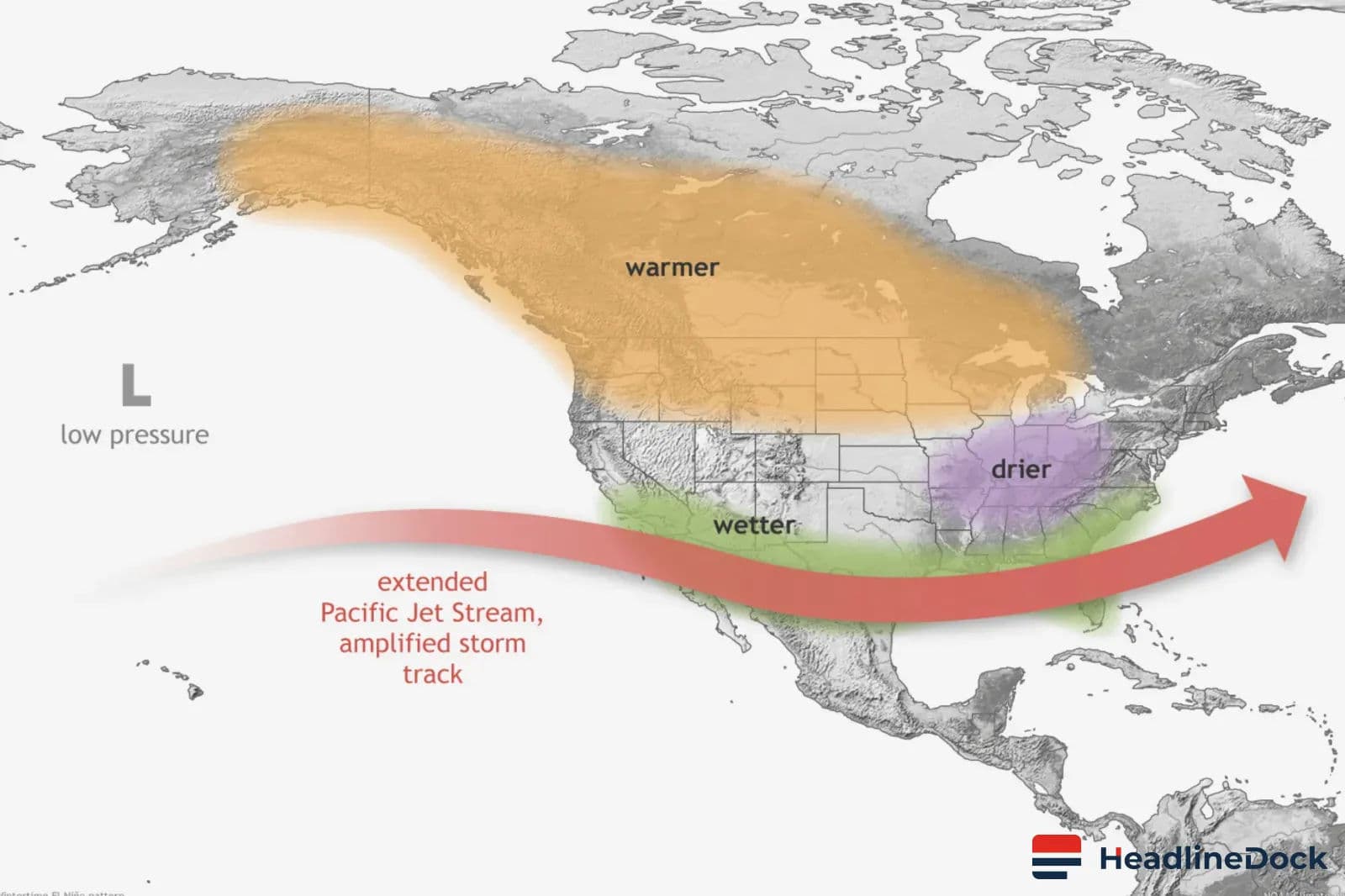
During an El Niño phase, sea surface temperatures within the central and eastern Pacific region rise, causing the typically strong east-to-west trade winds to weaken. This shift disrupts the Walker Circulation, a major atmospheric storm system, which consequently redirects moisture and cloud formations away from the Australian continent. Historically, such periods have been linked to some of the most intense heatwaves and severe drought conditions ever recorded in Australia.
Understanding the Criteria for Official El Niño Declaration
While discussions regarding a potential El Niño have been ongoing for months, official confirmation relies on meeting a specific set of meteorological benchmarks. To classify the event, scientists monitor several critical indicators, including sea surface temperature anomalies in the central Pacific, the weakening of trade winds over a four-month period, and the Southern Oscillation Index, which measures atmospheric pressure differences between Tahiti and Darwin. Additionally, the majority of seasonal forecasting models must project that these warmer ocean conditions will persist for at least three months.
It is essential to clarify that this declaration is an assessment of current oceanic conditions rather than a direct weather forecast. Generally, El Niño events correspond to warmer-than-average temperatures and reduced precipitation, particularly throughout the winter and spring seasons in eastern regions. While Western Australia experiences less direct impact, northern parts of the country often see a decline in tropical cyclone activity and a delayed onset of the monsoon season.
Global Temperature Trends and The 'Super El Niño' Phenomenon
Although human-induced greenhouse gas emissions remain the primary driver of global temperature rises, El Niño frequently acts as a catalyst that can push temperatures to record-breaking levels. Regarding reports of a potential “Super El Niño,” meteorologists note that this term describes events where central Pacific sea surface temperatures climb approximately 2°C above historical averages.
Current data shows temperatures rising, yet experts emphasize that the technical strength of an El Niño does not automatically correlate with the severity of its terrestrial impacts. Factors such as the Indian Ocean Dipole, shifts in the southern jet stream, and tropical storms in the north also play vital roles in shaping Australian weather. Consequently, authorities rely on long-range forecasts that synthesize these complex variables to provide the most reliable outlook for the nation's climate.